

Seoul · guide
Shopping in Seoul
The best districts, markets, and malls ranked by what they actually do best, from K-beauty and late-night fashion to handmade gifts and market food.
Seoul in brief
What is Seoul famous for shopping?
Seoul is best known for K-beauty, Korean fashion, traditional markets, luxury retail, and Korean crafts. Myeongdong, Dongdaemun, Gangnam, and Insadong each cover a different part of that mix.
Is Seoul good for clothes shopping?
Yes. Choose Dongdaemun for fashion malls and wholesale clothing, Gangnam for luxury and contemporary shopping, and Hongdae for indie labels, streetwear, and thrift finds.
Where is the best place to shop in Seoul?
There is no single winner. Myeongdong is the easiest all-rounder, Hongdae is strongest for independent style, Dongdaemun suits fashion-focused night browsing, and Insadong is the choice for traditional gifts.
Shop by mission, not by hype
Seoul shopping works best when you pick a district for a specific want. This ranking rewards places with a clear point of view, useful concentration, and enough character to make browsing feel like part of the trip. It also calls out polished streets and giant malls that are convenient but less distinctive than their reputations suggest.
I grouped the list into mainstream style districts, traditional craft streets, and markets and mall-scale shopping. Pair Myeongdong with Things to Do in Myeongdong, Hongdae with Things to Do in Hongdae, and Gangnam with Things to Do in Gangnam, then use our Seoul 3 Day Itinerary or Where to Stay in Seoul to place each area sensibly.
The full ranking, compared
Every pick at a glance, ranked by how well it earns its place, not by tourist traffic. Tap a name to jump to the full review.
| Place | Best for | Area | Access | Our verdict |
|---|---|---|---|---|
| 1. Myeongdong Shopping Street | K-beauty and mainstream fashion | Myeongdong | Free district; shops vary | Worth it |
| 2. Hongdae Shopping Street | Indie fashion and streetwear | Hongdae | Free district; shop hours vary | Worth the hype |
| 3. Dongdaemun Fashion Town | Wholesale fashion and night malls | Dongdaemun | Free district; venue policies vary | Worth it |
| 4. Gangnam Shopping District | Contemporary brands and character goods | Gangnam | Free district; shops vary | Worth it |
| 5. Insadong | Traditional crafts and souvenirs | Insadong | Free district; shops vary | Worth it |
| 6. Gwangjang Market | Market goods and street food | Jongno | Free entry; stalls vary | Worth it |
| 7. Namdaemun Market | Practical goods and market food | Jung-gu | Free entry; stores vary | Worth it |
| 8. Starfield COEX Mall | Indoor mall and Starfield Library | Samseong | Free entry; shopping separately priced | Worth the hype |
| 9. Ssamziegil | Small craft shops | Insadong | Free entry; experiences vary | Mixed |
| 10. Garosu-gil | Designer browsing and cafés | Sinsa | Free street; shop hours vary | Overrated |
The picks, mapped
Every stop on the map
All 10 picks across Seoul, mapped. Tap a pin for the quick verdict.
Make these into a Seoul trip
Zoya, your personal travel assistant, can turn these picks into a day-by-day Seoul plan.
Ranked, with honest verdicts
The best shopping in Seoul, ranked
Ten shopping districts, markets, and mall anchors ranked by what they actually do best, from K-beauty and late-night fashion to handmade gifts and the market lunch that makes the detour worthwhile.
Start with Seoul's strongest shopping identities
These are the districts to choose first when you know the kind of shopping you want, from beauty and streetwear to fashion after dark.
- 1
 Jung-gu · Myeongdong Worth it
Myeongdong Shopping Street
The easiest first stop for K-beauty, mainstream Korean fashion, street food, and a high-energy Seoul introduction.
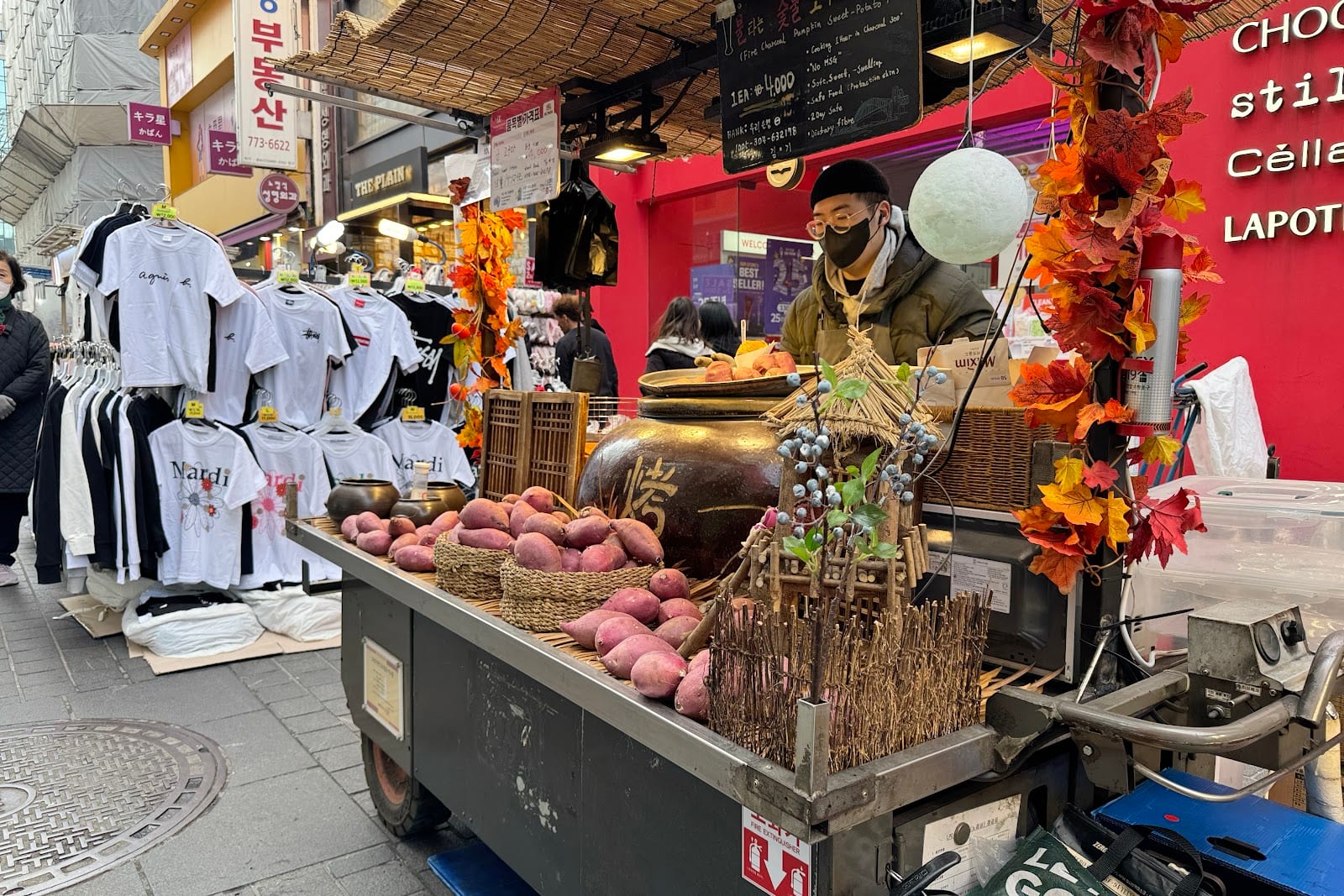
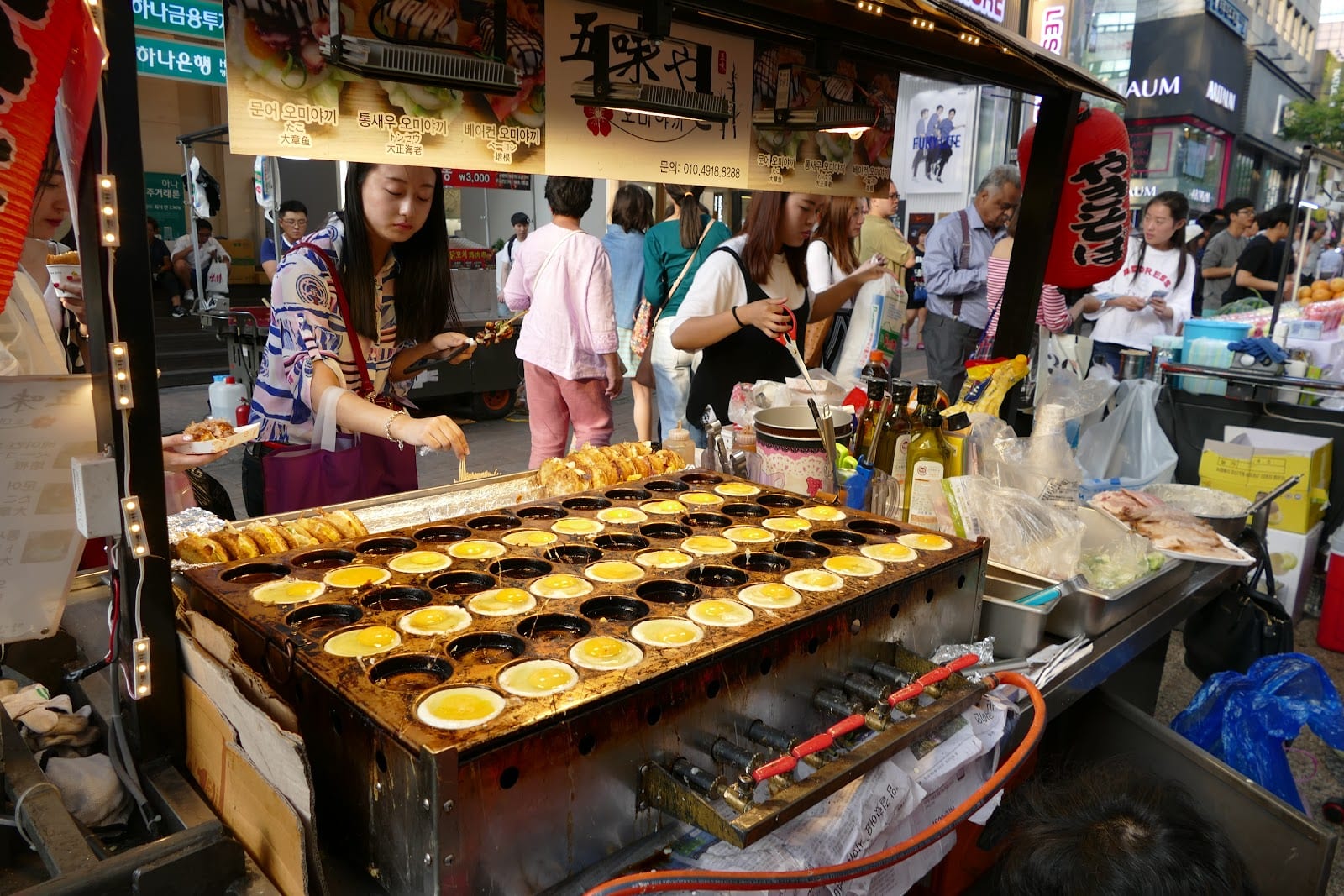
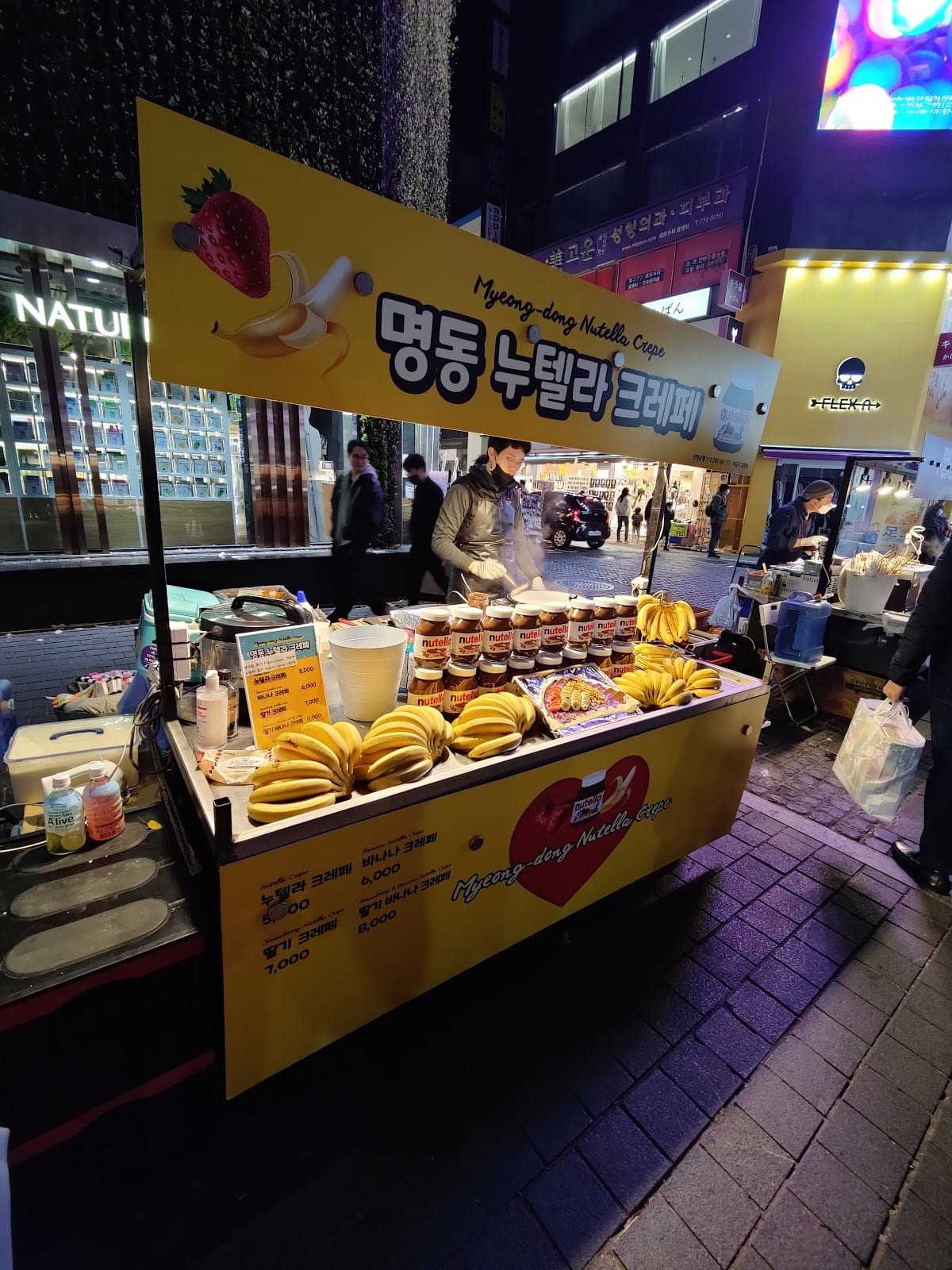
Myeongdong earns the top spot because it gives a first-time shopper the broadest useful sweep in one walkable district: cosmetics, clothing, shoes, accessories, department stores, restaurants, salons, and street stalls. The main streets run between Myeongdong Subway Station and Lotte Department Store, so you can enter from Line 4 or Euljiro 1(il)-ga and work across the neighborhood. It is busy and brand-heavy rather than especially local, but that is the point when your list includes beauty products and familiar Korean labels. The district is generally active from about 11:00 to 22:00, with stalls starting around noon. Finish at Myeongdong Cathedral, built in 1898, at the district's edge.
Where: Between Myeongdong Station and Lotte Department StoreTypical hours: About 11:00-22:00; stalls from around noonGetting there: Myeongdong Station, Line 4Sourcesenglish.visitkorea.or.kr
- 2
 Mapo-gu · Hongdae Worth the hype
Hongdae Shopping Street
Choose Hongdae for indie labels, streetwear, thrift browsing, and the lively art-school energy that makes shopping feel less polished.
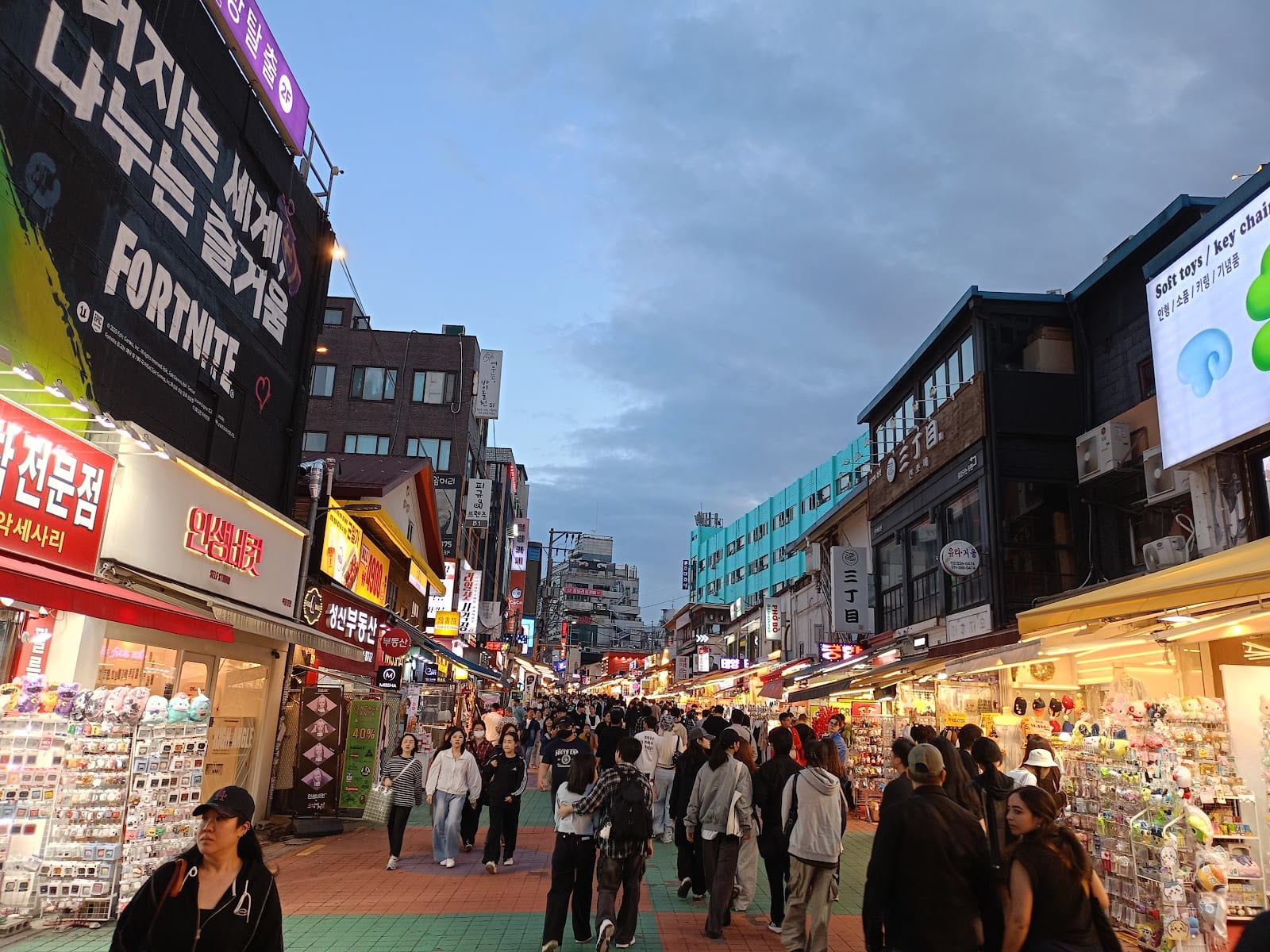
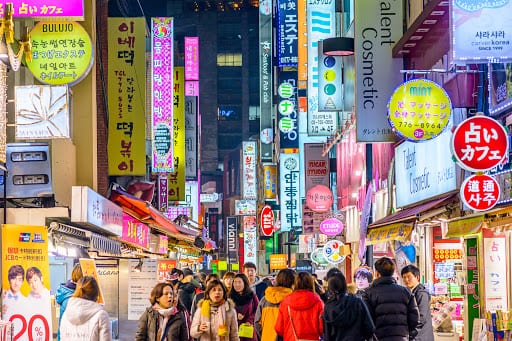
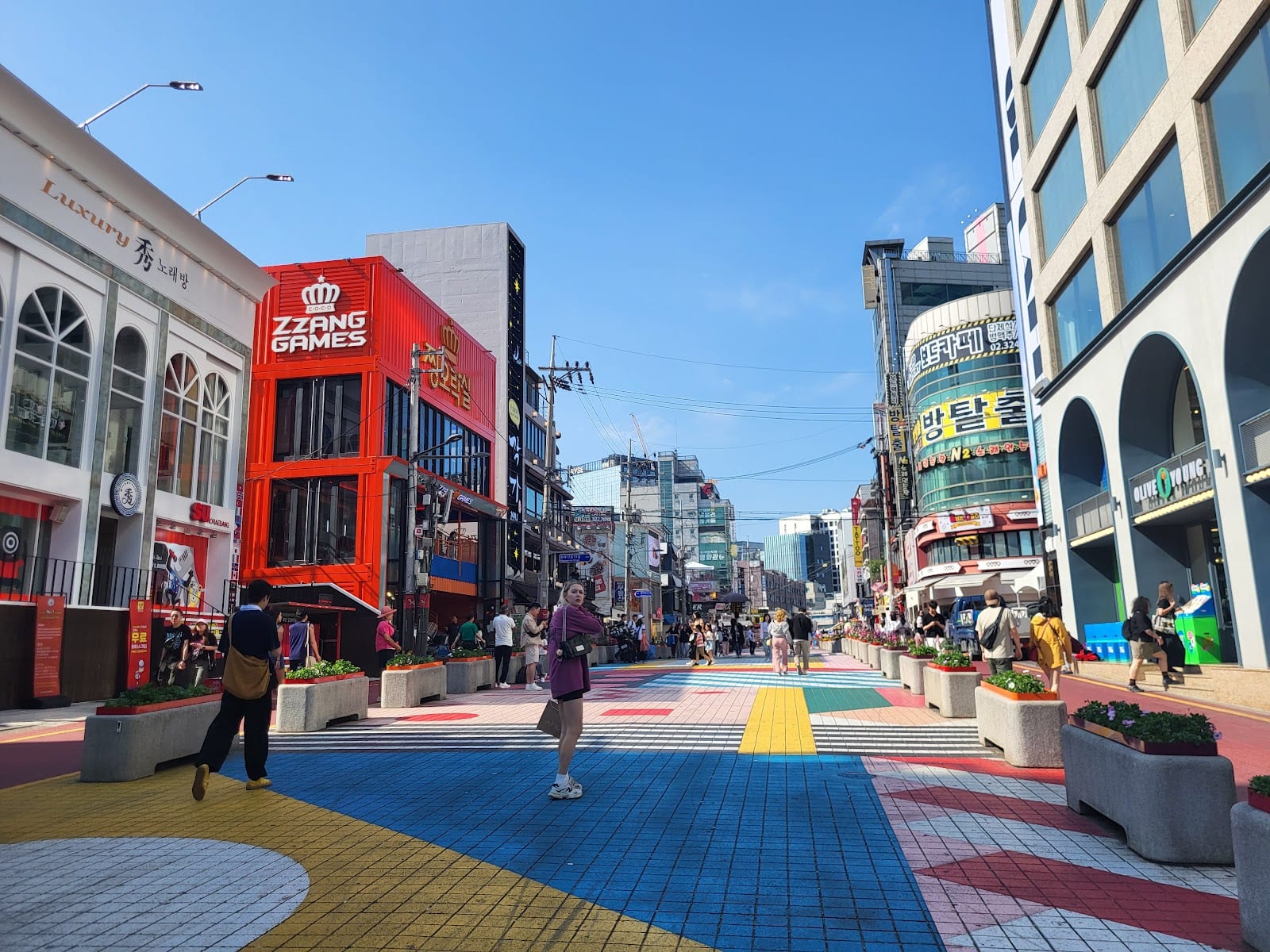
Hongdae ranks above the luxury districts for shoppers who want Seoul style with more personality. Built around Hongik University, the area mixes independent shops, streetwear, thrift finds, cafés, galleries, murals, buskers, and clubs, so the shopping day can easily turn into an evening out. Eoulmadang-ro is about 1.3 kilometers long, roughly a 25-minute walk from end to end, and the red-painted main route gives the district a visual thread. Come by Hongik Univ. Station, then wander rather than target one mall. Online listings commonly place shops around 11:00 to 21:00, but businesses set their own hours. The strongest street window is Friday through Sunday, when Eoulmadang-ro is car-free from 12:00 to 23:00.
Where: Eoulmadang-ro and streets around Hongik UniversityTypical hours: Around 11:00-21:00; individual shops varyGetting there: Hongik Univ. Station, Line 2 or AREXSourcesenglish.visitkorea.or.kr
- 3
 Jung-gu · Eulji-ro 6-ga Worth it
Dongdaemun Fashion Town
This is Seoul's fashion choice for night owls and determined browsers who enjoy seeing wholesale, materials, design, and retail collide.
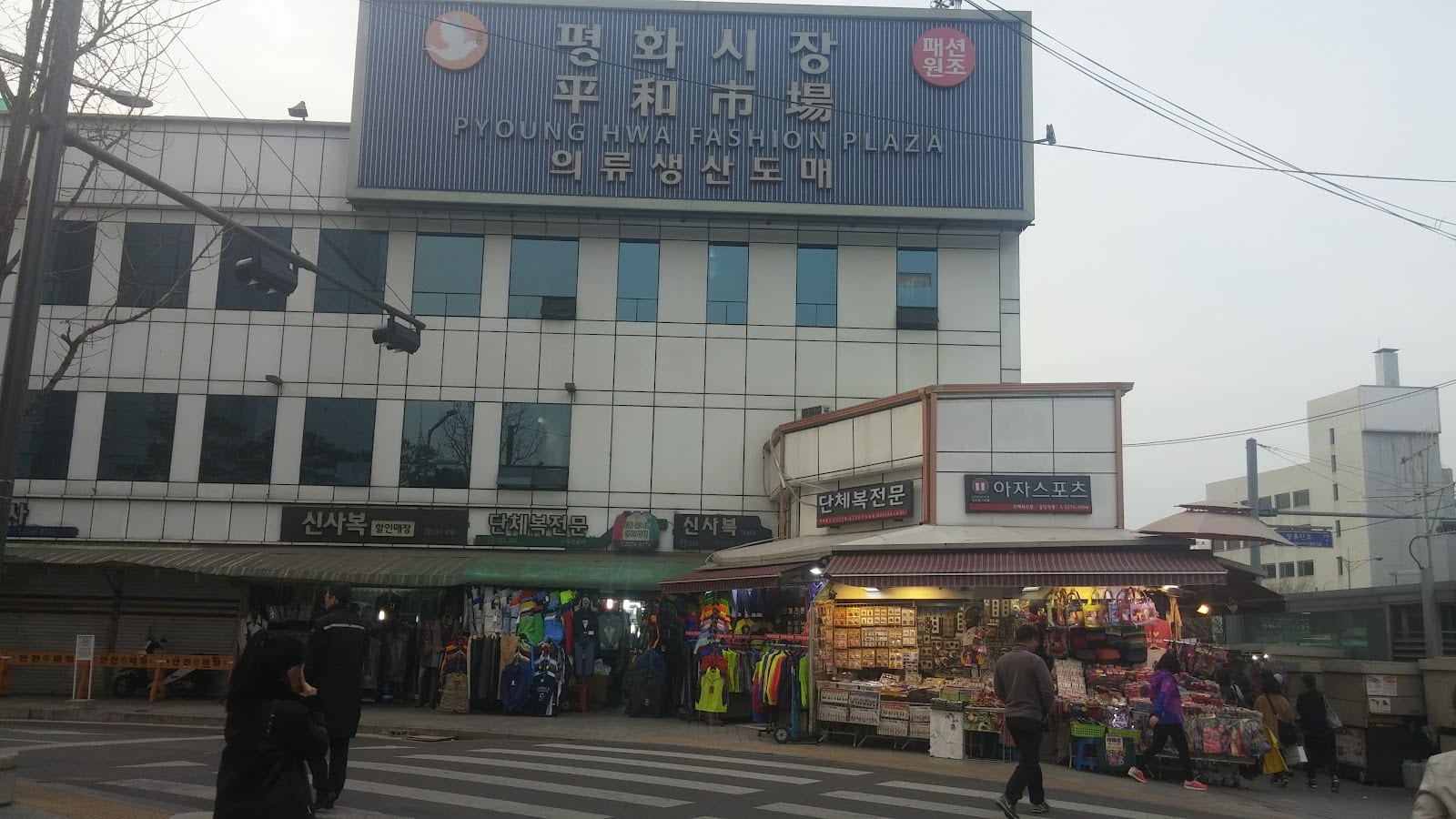
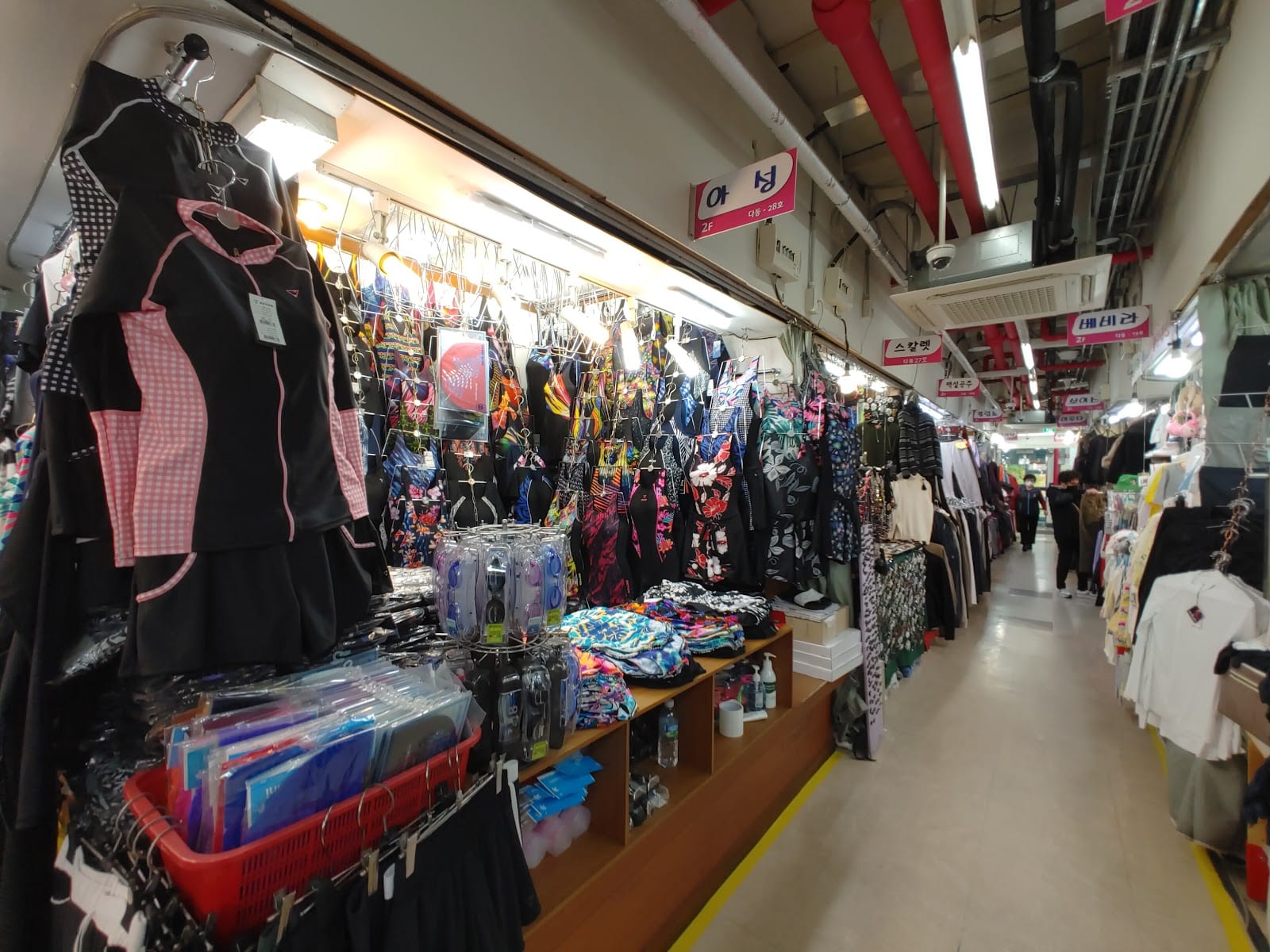
Dongdaemun is less a neat shopping street than a working fashion ecosystem, which is exactly why it ranks third. The district brings designers, fabric markets, sewing factories, wholesale buildings, and retail malls into one sprawling zone beside Cheonggyecheon Stream and Heunginjimun Gate. Dongdaemun Shopping Complex dates to December 1970, and the area became a special tourist zone in 2002. Retail malls commonly run from about 10:00 to midnight, while many wholesale markets trade roughly 22:00 to 05:00. Doota is listed at 10:30 to 24:00 daily. Go here if fashion is the destination, not if you want a simple browse. Some wholesale shops expect cash or minimum quantities, and several buildings close during the weekend changeover.
Late trading: Many wholesale markets run roughly 22:00-05:00Where: Eulji-ro 6-ga, beside CheonggyecheonGetting there: Dongdaemun Station, Lines 1 or 4Good to know: Wholesale shops may require cash or minimum quantitiesSourcesjunggu.seoul.kr
- 4
 Gangnam-gu · Gangnam-daero Worth it
Gangnam Shopping District
Gangnam is the practical pick for contemporary brands, character goods, and an easy underground browse, but bargain hunters should look elsewhere.
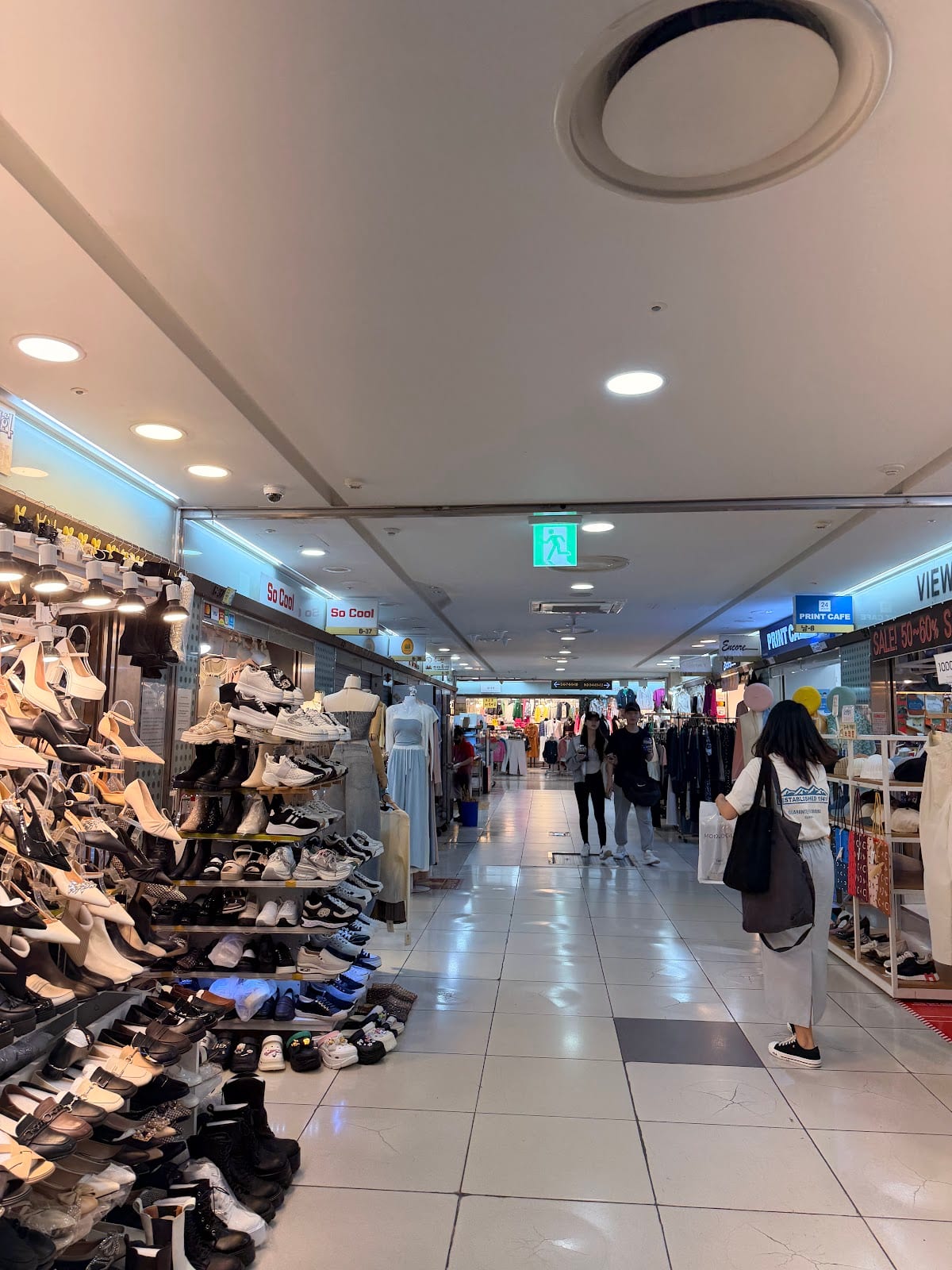
Gangnam offers two shopping experiences in one corridor. Above ground, the stretch between Gangnam Station exits 10 and 11 and Sinnonhyeon Station exits 5 and 6 is lined with brands, cafés, and flagships. Below ground, the Gangnam Station Underground Shopping Center concentrates clothing, shoes, bags, and sunglasses shops, with Herb Plaza as a rest area. The telling detail is the proximity of the multi-storey Kakao Friends and LINE FRIENDS flagships, within 50 metres of each other near Gangnam Station. The underground center is open 10:00 to 22:00, with some holiday exceptions. Choose it for convenience and trend-led browsing, not for Seoul's best market prices.
Where: Gangnam Station to Sinnonhyeon StationUnderground hours: 10:00-22:00, with some holiday exceptionsGetting there: Gangnam Station, Lines 2 and ShinbundangSourcesenglish.visitkorea.or.kr
- 10
 Gangnam-gu · Sinsa-dong Overrated
Garosu-gil
Garosu-gil is pleasant for designer browsing and cafés, but its reputation runs ahead of its shopping payoff.
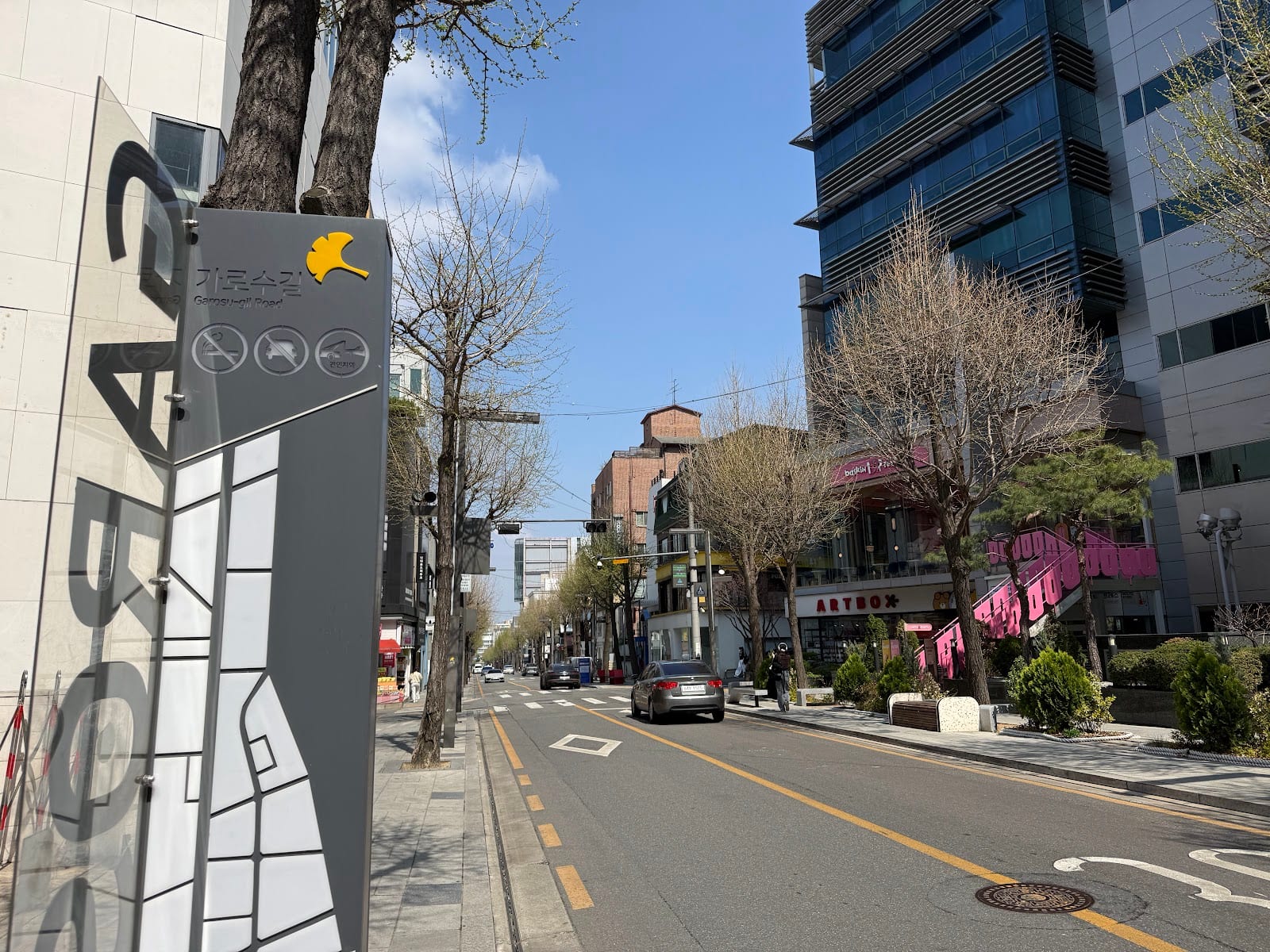
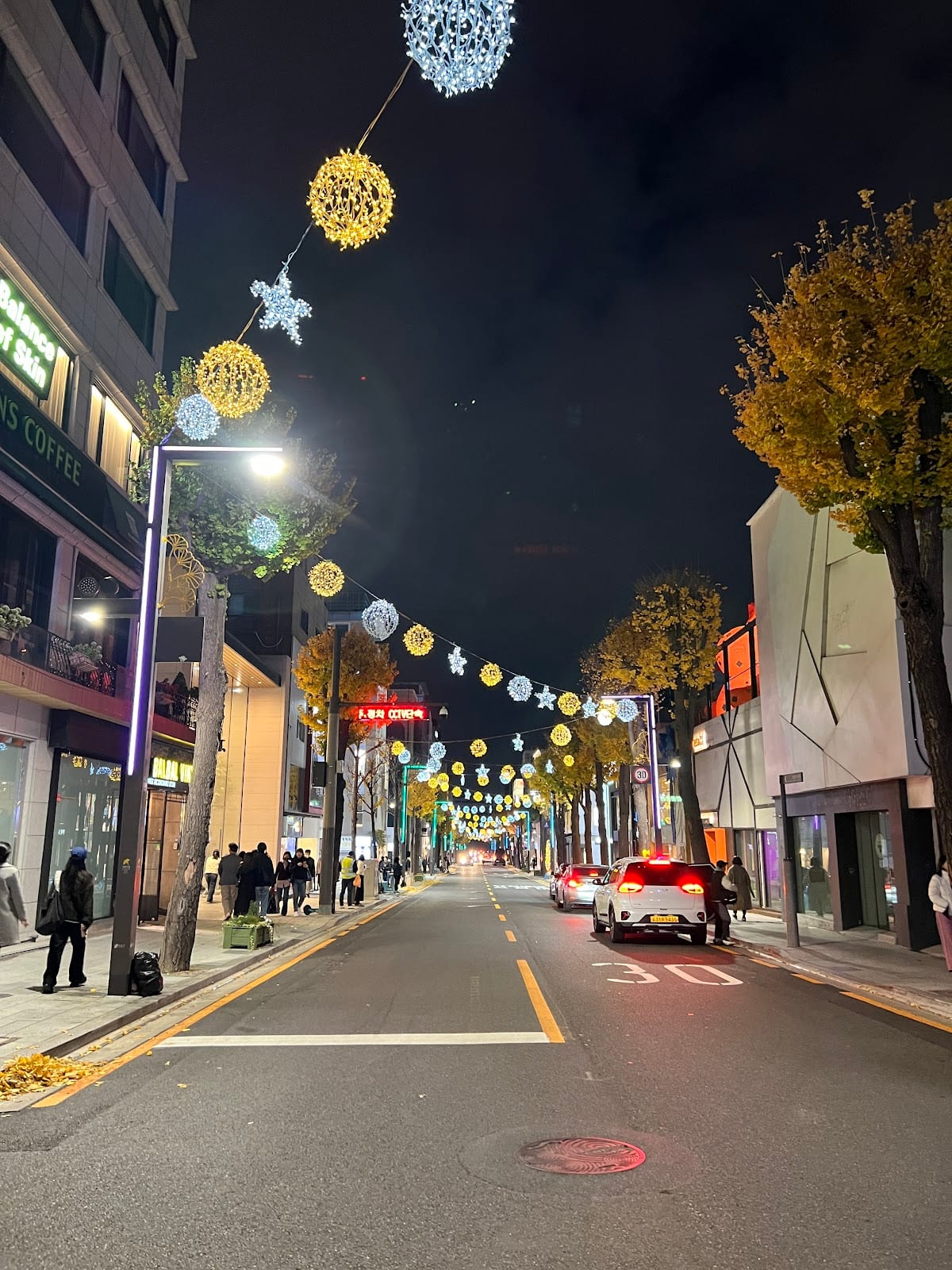
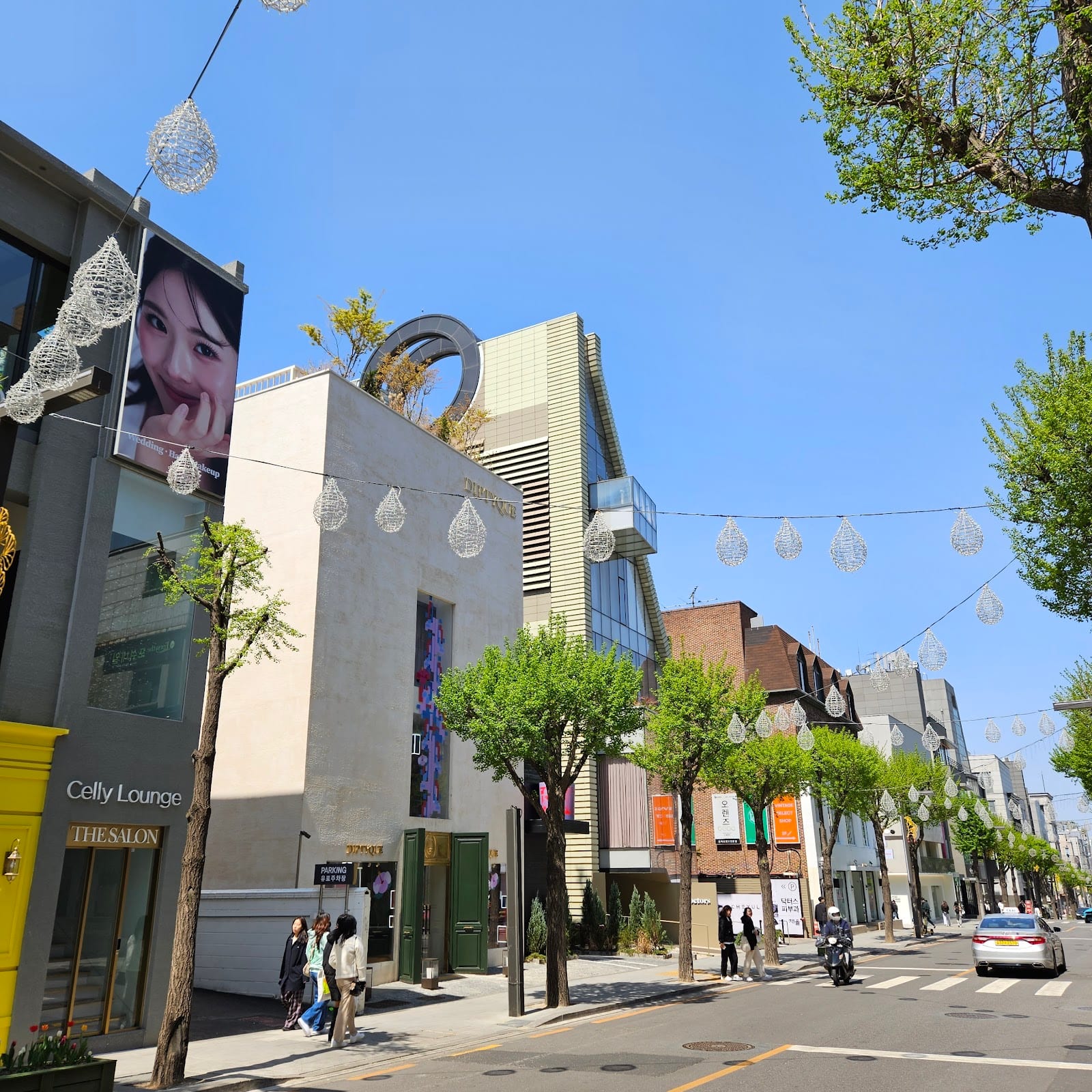
Garosu-gil remains a good-looking half-day stroll through Sinsa, with designer stores, cosmetics shops, clothing retailers, galleries, bookstores, antique-furniture shops, and cafés beneath rows of ginkgo trees. The street runs from Sinsa Station toward Hyeondae High School, and the nearest subway approach is Line 3 or the Shinbundang Line at Sinsa Station Exit 8. Its signature visual is seasonal: the ginkgo leaves turn the street gold in autumn. That atmosphere earns a place on the list, but not a higher rank. Many visitors expect a dense lane of independent designers and find a more polished, variable retail mix. The street itself is free, shop hours are not standardized, and the three-story LINE FRIENDS Café & Store is the clearest flagship stop.
Where: Between Sinsa Station and Hyeondae High SchoolGetting there: Sinsa Station, Line 3 or ShinbundangBest detail: Ginkgo leaves turn gold in autumnSourcesenglish.visitkorea.or.kr


Traditional Seoul, with some commercial gloss
Insadong and its craft-focused anchor are best for gifts and cultural browsing, though the main street is not as purely traditional as it once was.
- 5
 Jongno-gu · Insadong-gil Worth it
Insadong
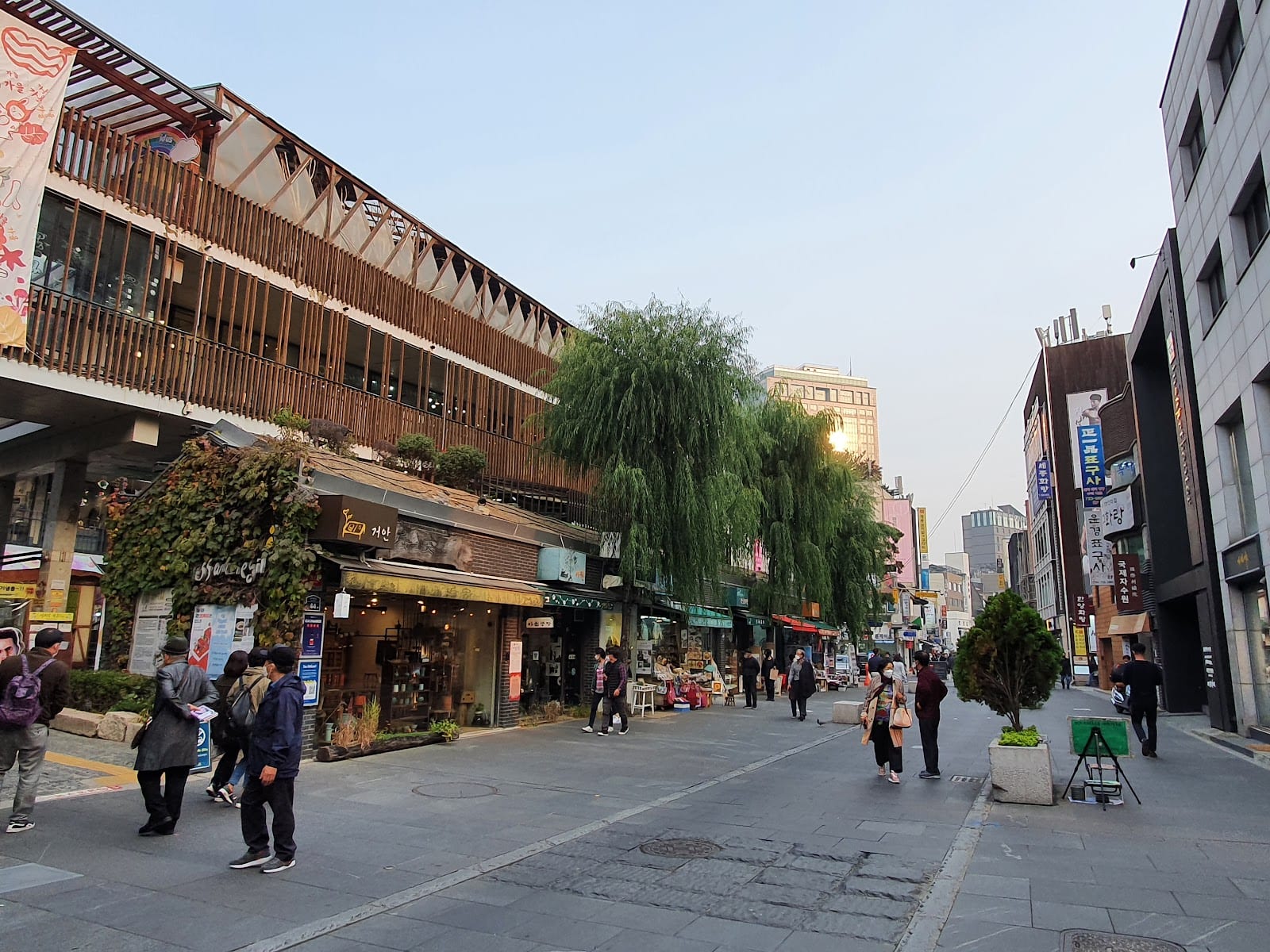
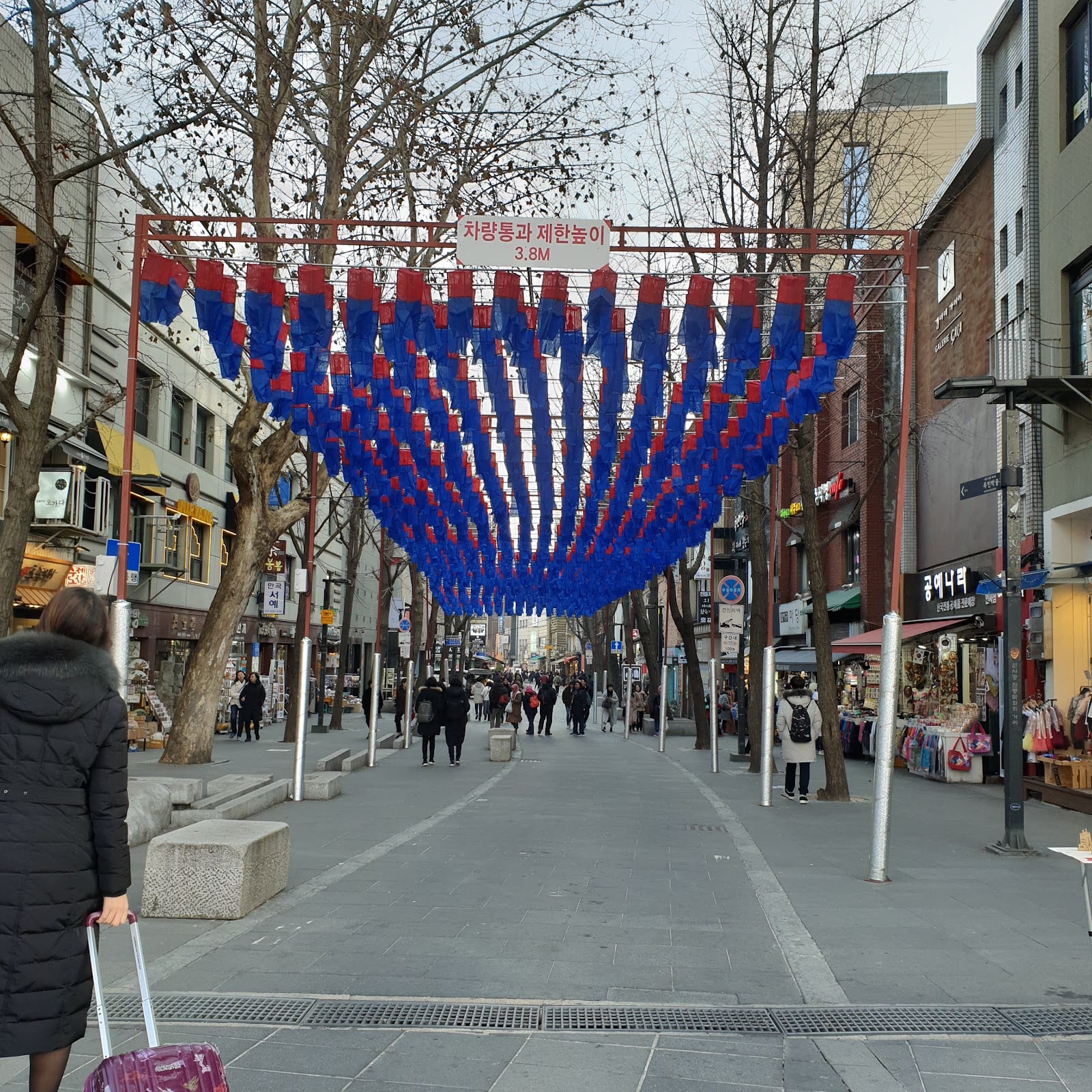
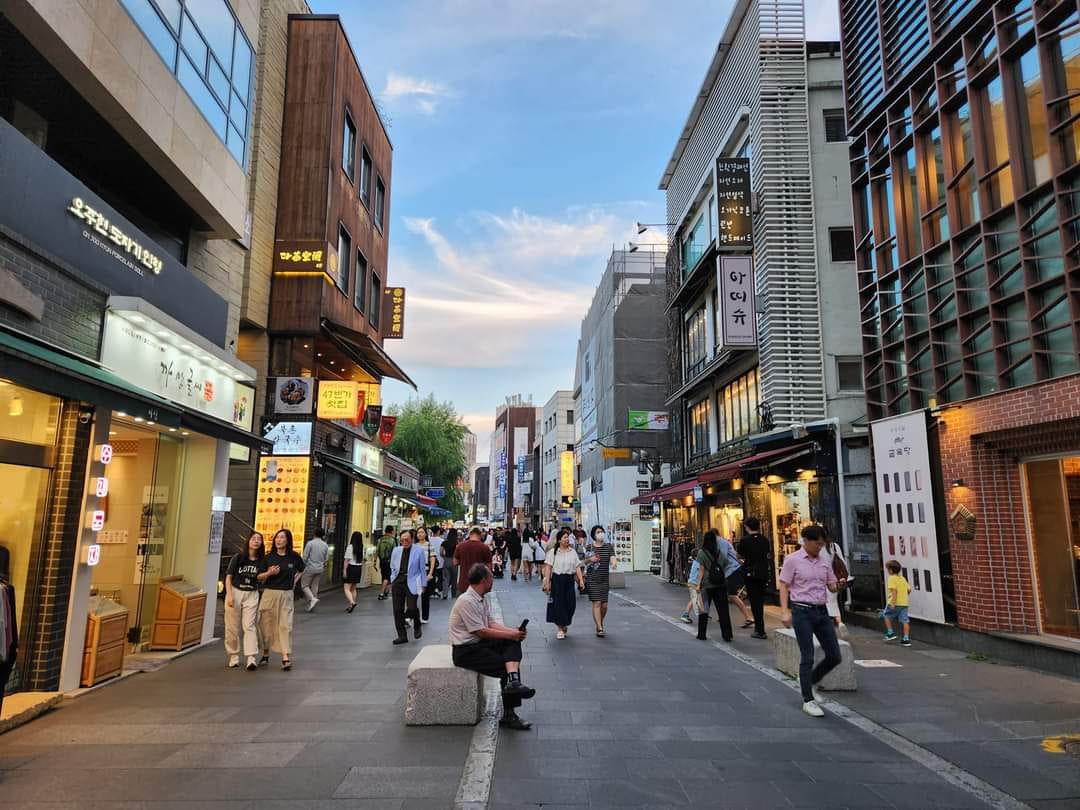
Insadong is Seoul's most useful central stop for traditional crafts and souvenirs, provided you accept that parts now feel curated for visitors.
Insadong earns this rank for gift shopping that feels connected to Korean craft rather than simply branded. Insadong-gil runs about 630 meters from near Anguk Station, with galleries, antique-oriented shops, traditional performances, outside booths, and fortune-teller stalls adding texture. The district contains about 100 galleries, but its commercial identity has softened: a cited 2017 survey found only 39.3 percent of shops sold goods associated with Insadong's traditional identity. That is the tradeoff. Come through Anguk Station Exit 6, browse on foot, and look carefully at materials and provenance instead of buying the first souvenir you see. Weekend vehicle restrictions make the main street easier to explore.
Where: Insadong-gil, near Anguk StationShopping focus: Traditional crafts, galleries, antiques, and giftsPedestrian hours: Weekend vehicle restrictions; shop hours varySourcesenglish.visitkorea.or.kr
- 9
 Jongno-gu · Insa-dong Mixed
Ssamziegil
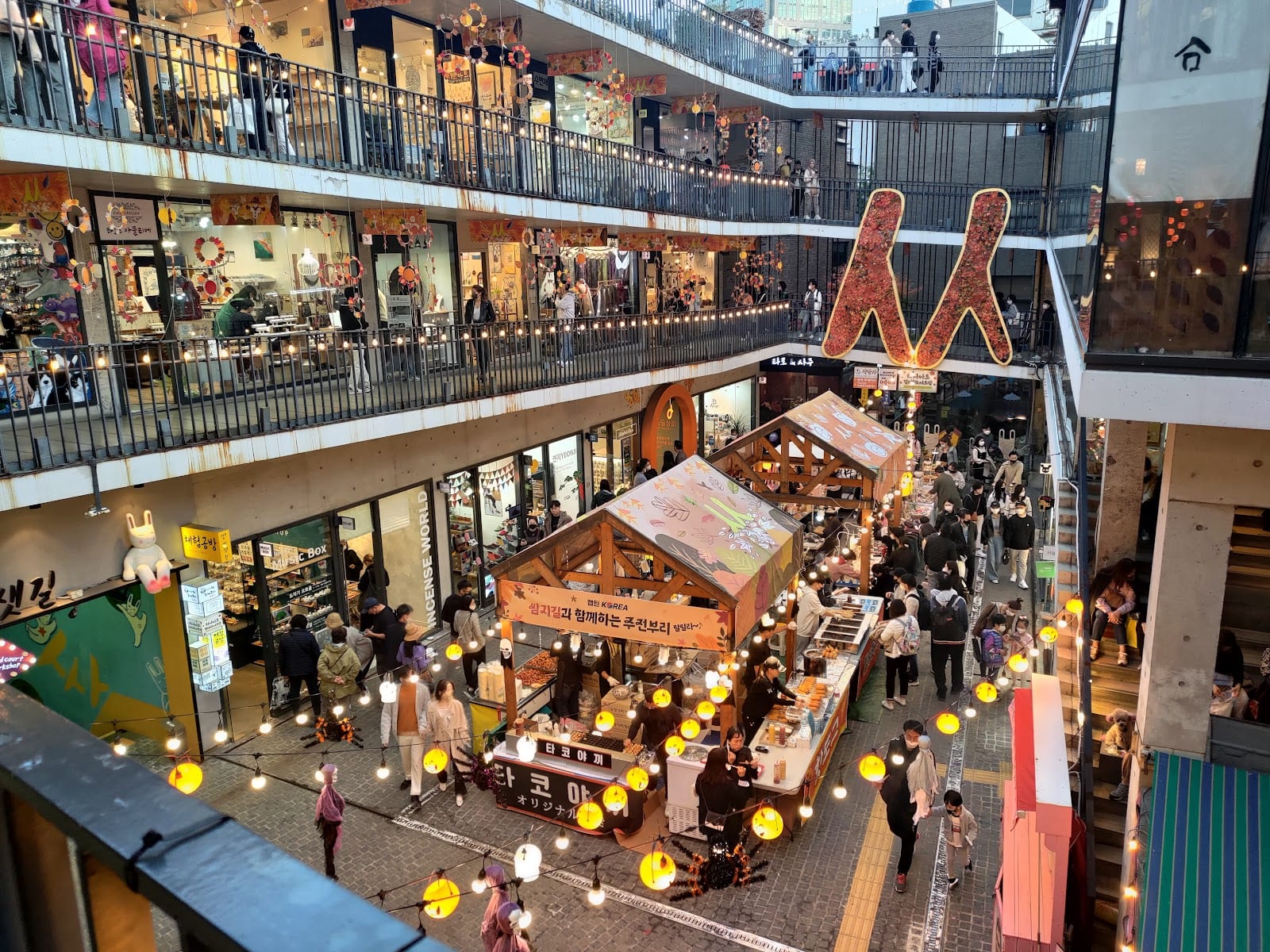
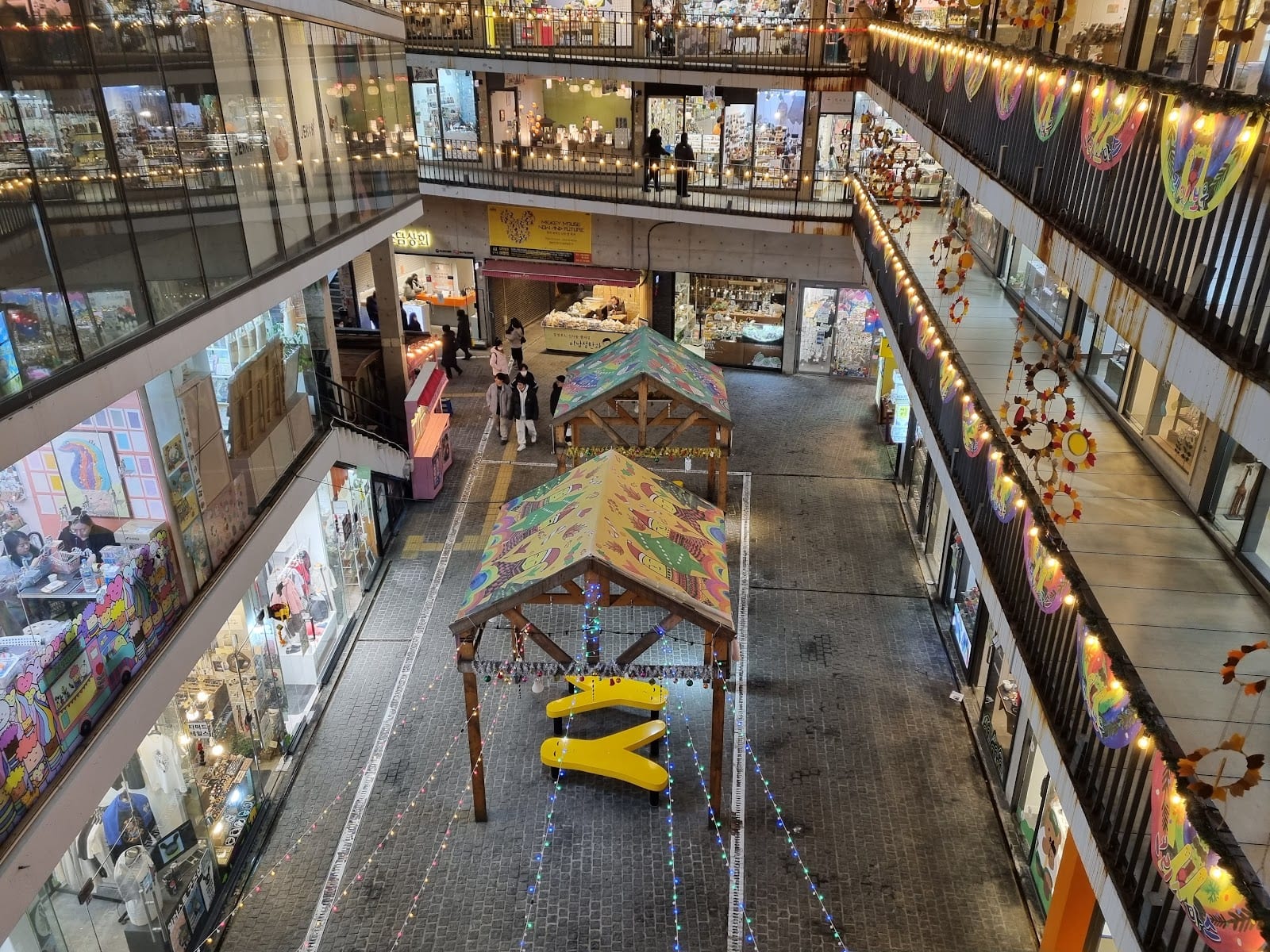
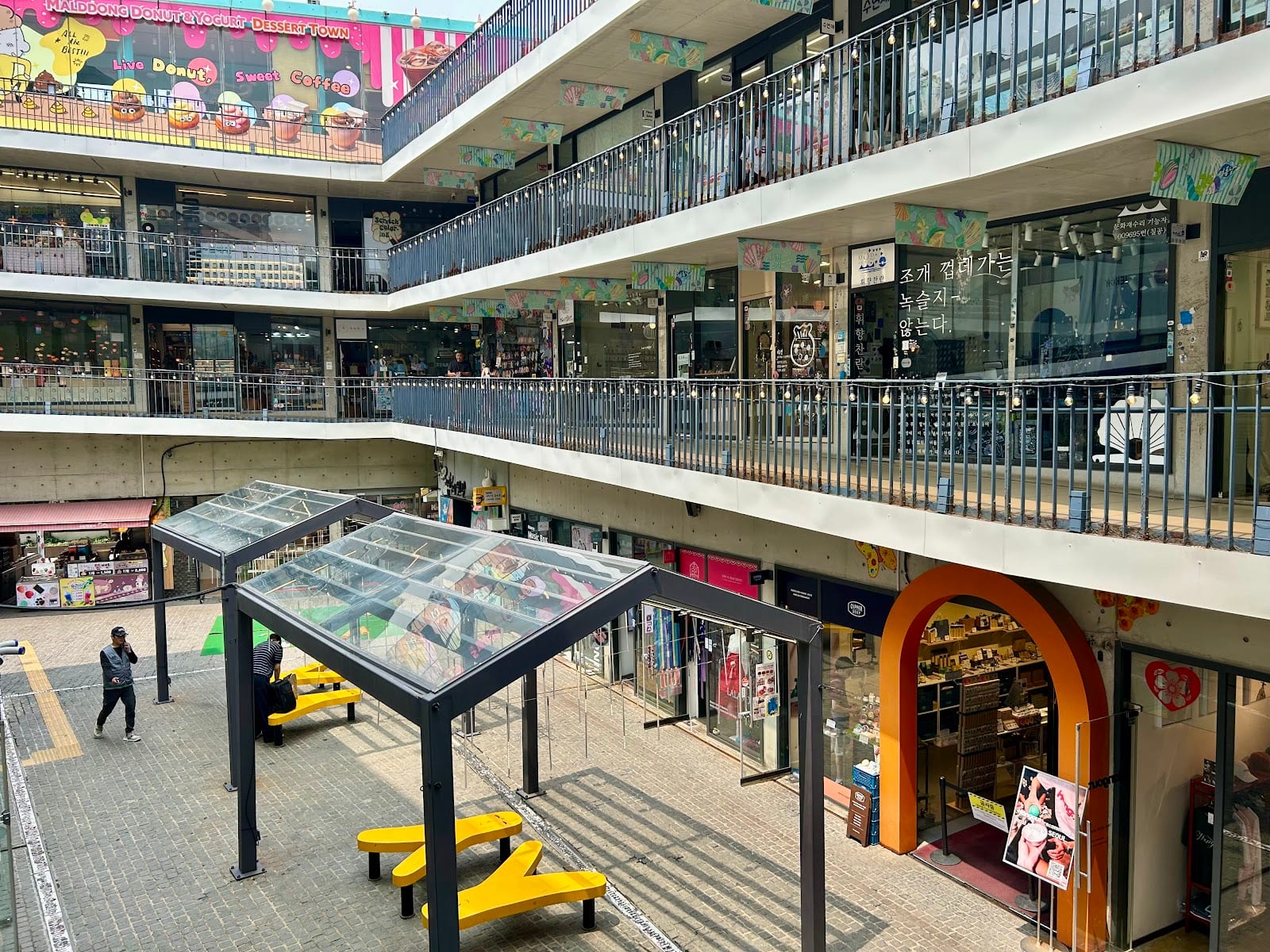
Ssamziegil is Insadong's most manageable craft-shopping stop, with many small makers in one compact address.
Ssamziegil gives Insadong a clear shopping anchor. The complex opened in 2004 and places about 70 small shops, workshops, galleries, restaurants, and cafés around an open courtyard. Merchandise spans traditional and contemporary crafts, so it is better for distinctive small gifts than generic Seoul souvenirs. The design is part of the appeal: a roughly 500-meter footpath wraps the courtyard and climbs continuously from the lower floors to the roof, marked by a rose-stem motif running from basement to rooftop. Admission is free, though craft experiences may cost extra. Visit daily from 10:30 to 20:30, and reach it from Anguk Station Exit 6. There is no parking, so arrive by subway and keep your hands free for purchases.
Shopping focus: Traditional and contemporary craftsHours: 10:30-20:30 dailyWhere: 44 Insadong-gil, Jongno-guAdmission: Free; some craft experiences cost extraSourcesenglish.visitkorea.or.kr


Markets and malls for a broader haul
Go here for practical goods, food, wholesale energy, or a weatherproof shopping day that can absorb several hours.
- 6
 Jongno-gu · Changgyeonggung-ro Worth it
Gwangjang Market
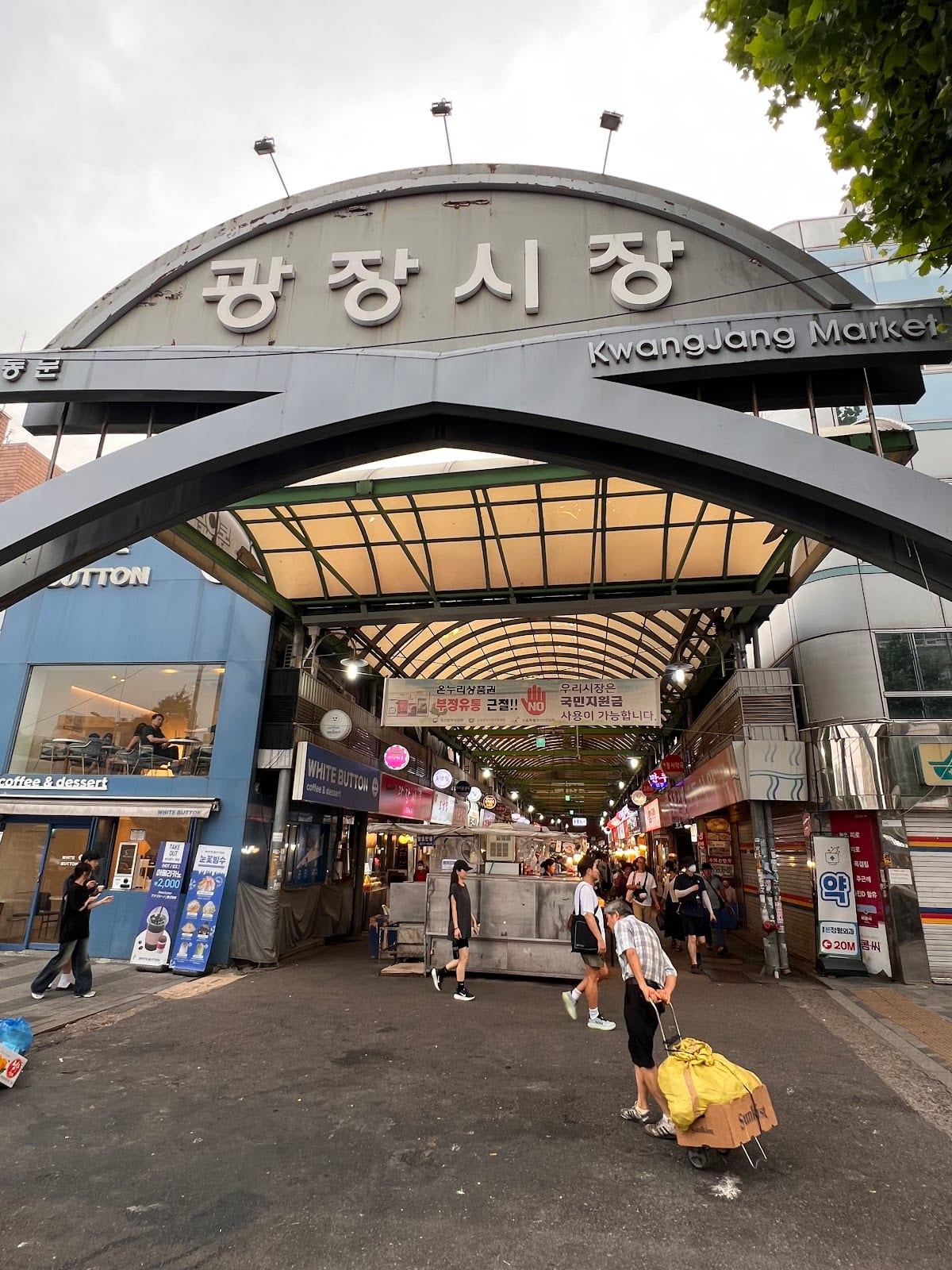
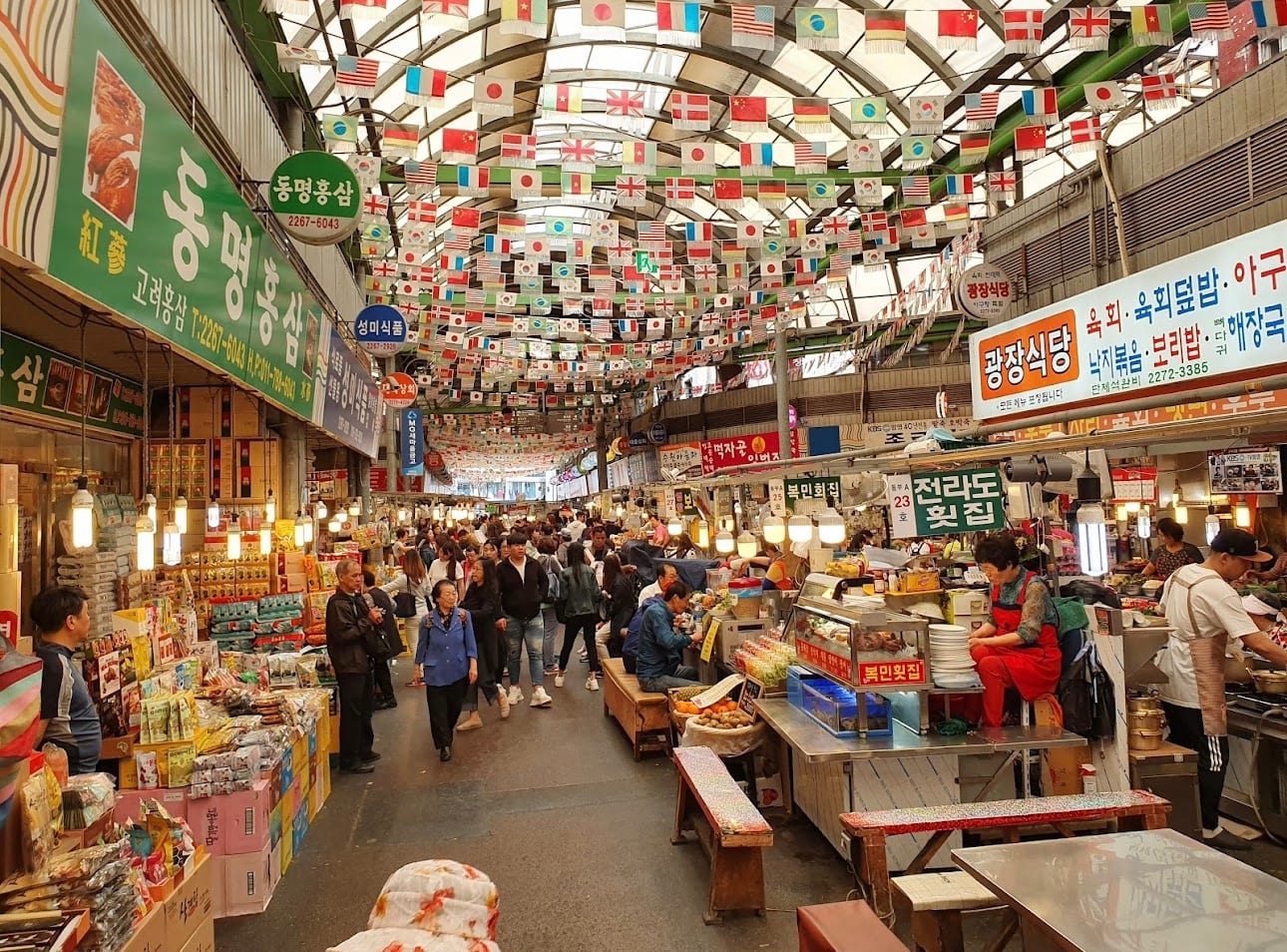
Gwangjang is the best place here to turn a food stop into genuine market browsing.
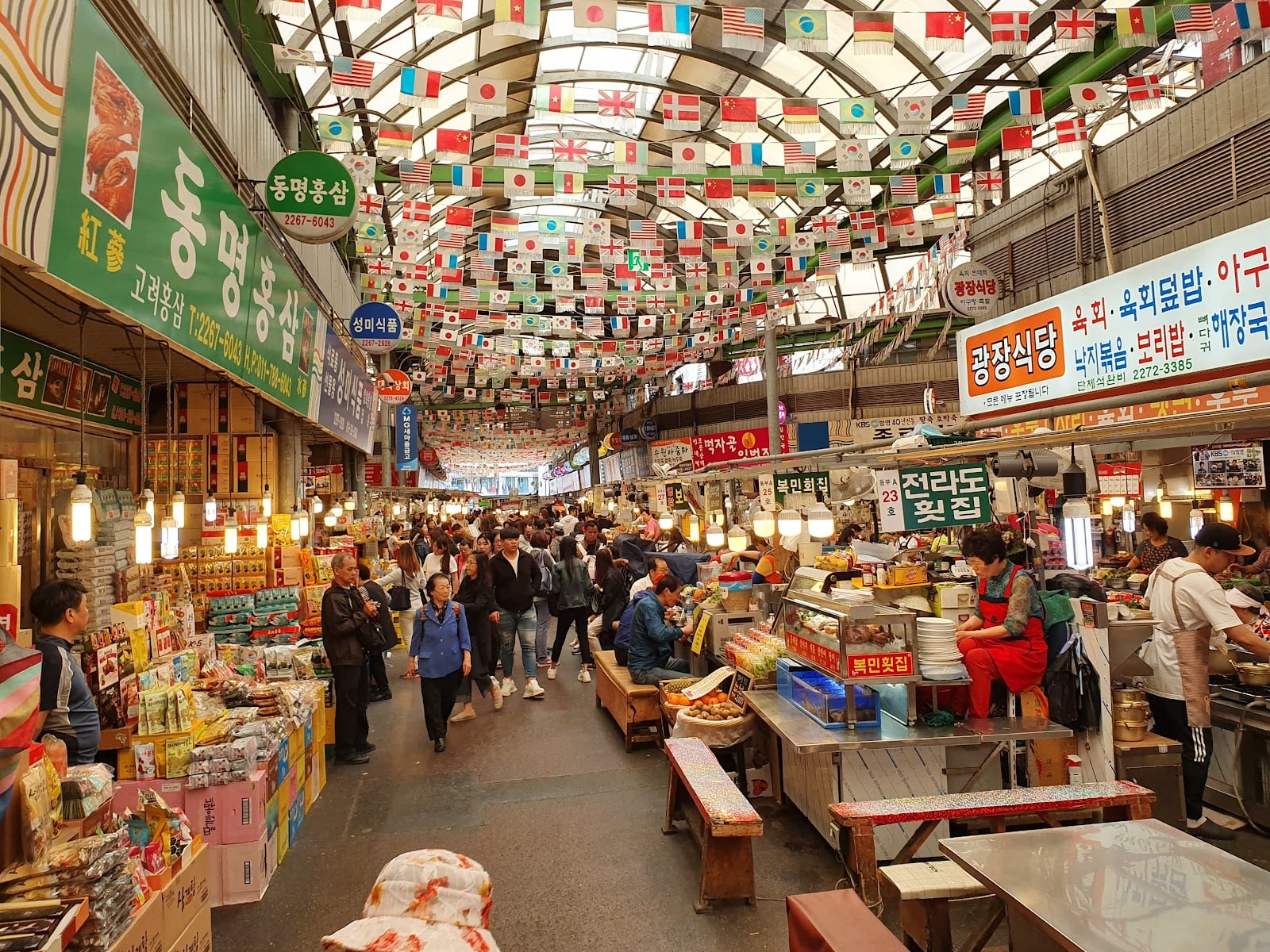
Gwangjang is a shopping destination with a persuasive edible center. Founded in 1905 as Dongdaemun Market and renamed in 1960, it developed as Korea's first permanent market open every day. Today stalls cover textiles, clothing, groceries, dried fish, bedding, handicrafts, and traditional goods, while the food street pulls visitors toward bindaetteok and mayak gimbap. The mini rice rolls are brushed with sesame oil and sesame seeds, and their nickname translates as “narcotic rice rolls” because diners find them hard to stop eating. General market hours are 09:00 to 18:00, with the food street continuing to about 23:00. The main market closes Sundays, though the food street stays open.
Eat: Bindaetteok and mayak gimbapTypical hours: Market 09:00-18:00; food street to about 23:00Where: 88 Changgyeonggung-ro, Jongno-guClosed: Main market Sundays; food street open year-round - 7
 Jung-gu · Namdaemunsijang 4-gil Worth it
Namdaemun Market
Namdaemun is the better market for practical goods, small presents, and the feeling of a city buying what it needs.
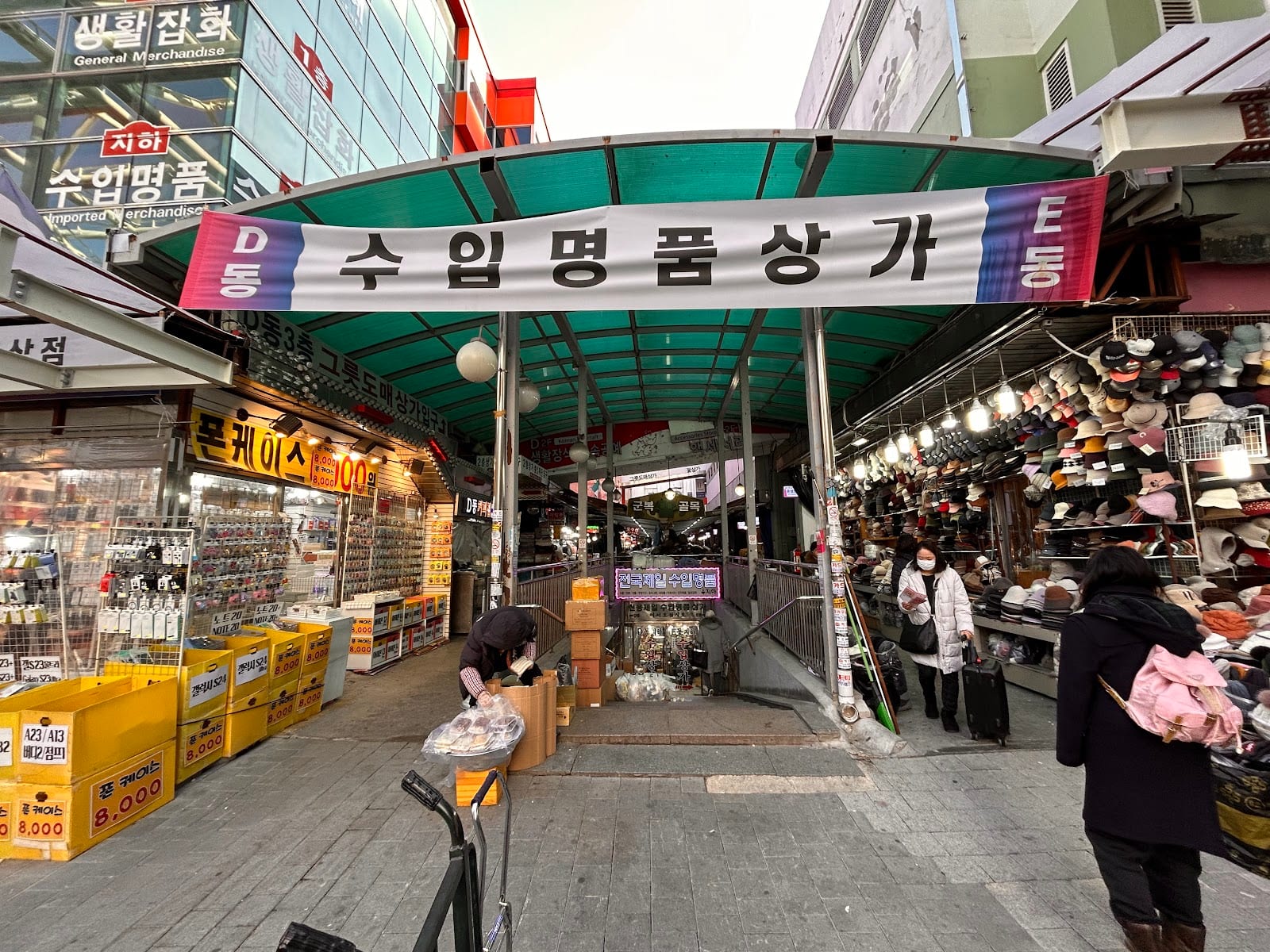
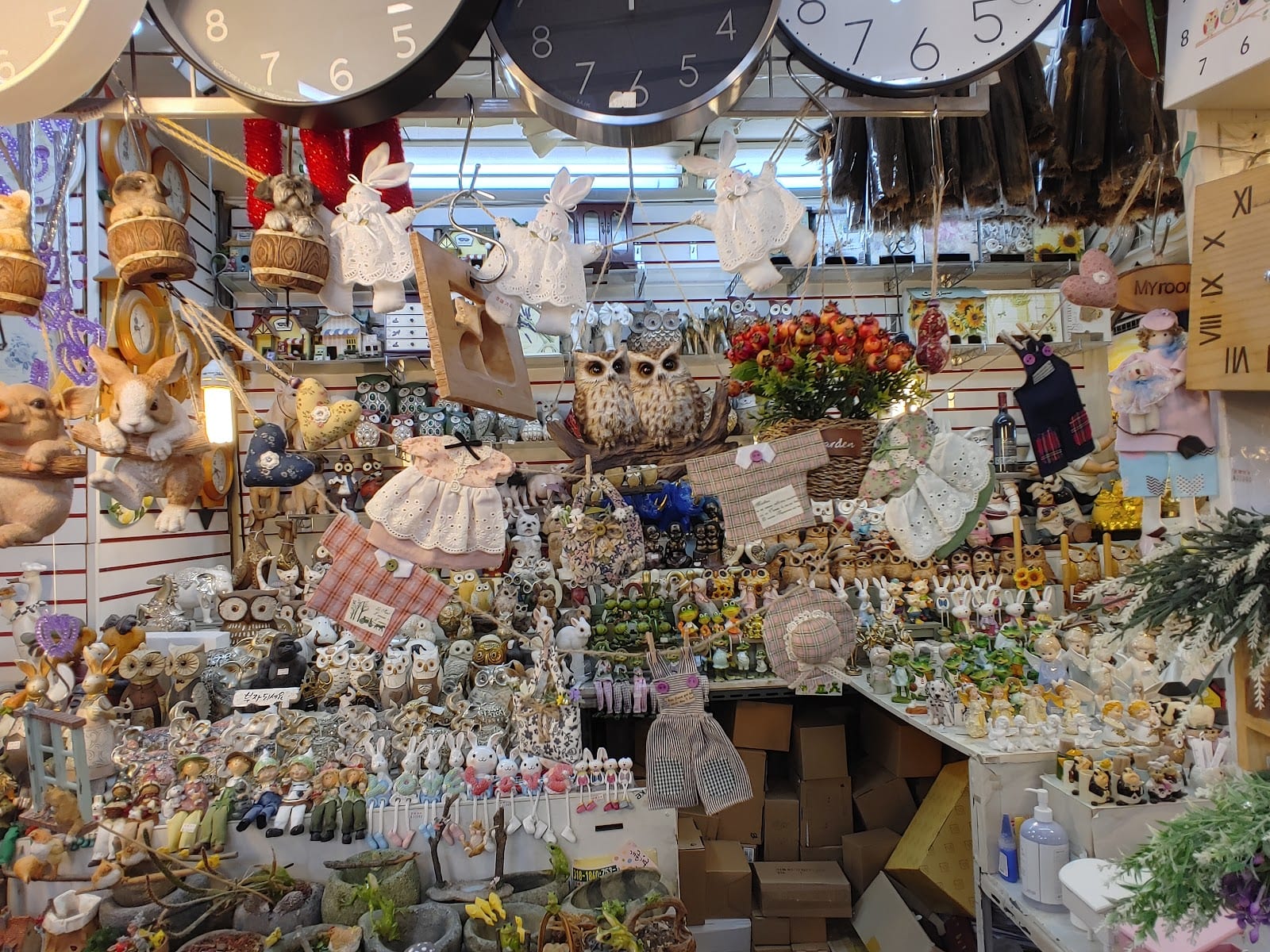
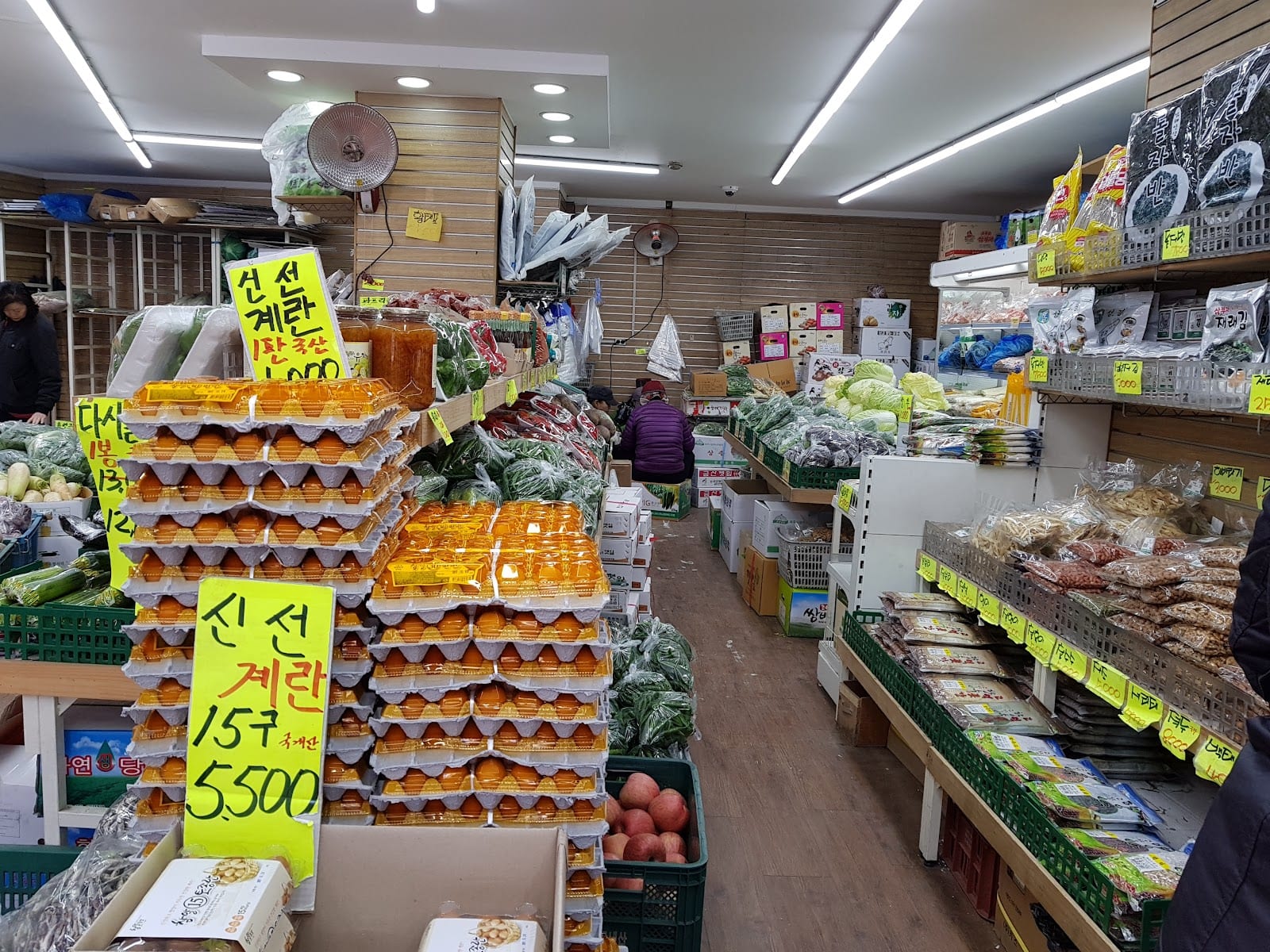
Namdaemun is less curated than Myeongdong and less food-centered than Gwangjang, making it strong for useful, affordable browsing. Opened in 1964, the market carries clothing, kitchenware, toys, outdoor gear, stationery, flowers, ginseng, imported goods, and everyday commodities. VisitKorea lists approximately 17,000 products, while other descriptions count more than 10,000 stores. Follow queues to Hairtail Alley for braised or grilled hairtail, or turn into Kalguksu Alley, where more than 10 shops serve knife-cut noodle soup and related dishes. Hoehyeon Station Exit 5 is about a two-minute walk away. Stores vary, Sundays are generally quiet or closed, and some activity continues overnight from 23:00 to 04:00.
Where: 21 Namdaemunsijang 4-gil, Jung-guGetting there: Hoehyeon Station, Line 4, Exit 5Food alleys: Hairtail Alley and Kalguksu AlleyGood to know: Free entry; stores generally close SundaysSourcesenglish.visitkorea.or.kr
- 8
 Gangnam-gu · Samseong-dong Worth the hype
Starfield COEX Mall
COEX is the weatherproof, all-in-one option, but its scale and polish are more useful than distinctive.
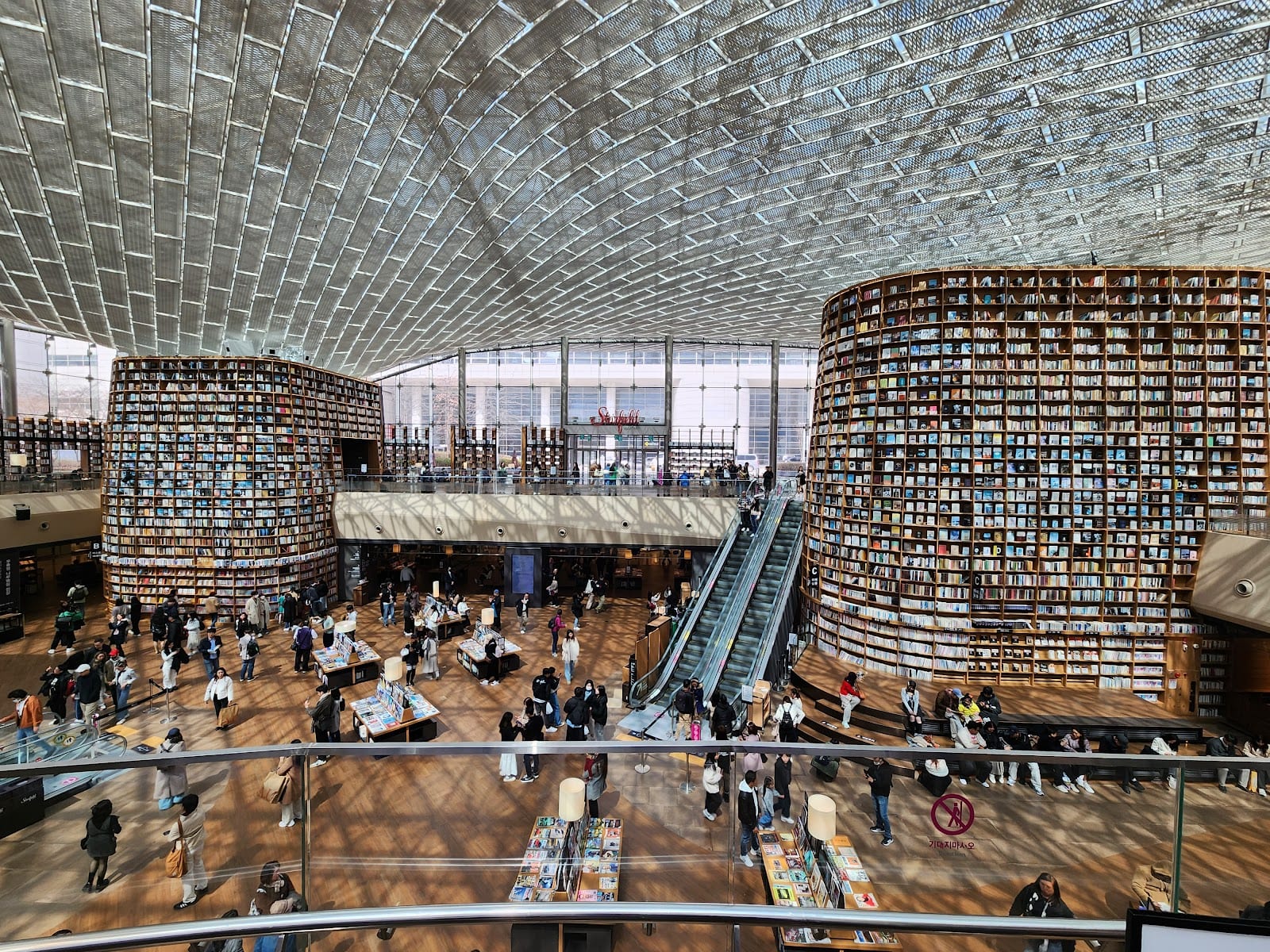
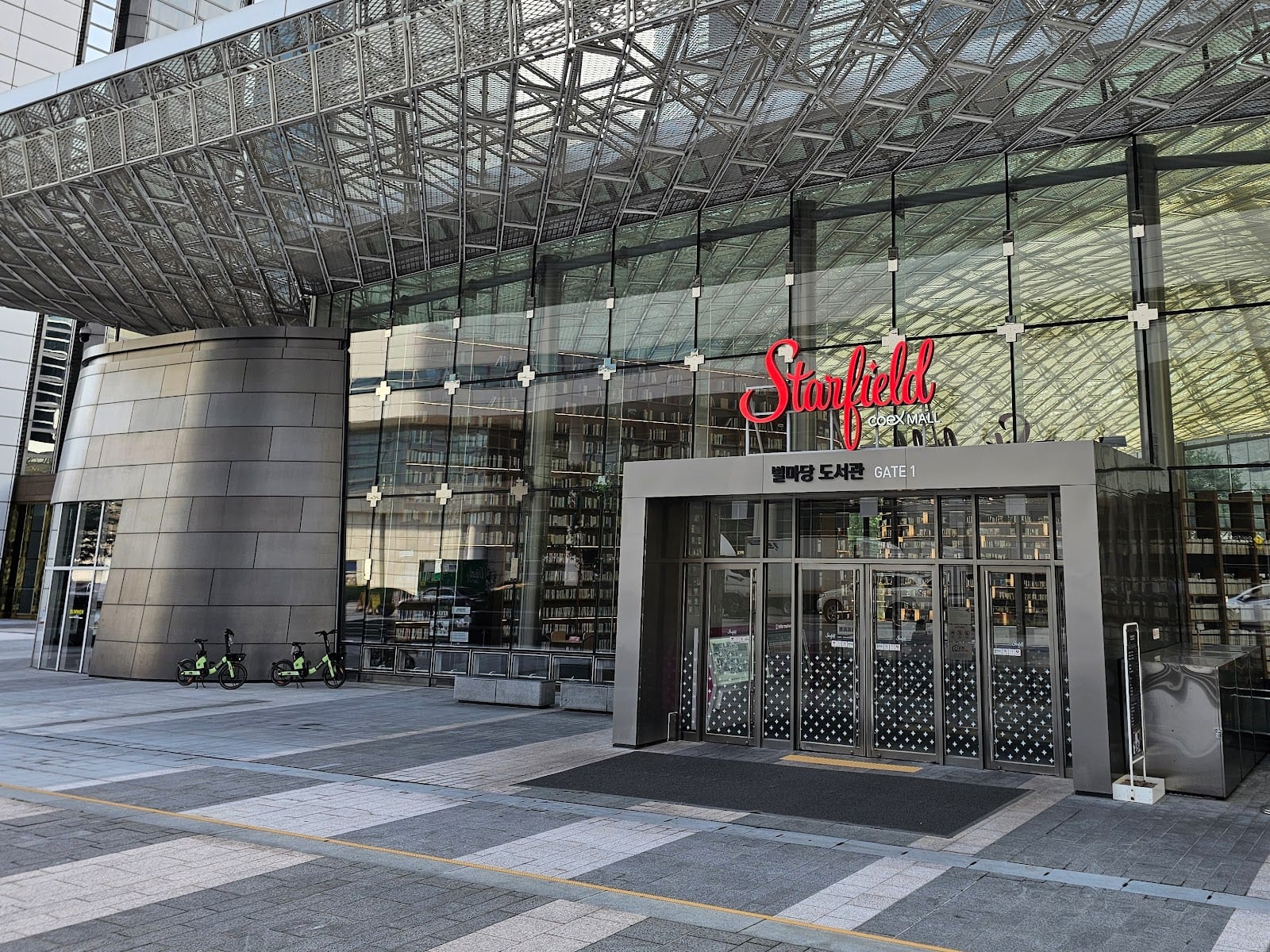
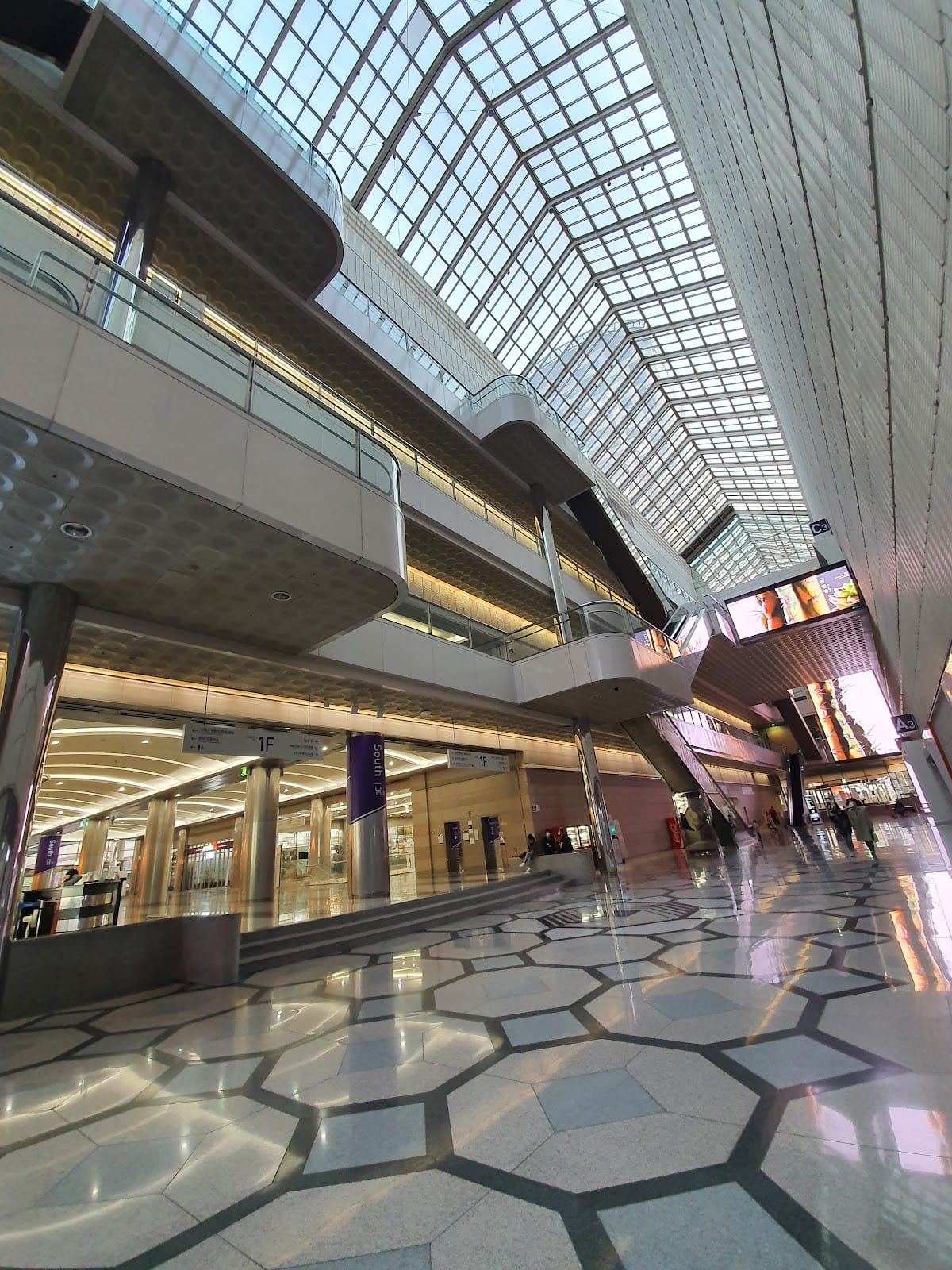
Starfield COEX Mall is Seoul shopping as controlled indoor infrastructure: hundreds of shops, two food courts, a cinema, COEX Aquarium, and a large bookstore under one roof. Its approximately 154,000-square-meter footprint is hard to absorb casually, with about 144,000 square meters on a single underground floor. The strongest non-shopping reason to come is Starfield Library, whose shelves rise about 13 meters and hold 50,000 books, 600 magazines, and e-books. The mall is free to enter and generally open 10:30 to 22:00, with individual stores setting their own hours. Connected to Samseong Station on Line 2 and Bongeunsa Station on Line 9, it is a sensible rainy-day plan. For local-market character, choose elsewhere.
Typical hours: 10:30-22:00; individual shops varyWhere: Underground COEX complex, Samseong-dongGetting there: Samseong Station, Line 2, or Bongeunsa Station, Line 9Extra stop: Starfield Library is free to enter


Start in Myeongdong for the broadest first-day haul, choose Hongdae for individual style, and reserve Dongdaemun for serious fashion browsing after dark. Add Insadong or a traditional market when the souvenirs matter as much as the clothes. Rankings and verdicts are our own; where shown, star ratings open each spot's Google listing, and details shift by season, so confirm before you go.
The big decision
Mainstream brands or independent finds?
The right district depends on whether your shopping list is specific and efficient or open-ended and style-led.

The efficient haul
Start at Myeongdong for K-beauty, mainstream Korean brands, street stalls, and department-store access in one concentrated walk. It is the safest choice when you have limited time.
See more
The style hunt
Give Hongdae a longer wandering window for indie labels, streetwear, thrift shops, buskers, and cafés. It rewards curiosity more than a tightly planned shopping list.
See moreBefore you go
Know before you go
A few practical things that decide whether the day goes smoothly.
Use the subway as your shopping spine
Myeongdong, Hongdae, Dongdaemun, Insadong, and the main Gangnam corridors are easiest by subway. Stations place you close to the action, while driving adds little on pedestrian-heavy streets.
Match the district to the hour
Myeongdong and Hongdae usually come alive around late morning, while Dongdaemun has many fashion venues trading late into the night. Gwangjang's general market closes earlier than its food street, so do not save the full market browse for dinner.
Treat each area as a zone
Shopping is spread across streets, underground centers, department stores, and individual buildings rather than one universal mall. In Dongdaemun, check the exact building before setting out because retail, fabric, and wholesale hours differ.
Carry a card and some cash
Cards are accepted at Gwangjang and Namdaemun, but some Dongdaemun wholesale shops may require cash or minimum quantities. Prices are set by individual stores, and the supplied sources do not establish one citywide bargaining rule.
Check closures before a market visit
Gwangjang's main market and Namdaemun generally close on Sundays, while parts of Dongdaemun's wholesale trade commonly pause between Friday morning and Sunday night. Individual malls and shops can also change hours around Seollal and Chuseok.
Build a sensible neighborhood day
Pair Insadong with Gwangjang or Namdaemun rather than crossing the city for one shop. Keep Gangnam, COEX, and Garosu-gil together, and use Hongdae as its own afternoon-to-evening circuit.

Ready to plan your Seoul trip?
Tell Zoya, your personal travel assistant, how you like to travel, and she'll turn any of this into a day-by-day plan that fits your dates.
Explore now