

Esquilino · Rome neighborhood guide
Things to Do in Esquilino
The multicultural rione south of Termini: a great papal basilica, Rome's largest square, and its most international food market, more lived-in than the tourist center. Here's what's actually worth your time, ranked and judged.
Esquilino in brief
What is the Esquilino known for?
For three things: the Basilica di Santa Maria Maggiore, one of Rome's four great papal basilicas, with 5th-century mosaics and the relic of the Holy Crib; Piazza Vittorio Emanuele II, Rome's largest square, with its arcaded gardens and ancient ruins; and the Nuovo Mercato Esquilino, the covered food market that is the best place in the city for global ingredients. It is the most multicultural quarter in Rome, and its food follows: some of the city's best Chinese, Sri Lankan, and Eritrean cooking is here.
Is Esquilino a good area of Rome to visit?
Yes, for what it is. Esquilino is not the pretty postcard Rome of Trastevere or the center; it is a working, diverse, transit-gateway neighborhood next to Termini station that can feel gritty around the edges. Come for one first-rank basilica, a grand square, a great market, and genuinely good multicultural food, keep an eye on your belongings around the station, and you will see a side of Rome most visitors miss.
Which pope is buried in Santa Maria Maggiore?
Pope Francis, who chose to be buried in the Basilica di Santa Maria Maggiore rather than at the Vatican. He was laid to rest here on 26 April 2025, in a simple tomb marked only Franciscus, in a side aisle near the chapel he often visited. He is the first pope buried outside the Vatican in over a century, and the tomb has become a place of quiet pilgrimage. The basilica also holds the tombs of several earlier popes and of the sculptor Gian Lorenzo Bernini.
Get oriented
How the Esquilino fits together
The Esquilino is the rione directly south and east of Termini station, laid out on a grid after 1870 as the administrative quarter of the new Italian capital.
Two landmarks anchor it. At the northern edge, on the crown of the Esquiline Hill between Termini and the center, stands the Basilica di Santa Maria Maggiore. A few blocks south is Piazza Vittorio Emanuele II, the huge arcaded square that is the social heart of the neighborhood, with the covered Nuovo Mercato Esquilino a block off it. Because Rome laid out this quarter fresh in the 1870s in a stately Turin-style grid, it looks different from the medieval tangle elsewhere: long straight streets, uniform porticoed blocks, and more space. Fanning east toward the railway lines are the ancient fragments, Porta Maggiore, the ruined dome of the Temple of Minerva Medica, and the underground basilica. Almost everything here is a flat ten to fifteen minute walk, and two metro lines meet at Termini and Vittorio Emanuele. Note that this is Rome's most diverse district, home to large Chinese, South Asian, and African communities, which is exactly why the food is so good and so unlike anywhere else in the city.
A half-day loop on foot, from the basilica down through the square and market to the ancient ruins by the railway:
See & do, ranked
The best things to do in Esquilino
Our honest ranking of what is worth your time in the Esquilino, from the one unmissable basilica to the ancient ruins hiding by the tracks, with a verdict on each so you know what to prioritize and what to skip.
Must-see
The essentials, ranked.- 1
 Piazza di Santa Maria Maggiore Worth it
Basilica di Santa Maria Maggiore
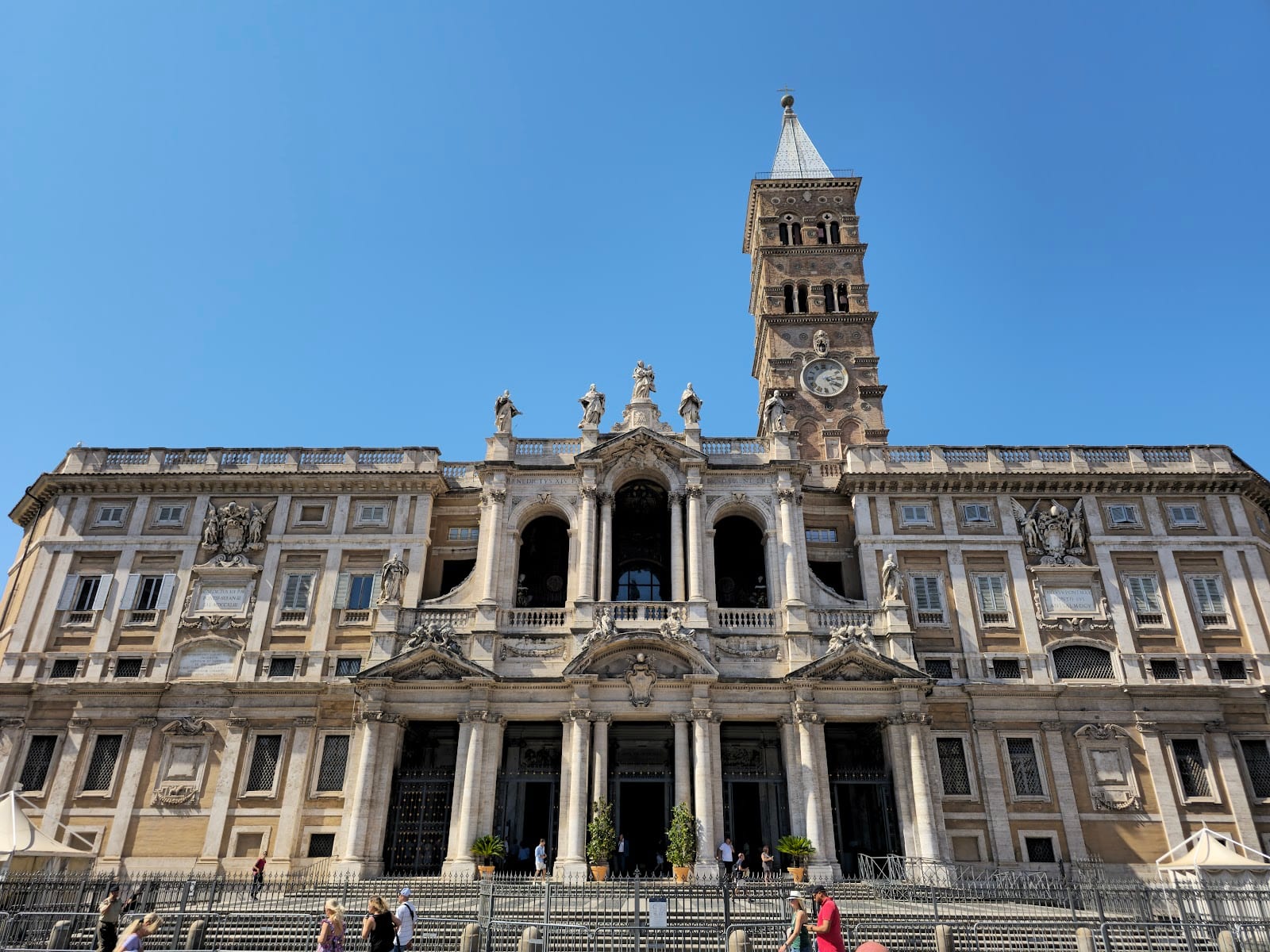
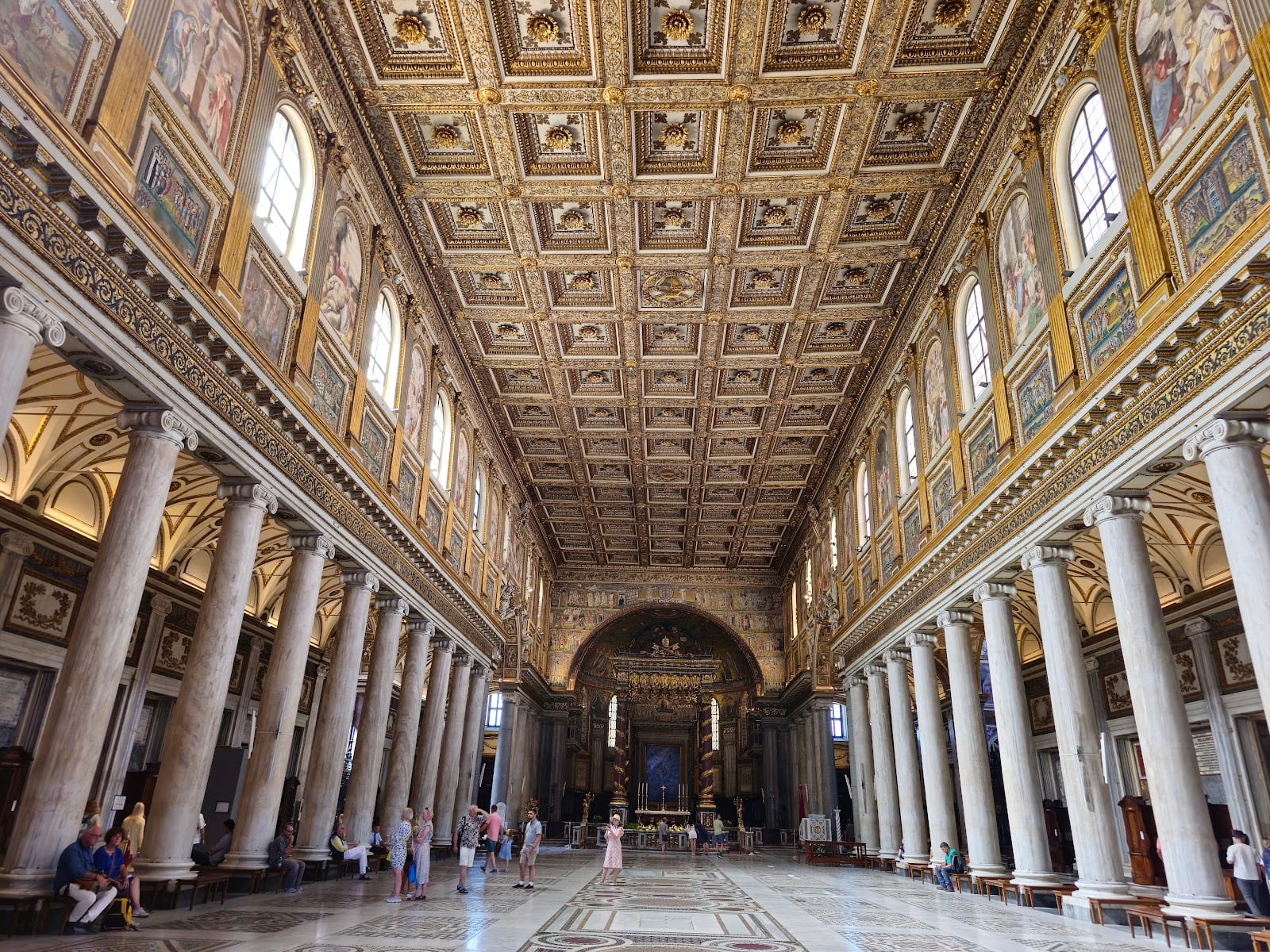
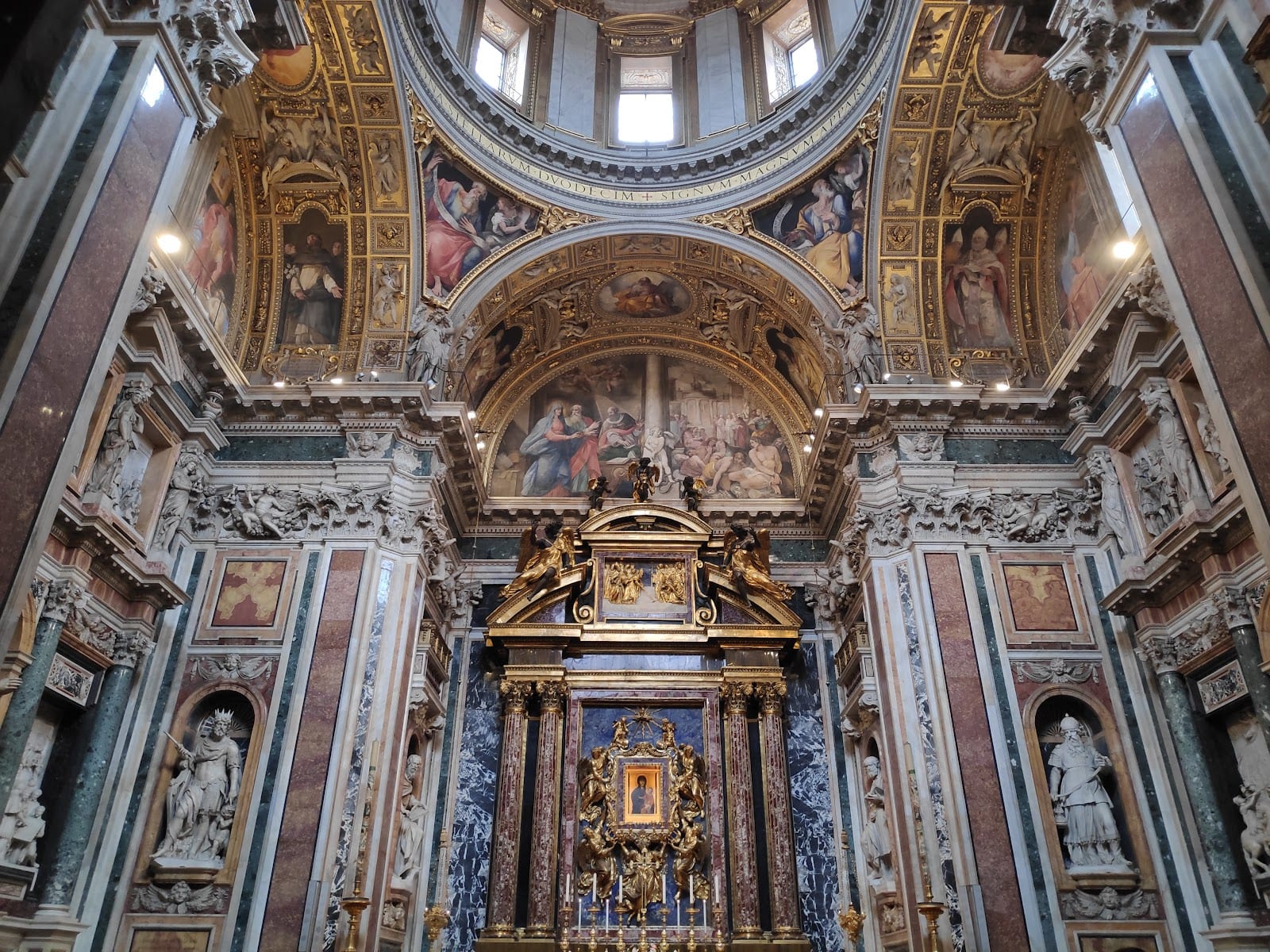
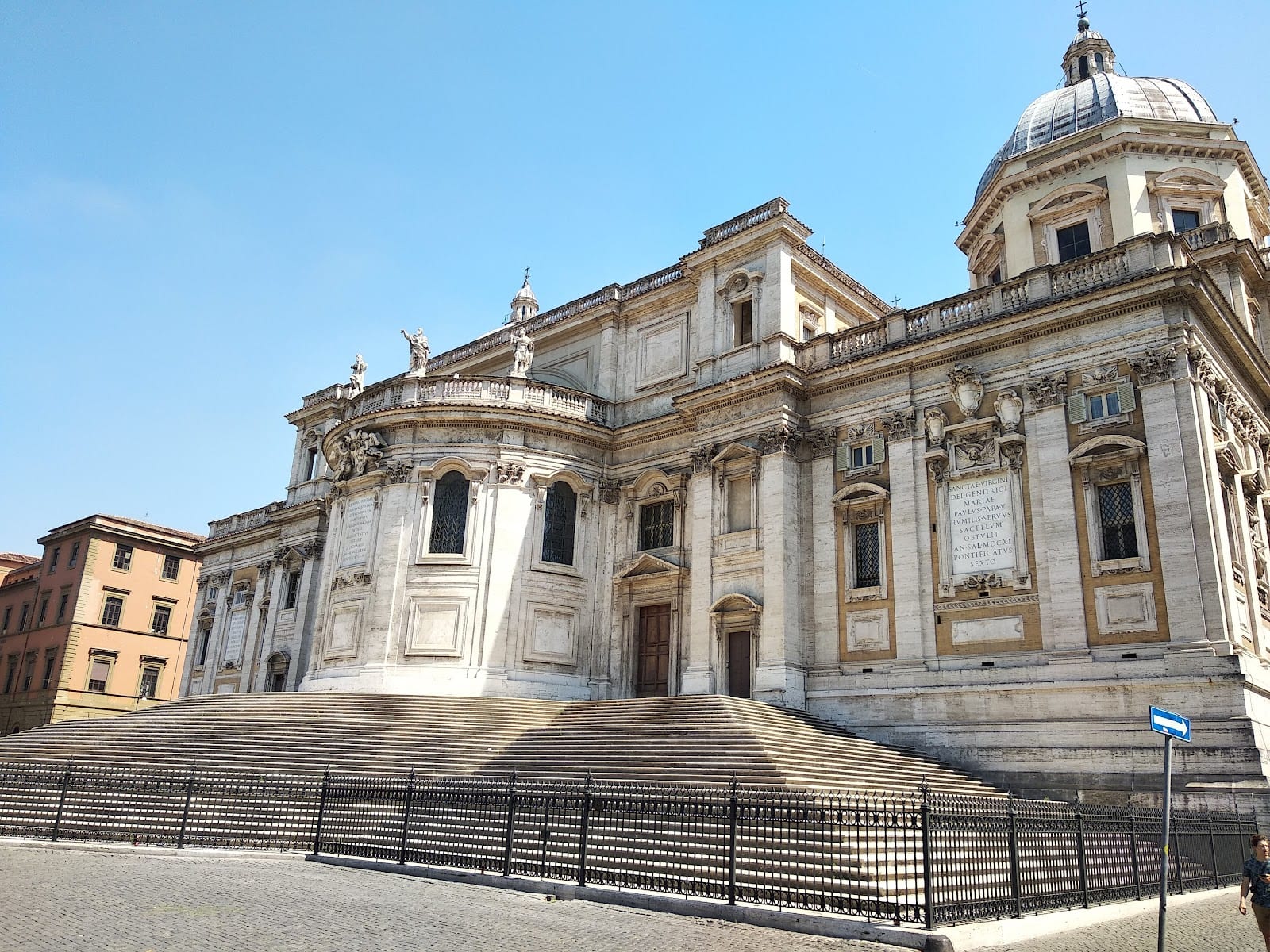
One of Rome's four great papal basilicas, with 5th-century mosaics and, since 2025, the tomb of Pope Francis.
This is the reason to come to the Esquilino. Santa Maria Maggiore is one of the four papal major basilicas of Rome, alongside St Peter's, St John Lateran, and St Paul Outside the Walls, and it is the least crowded and most rewarding of them to simply walk into. Built after the Council of Ephesus of 431 declared Mary the Mother of God, it keeps a band of glittering 5th-century mosaics of Old Testament scenes running high along the nave, and more from the time of Pope Sixtus III on the triumphal arch. The coffered ceiling, by tradition, was gilded with the first gold brought back from the Americas, a gift of the Spanish monarchs. Under the high altar, a crystal reliquary holds wooden fragments venerated as the Holy Crib, the manger of the Nativity. Its founding legend is the miracle of the snow: tradition says snow fell on the Esquiline on the morning of 5 August, in the 4th century, tracing the outline of the church to come, and every 5 August white petals are still showered down inside to mark it. In April 2025 Pope Francis was buried here in a plain tomb marked only Franciscus, the first pope in over a century to be laid to rest outside the Vatican, and it has drawn a steady stream of visitors since. The basilica itself is free; the museum, loggia mosaics, and archaeological area are separate ticketed visits. Dress modestly, as for any working church.
Daily, roughly 7:00 AM – 6:45 PMGood for couples, families, solo
- 2
 Piazza Vittorio Emanuele II Worth it
Piazza Vittorio Emanuele II
Rome's largest square, arcaded like Turin, with a garden hiding ancient ruins and an alchemists' door.
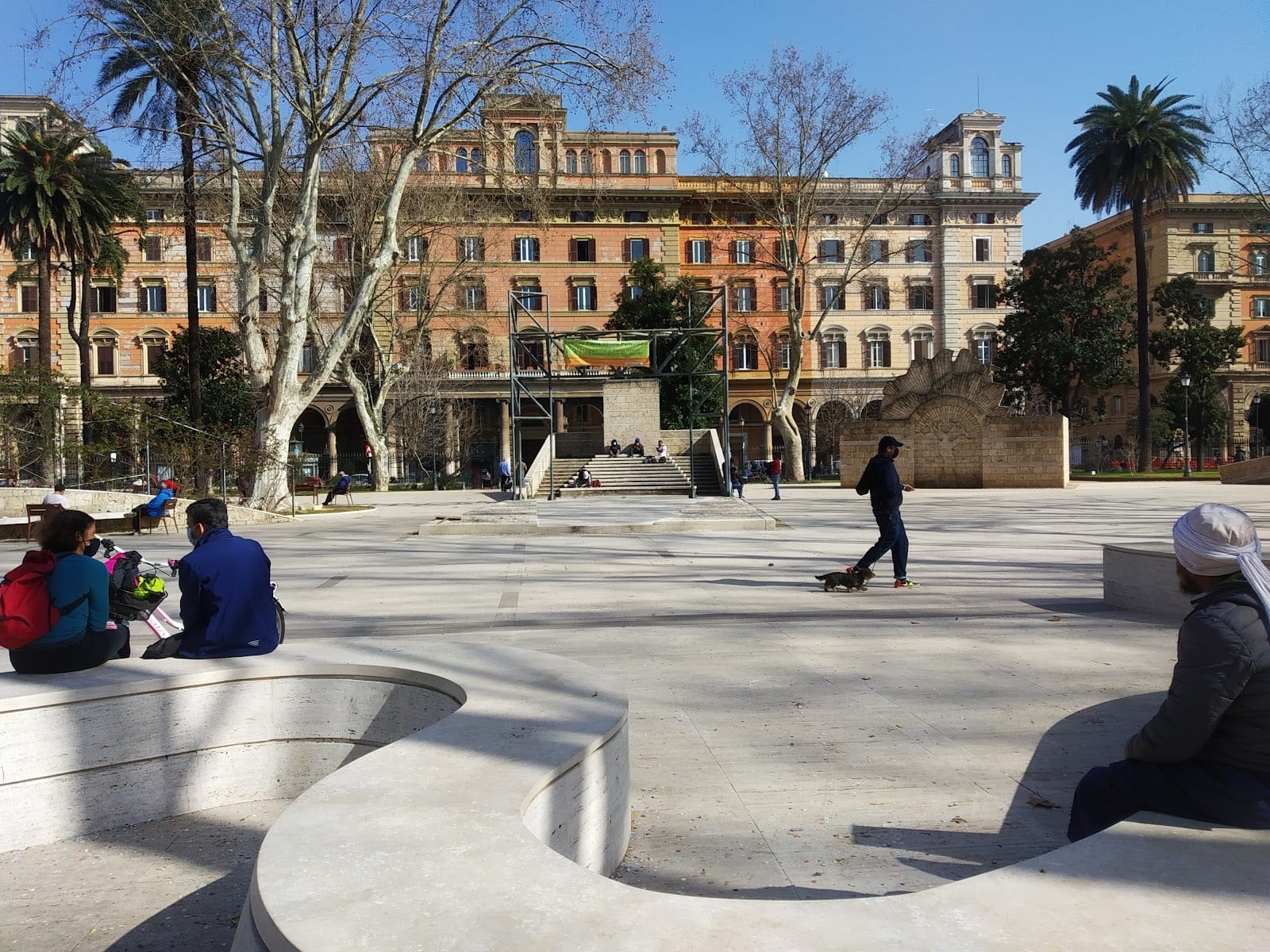
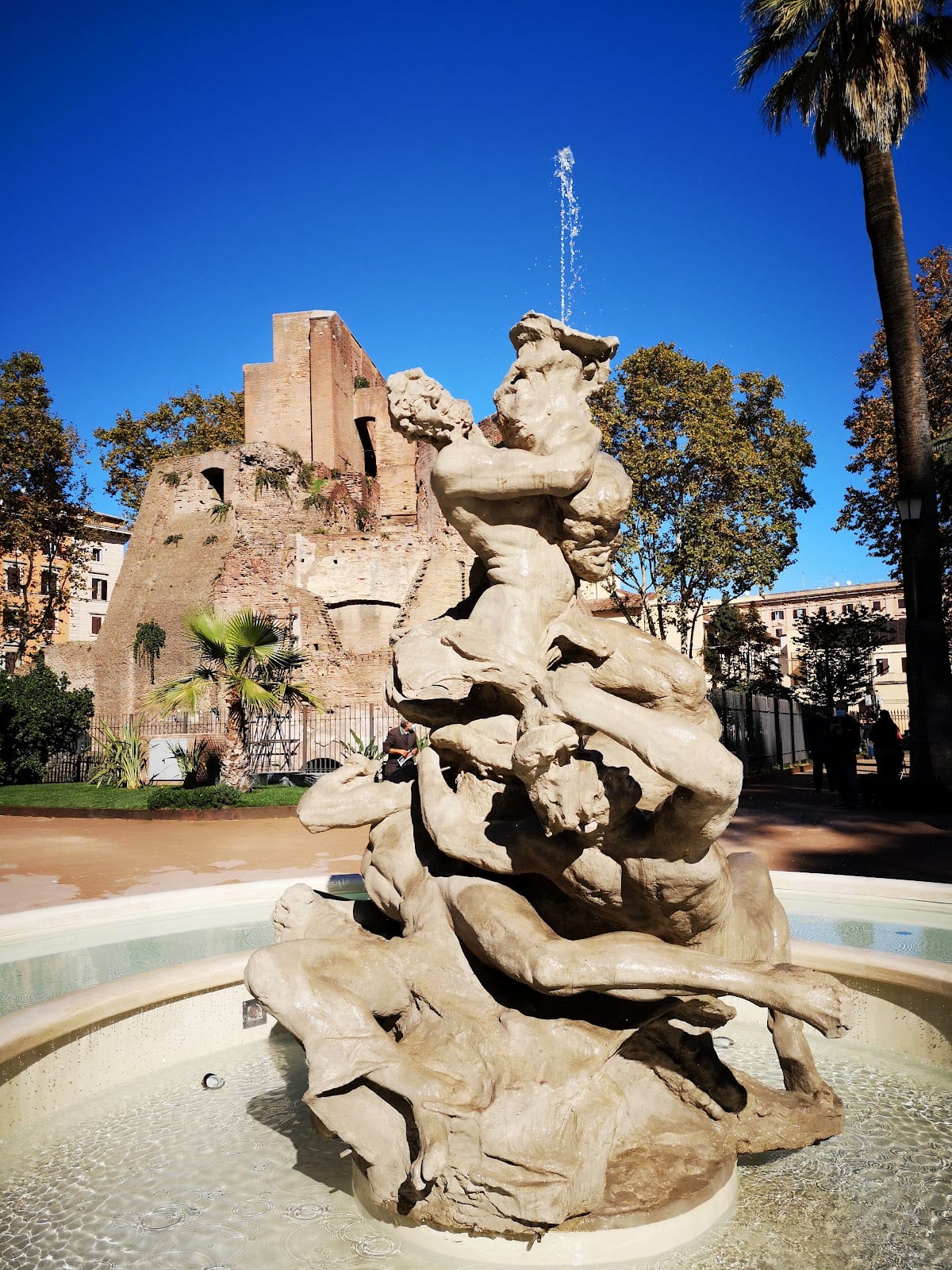
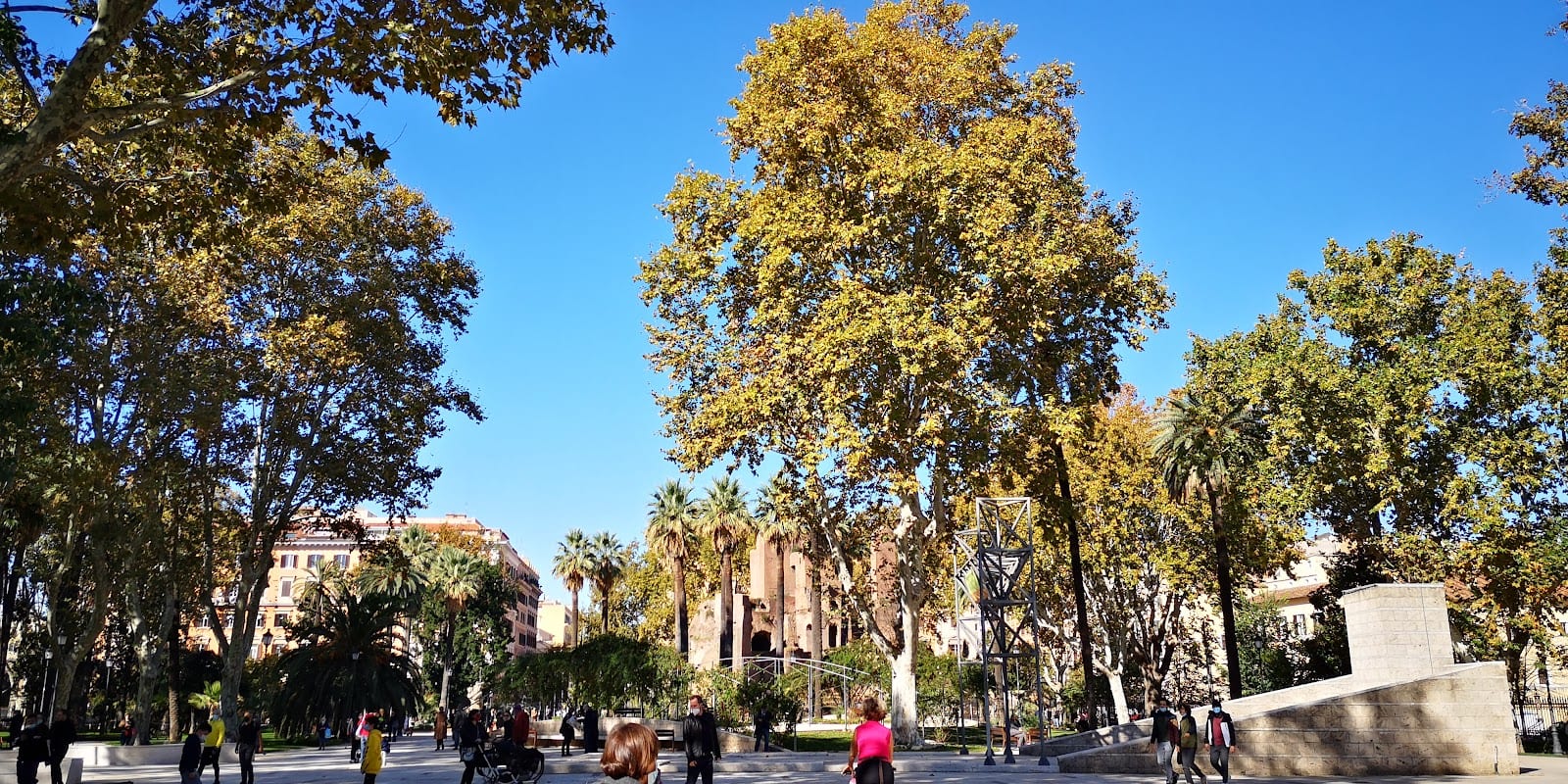
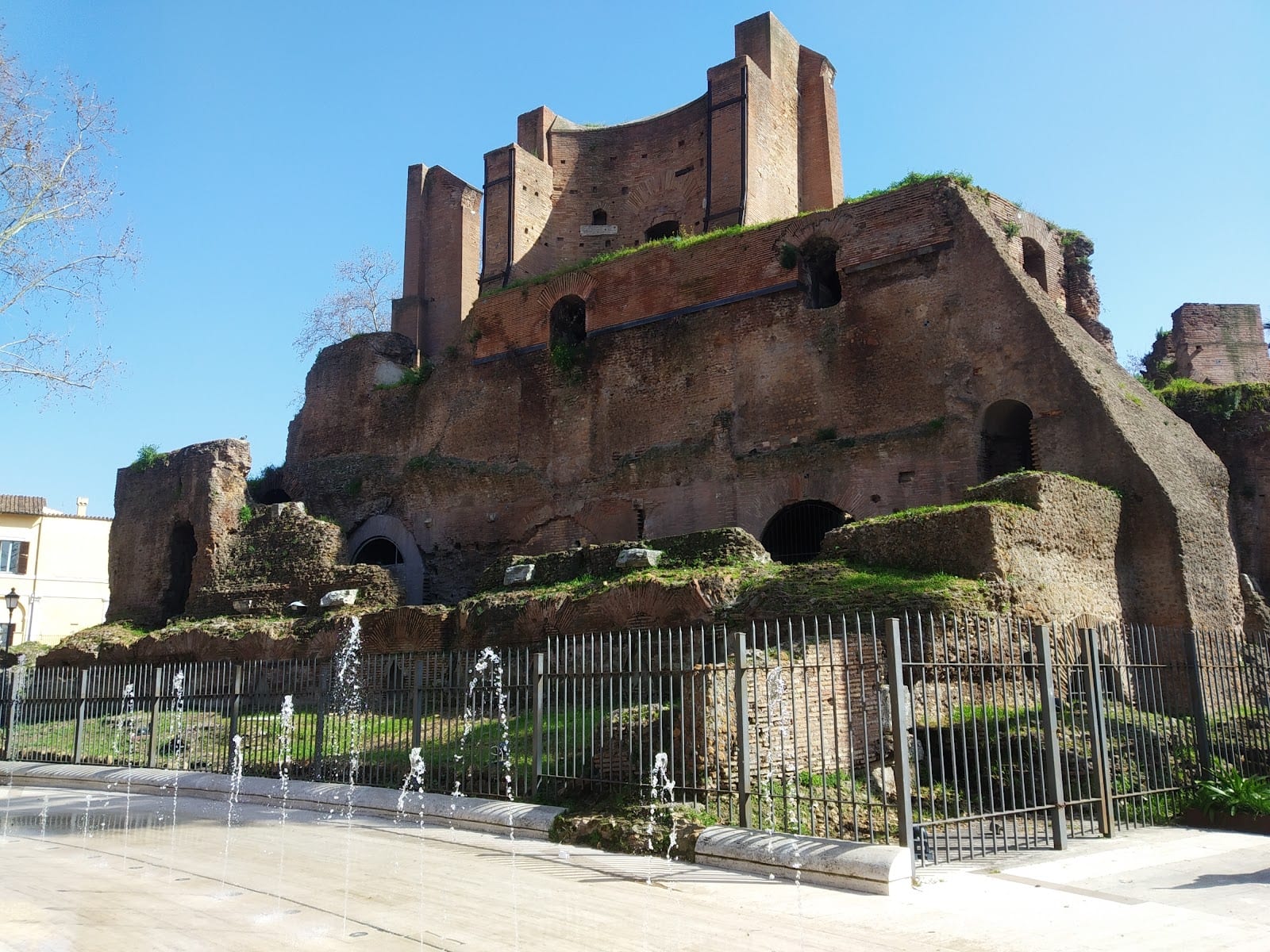
Piazza Vittorio is the biggest square in Rome and the beating heart of the Esquilino. When the capital moved to Rome after 1870, architects led by Gaetano Koch ringed it with uniform porticoed blocks in a northern, Turin-inspired style, which is why it feels unlike anywhere else in the city. At its center is a public garden, and the garden holds two surprises. One is the Trofei di Mario, the towering brick ruin of a monumental 3rd-century Roman fountain, long and wrongly nicknamed for the general Marius. The other is the Porta Magica, or Alchemical Door, the only one of its kind in Rome: a 17th-century doorway, all that survives of the Villa Palombara, carved with cryptic alchemical and Kabbalistic symbols and flanked by two grotesque statues of the Egyptian god Bes. The square is also the symbolic center of Rome's most international community, and its story is a musical one: the multi-ethnic Orchestra di Piazza Vittorio was formed here in 2002 from the neighborhood's immigrant musicians. It is free and open at all hours; come by day to sit in the garden and find the ruins and the door.
Free40 minOpen 24 hoursGood for couples, families, solo
Sourcesturismoroma.itturismoroma.it
- 3
 Via Principe Amedeo Worth it
Nuovo Mercato Esquilino
The most international food market in Rome, and the best place in the city for global ingredients.
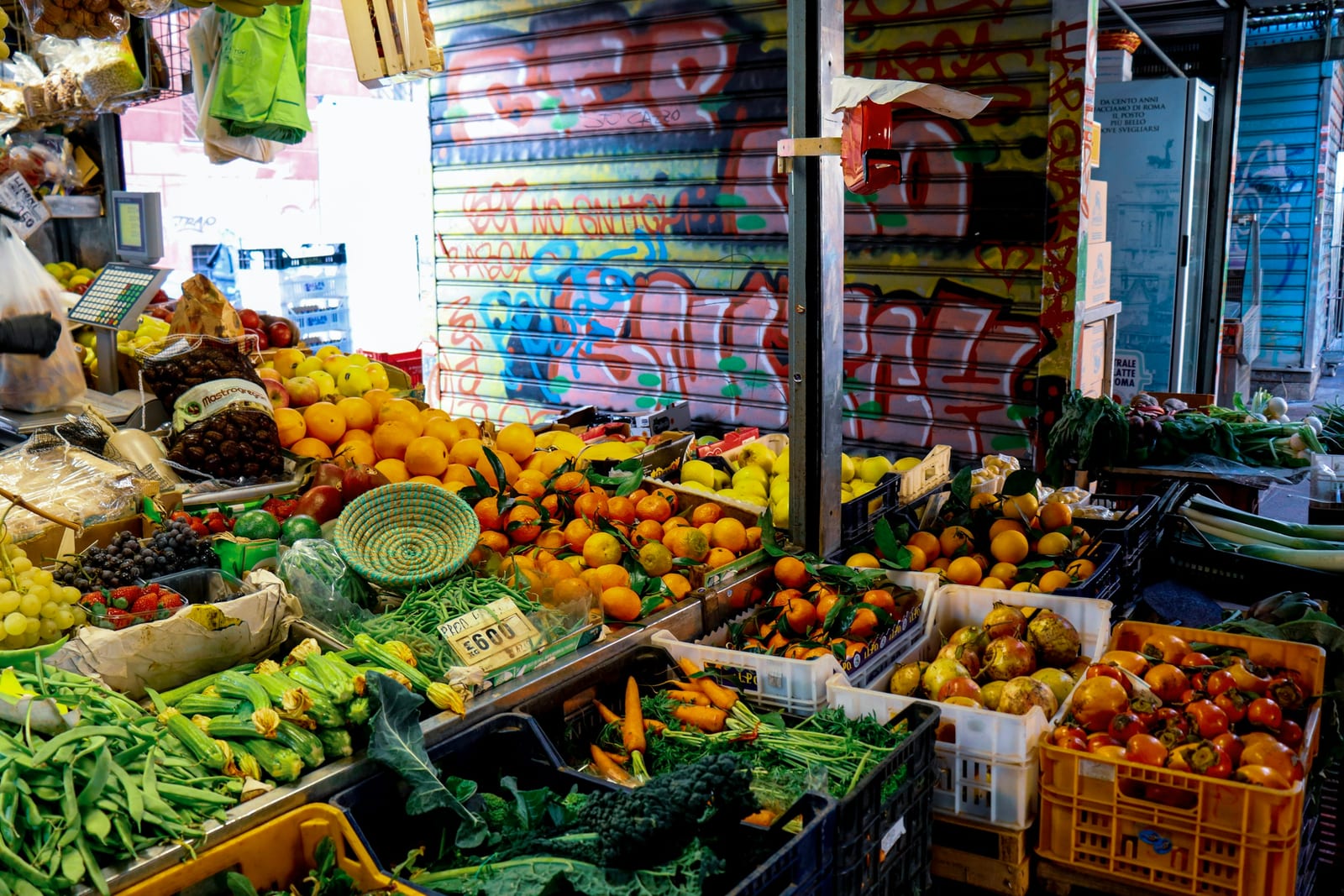
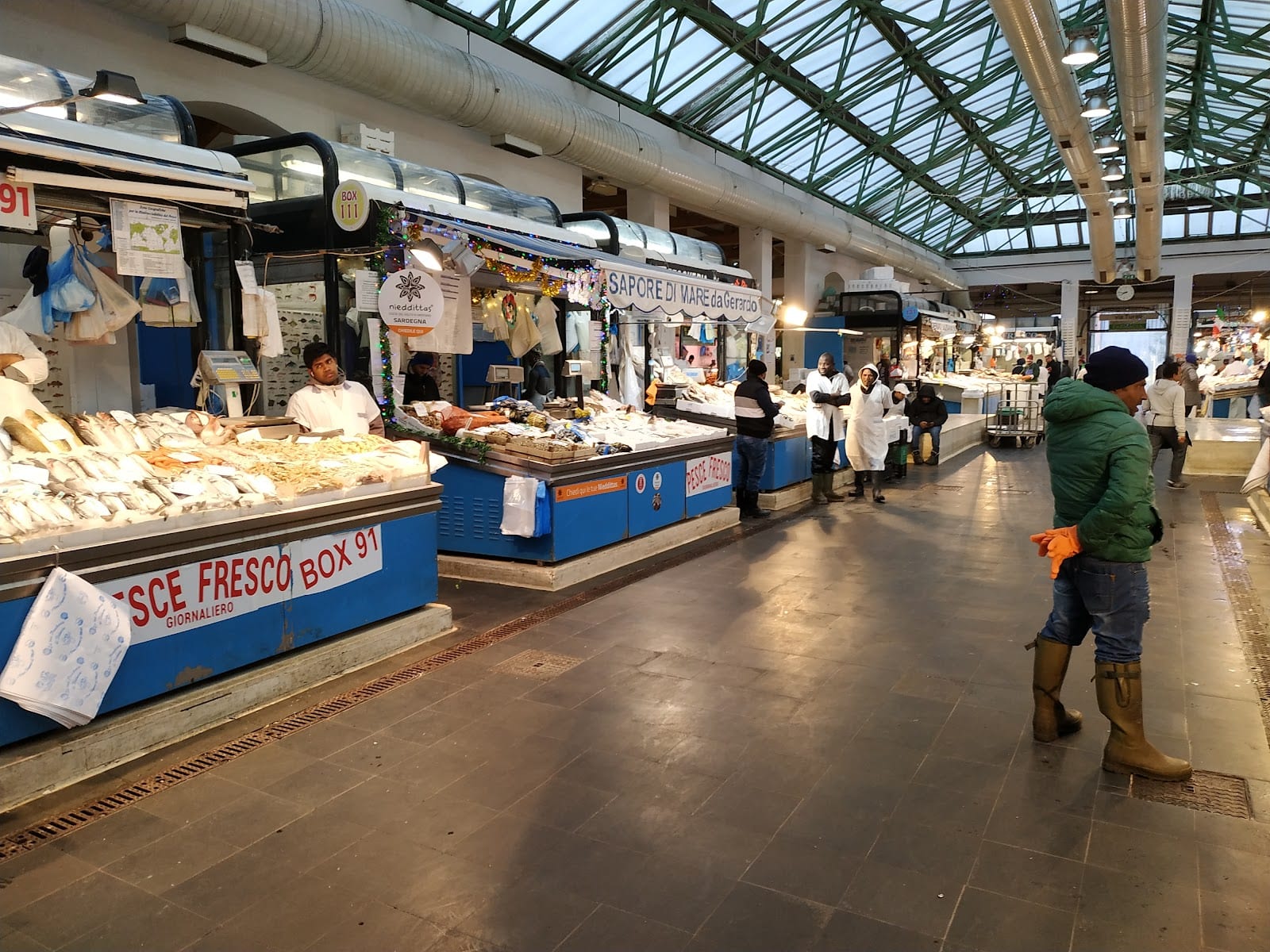
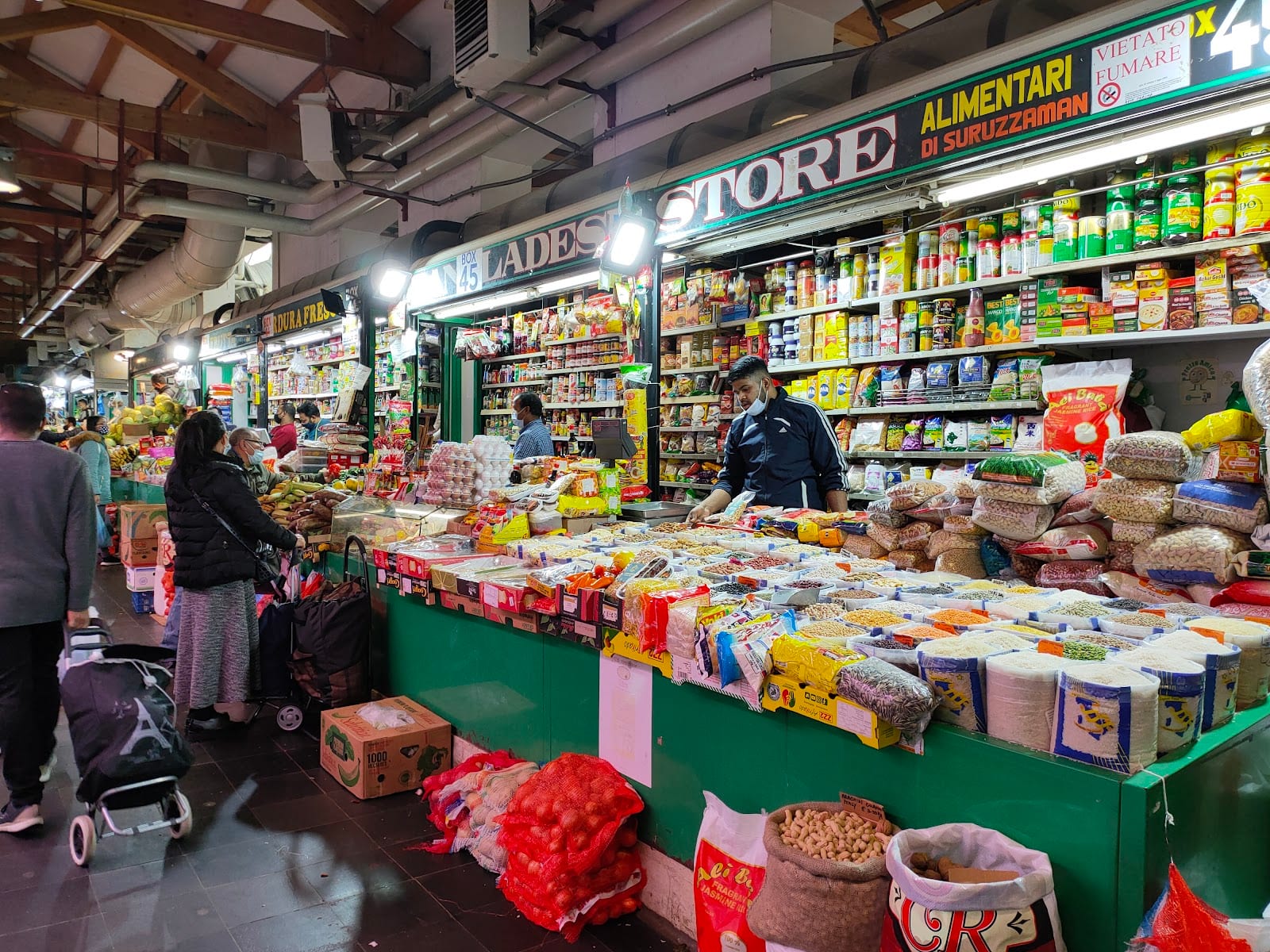
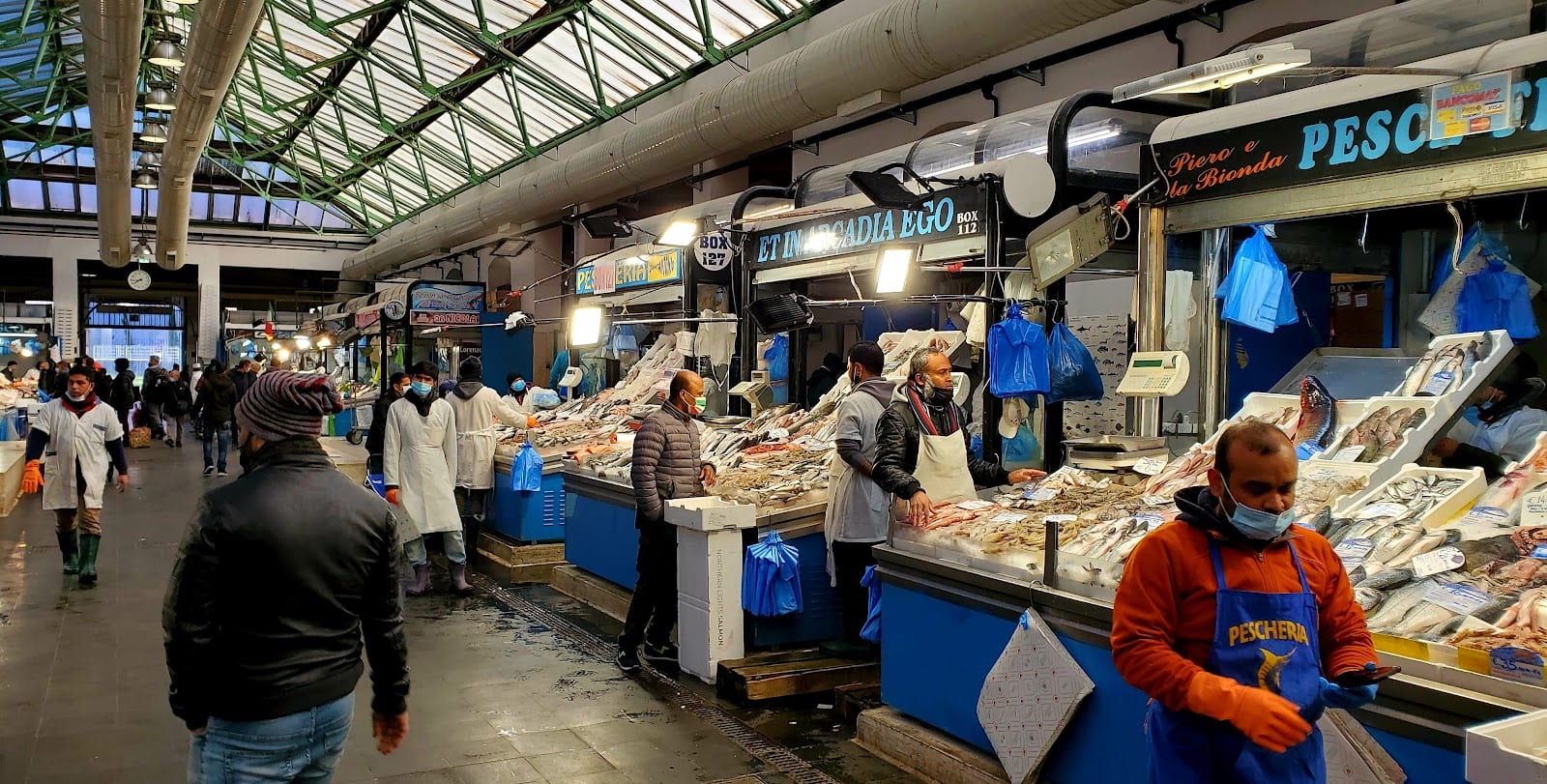
If you want to understand the Esquilino in twenty minutes, come here. The Nuovo Mercato Esquilino is the covered market that moved off Piazza Vittorio in 2001 and into the old Sani barracks a block away, with entrances on Via Principe Amedeo, Via Turati, and Via Mamiani. It has always been, in the market's own words, the most multicultural market in Rome: a hall where Lazio farm produce, halal butchers, a superb fresh-fish counter, Chinese greens, South Asian spices, and African and Middle Eastern goods trade side by side. For a home cook it is the single best place in the city to find ingredients you cannot get anywhere else, and even if you are only browsing, the color and the sheer range are the point. Come mid-morning when it is fullest. It is free to walk through, open Monday to Saturday from very early until early or mid-afternoon, and closed on Sundays.
Mon–Sat, roughly 6:00 AM – 3:00 PM (later some days); closed SunGood for couples, families, friends
Sourcesmarketsofrome.com


Worth it with more time
Good additions once you've done the icons.- 1
 Piazza di Porta Maggiore Worth it
Porta Maggiore
A monumental 1st-century gate where two aqueducts crossed, with a strange baker's tomb beside it.
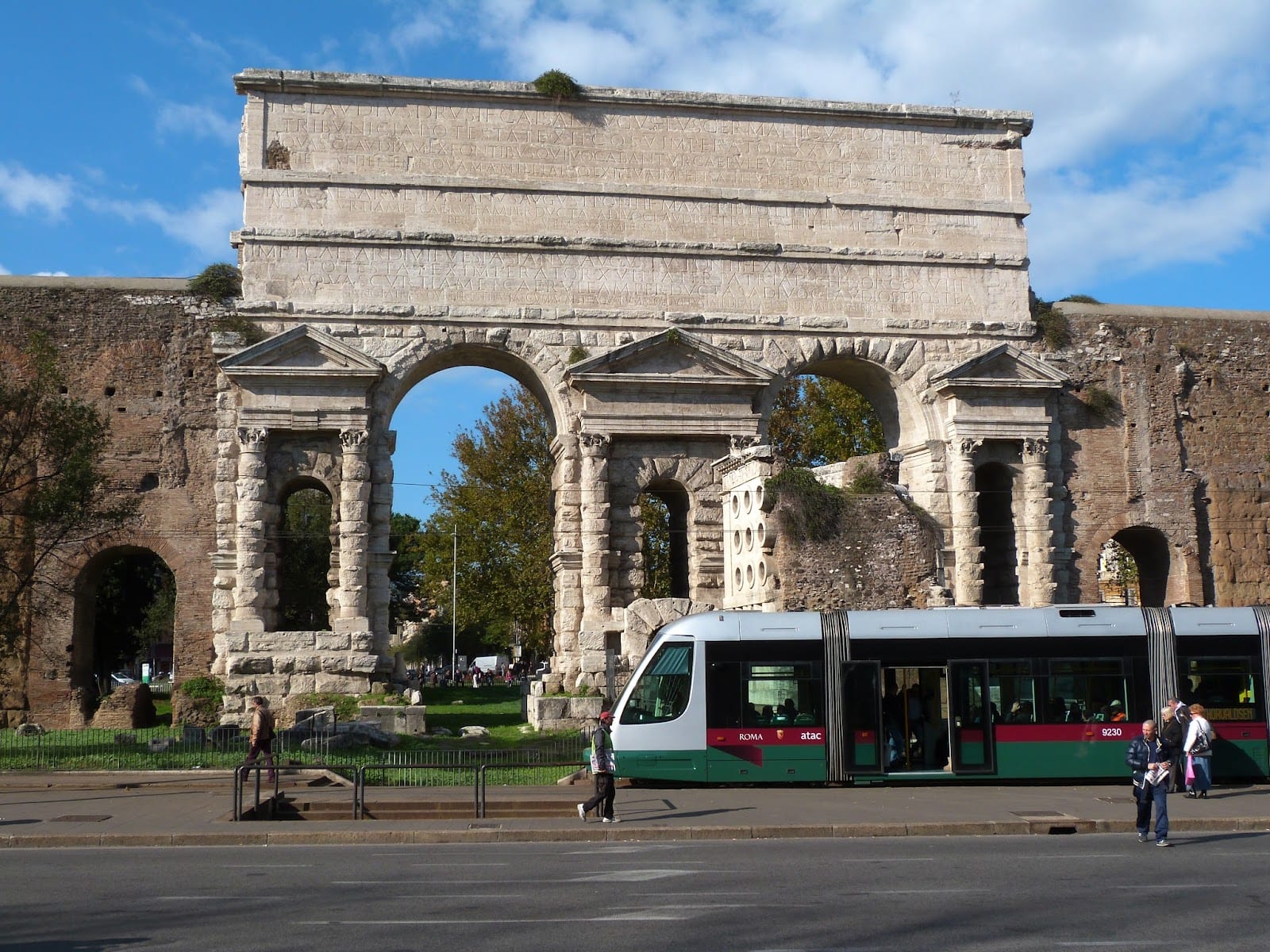
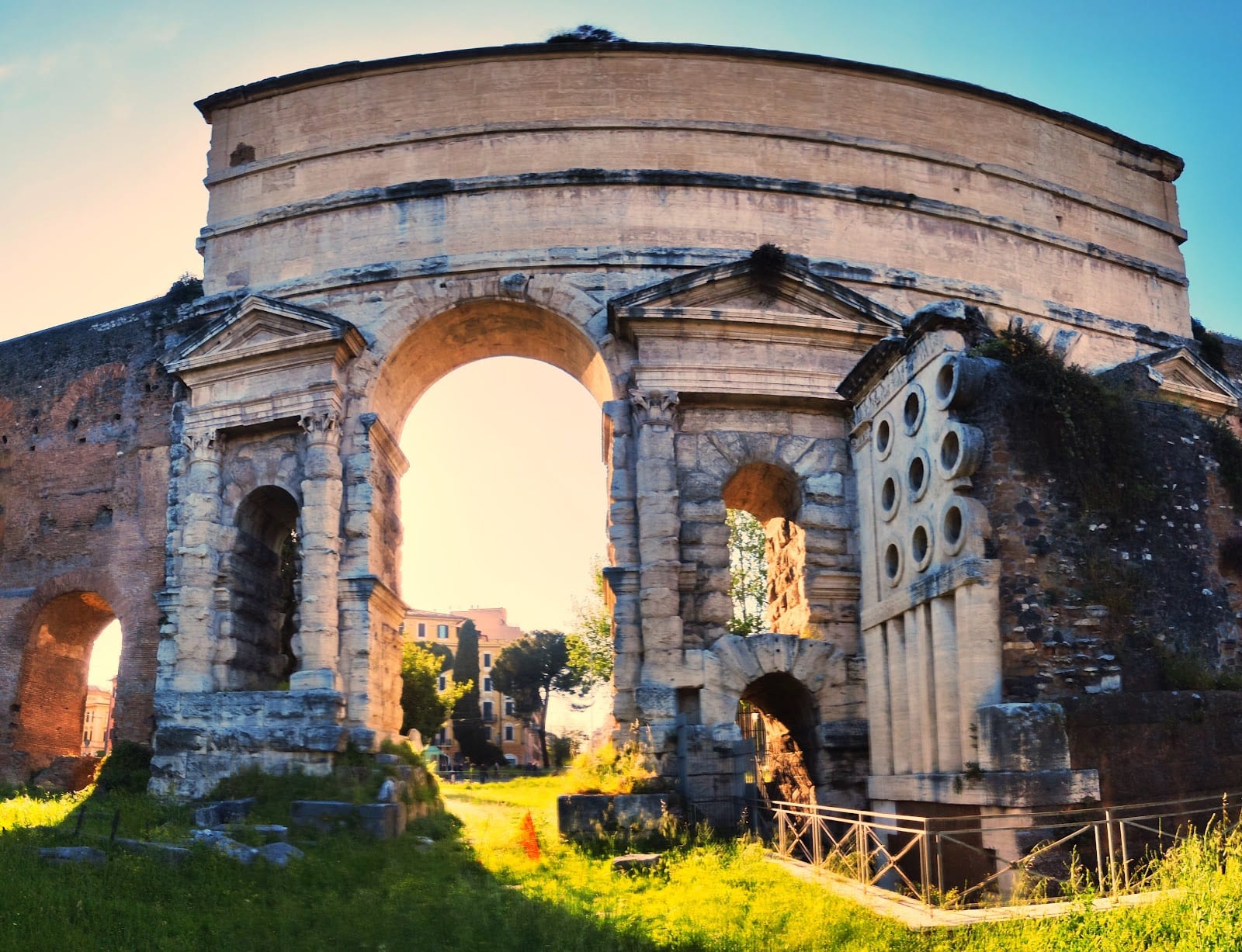
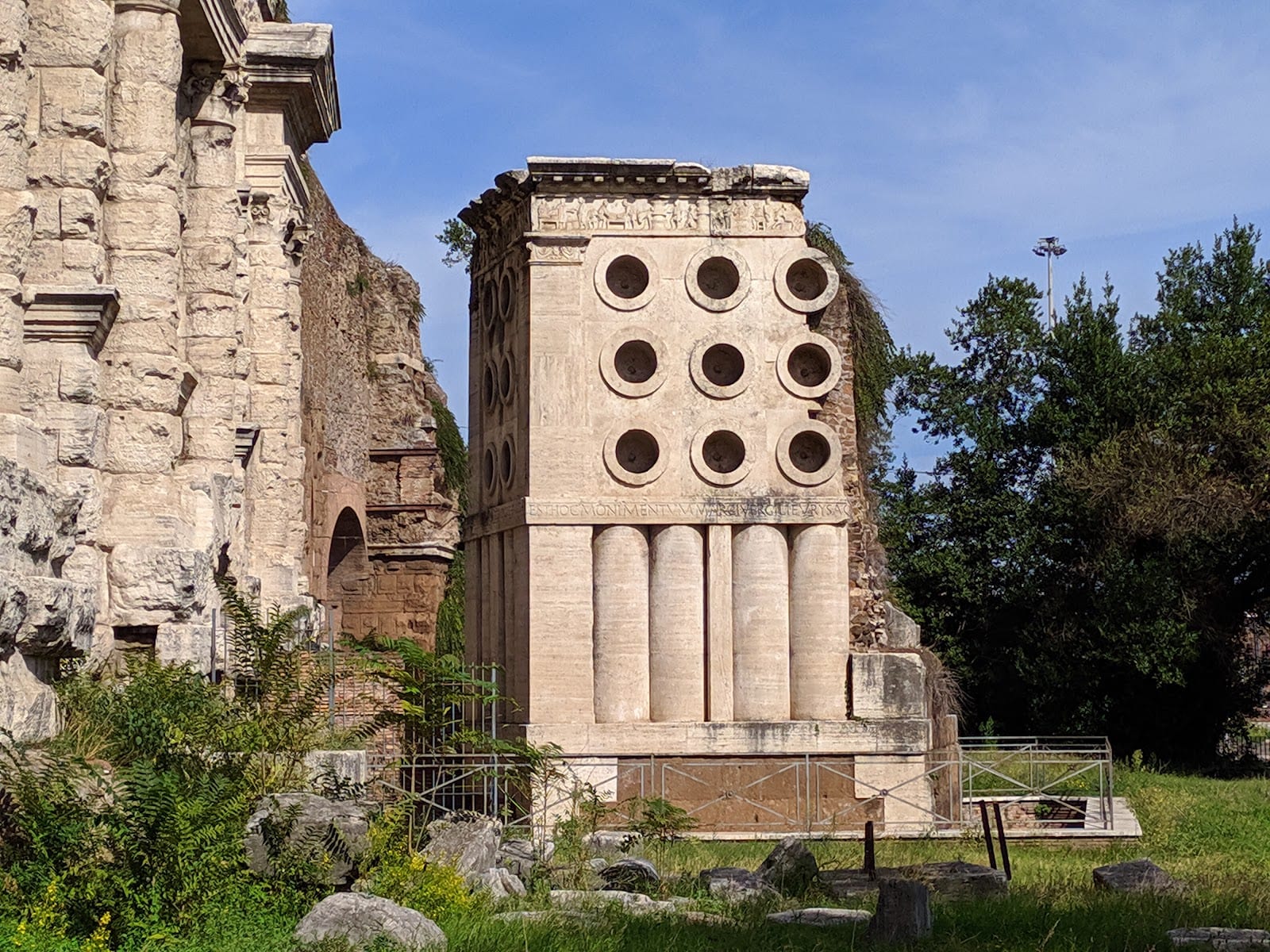
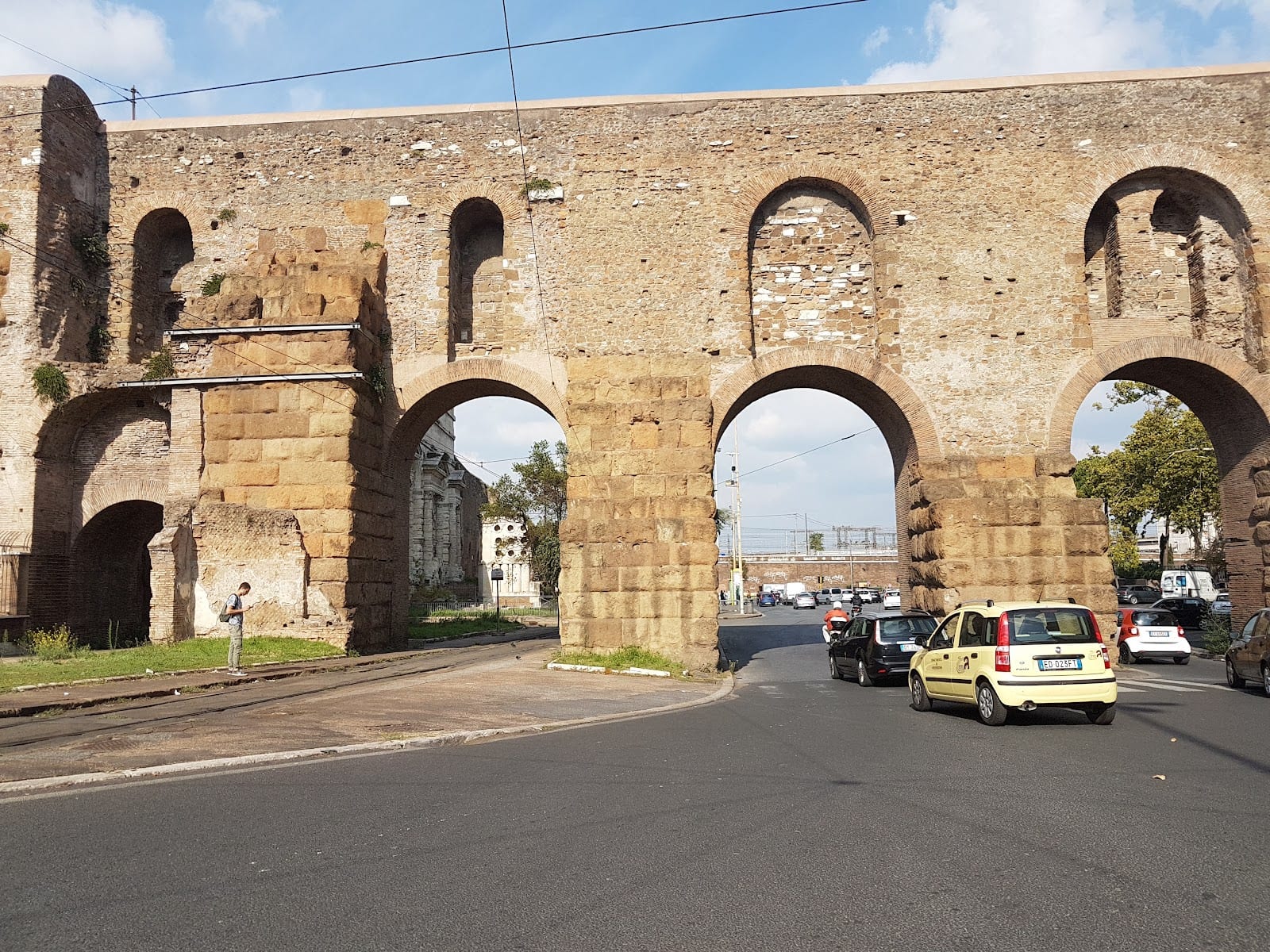
At the eastern edge of the Esquilino, marooned on a traffic island where the trams pass, stands one of Rome's most imposing ancient gates. Porta Maggiore was built in white travertine by the emperor Claudius in 52 AD, not as a gate at first but to carry two aqueducts, the Aqua Claudia and the Anio Novus, over the roads below. Its blocks were left deliberately rough, and the effect up close is huge and severe. Right beside it is one of the oddest monuments in the city: the Tomb of Eurysaces the Baker, from the last decades of the Roman Republic, its facade covered in the round openings of a baking oven, a self-made businessman's proud advertisement in stone. You see both for free from the street in a few minutes, and it pairs naturally with the underground basilica a step away.
Open 24 hours (viewed from the street)Good for couples, solo, families
- 2
 Via Giovanni Giolitti Mixed
Temple of Minerva Medica
A huge ten-sided domed ruin by the tracks, misnamed for a temple it never was.
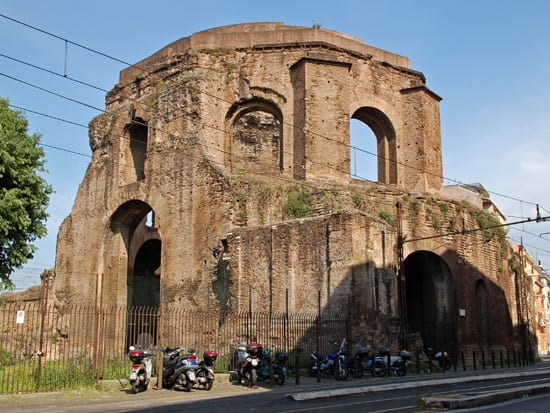
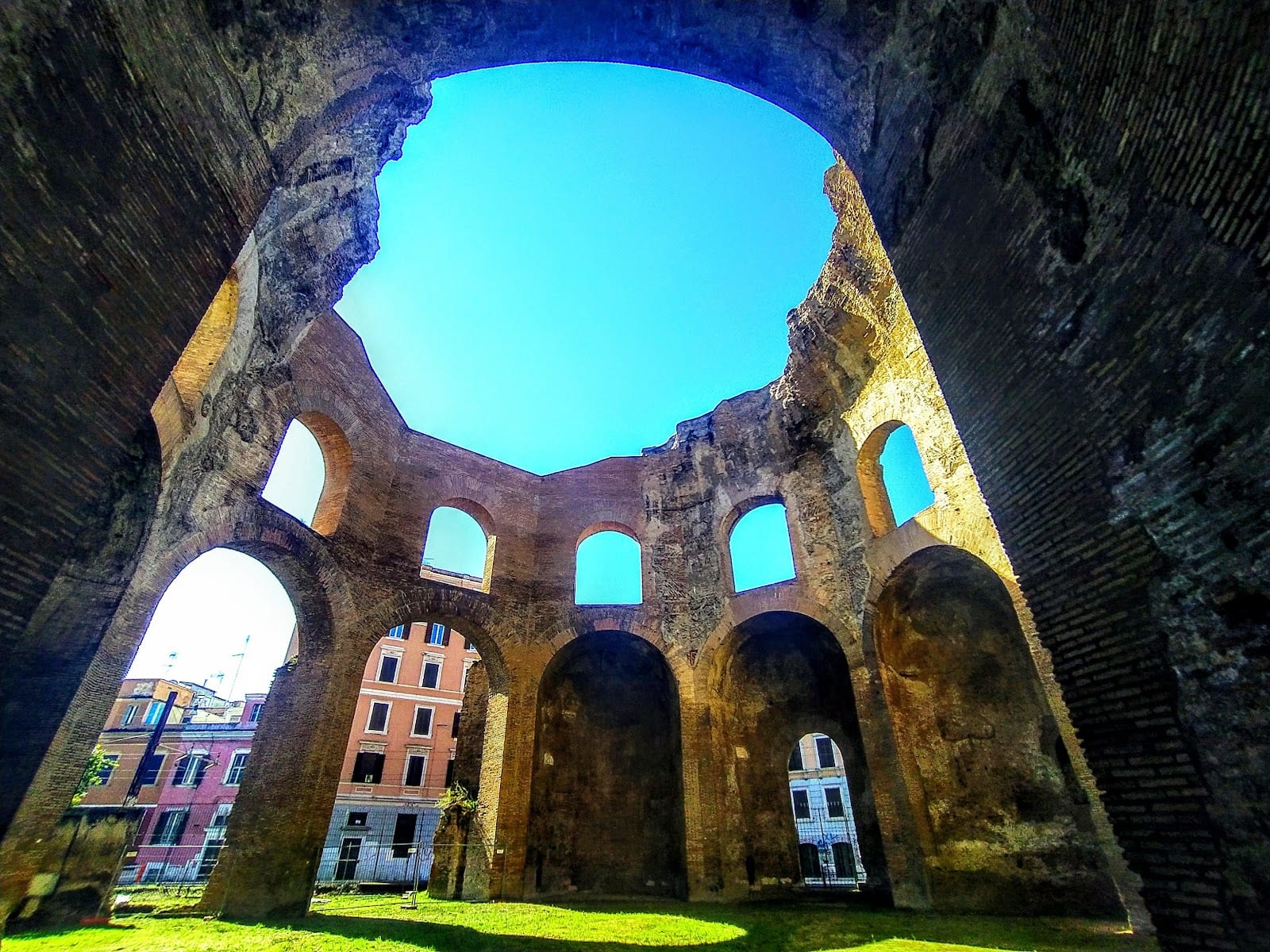
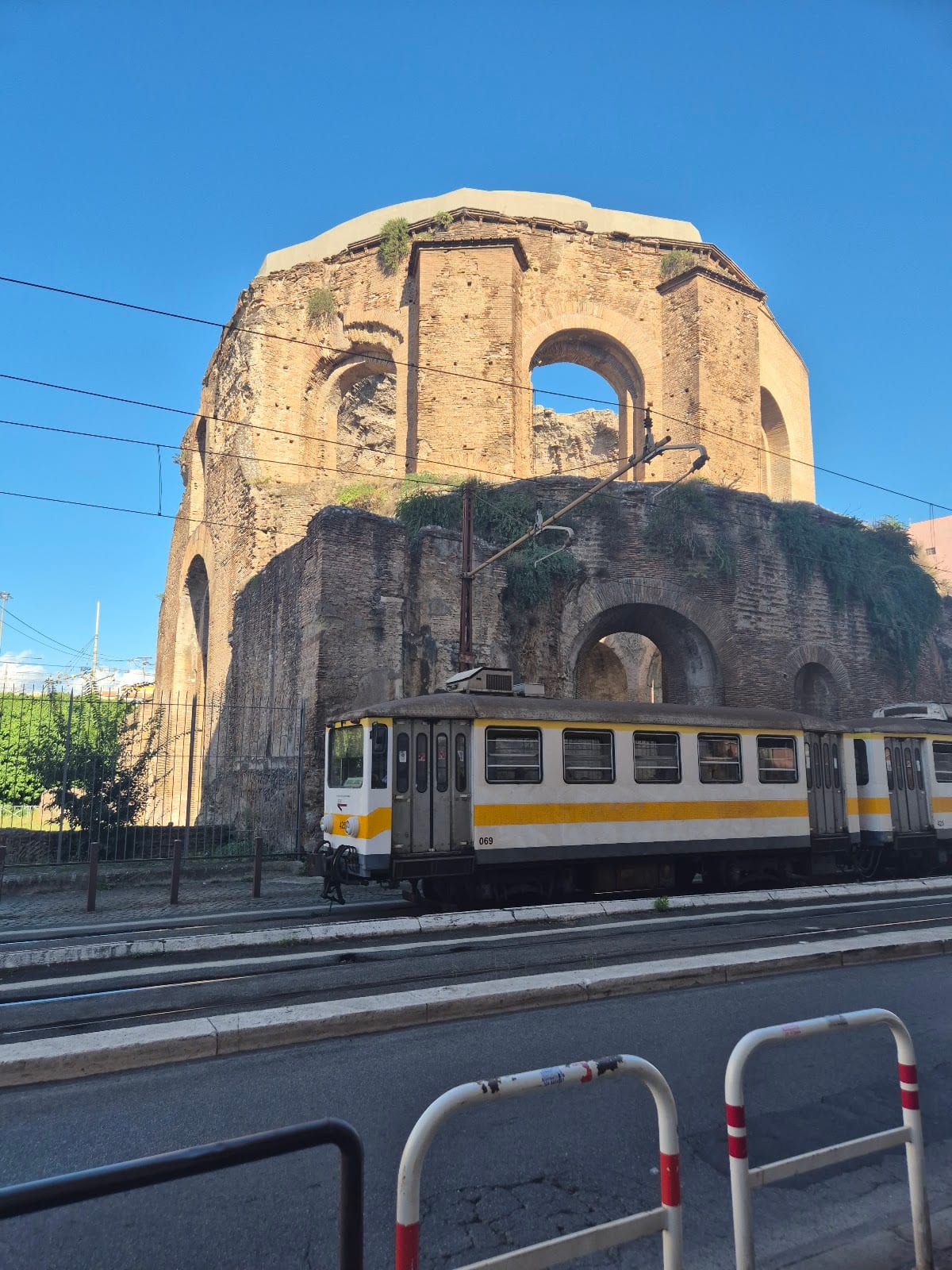
Rising beside the railway lines just east of Piazza Vittorio is a great decagonal brick ruin, ten-sided and once domed, that antiquarians of the 17th century wrongly christened the Temple of Minerva Medica. Modern scholars agree it was no temple but a grand nymphaeum, a monumental fountain-pavilion of the late 3rd or early 4th century, part of the Horti Liciniani, the Licinian imperial gardens on the Esquiline. Its dome, one of the largest to survive from antiquity before it partly collapsed in 1828, was studied by Renaissance architects for how it stood. The honest catch is that it sits fenced and stranded among railway tracks and traffic, so you admire it from the outside rather than visit it, which makes it a striking detour for anyone drawn to ruins and skippable for anyone who is not.
Viewed from the street; interior not generally openGood for couples, solo
Sourcesen.wikipedia.org
- 3
 Largo Leopardi Mixed
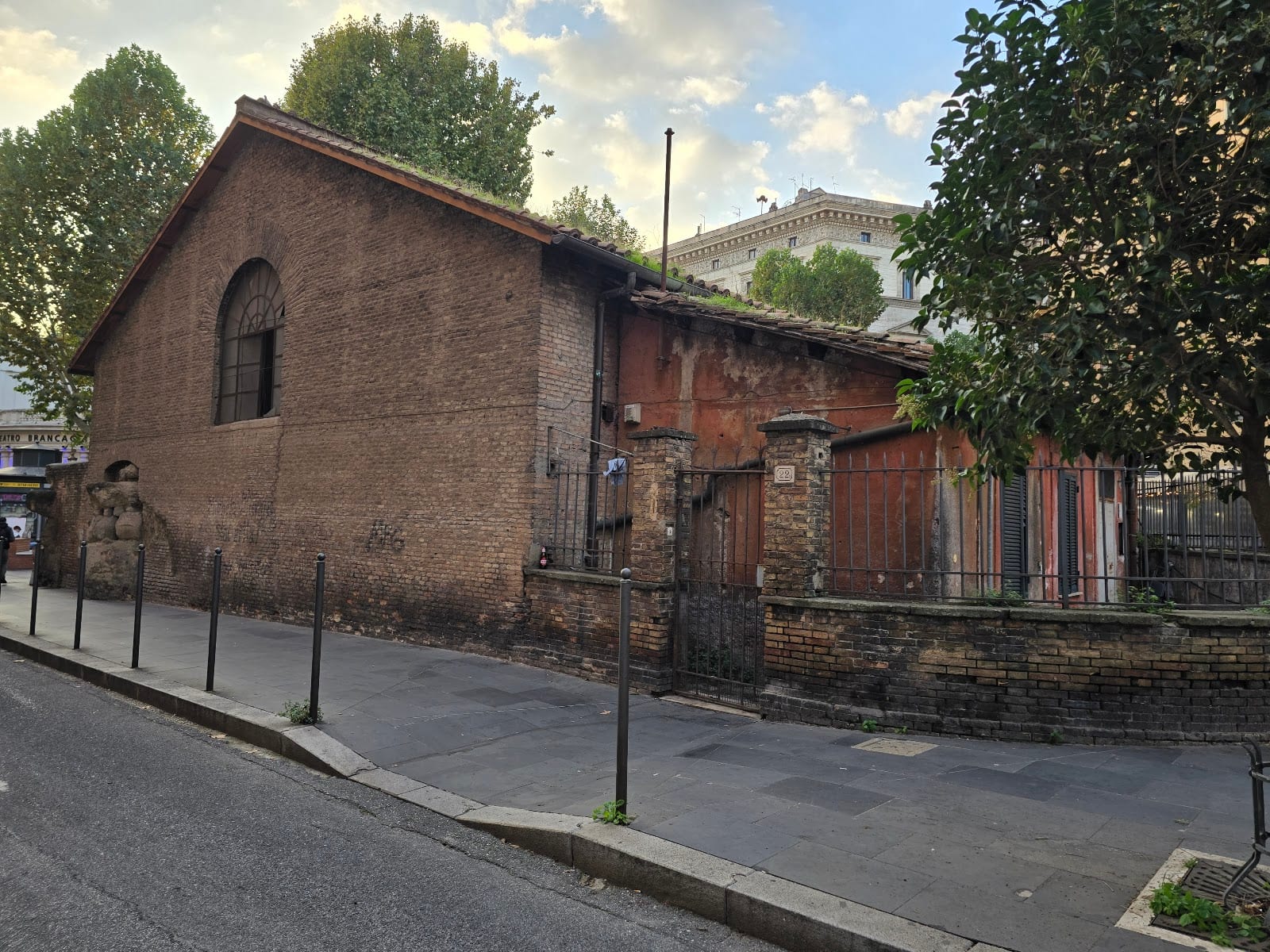
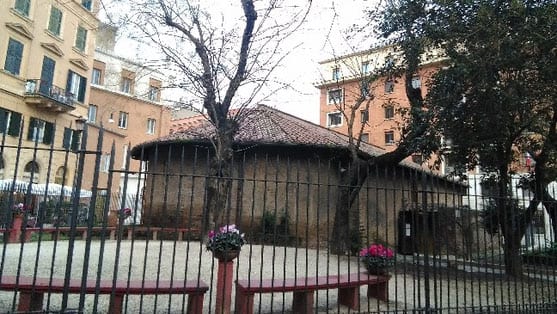
Auditorium of Maecenas
A garden hall of Augustus's great patron, with faded painted gardens on its walls.
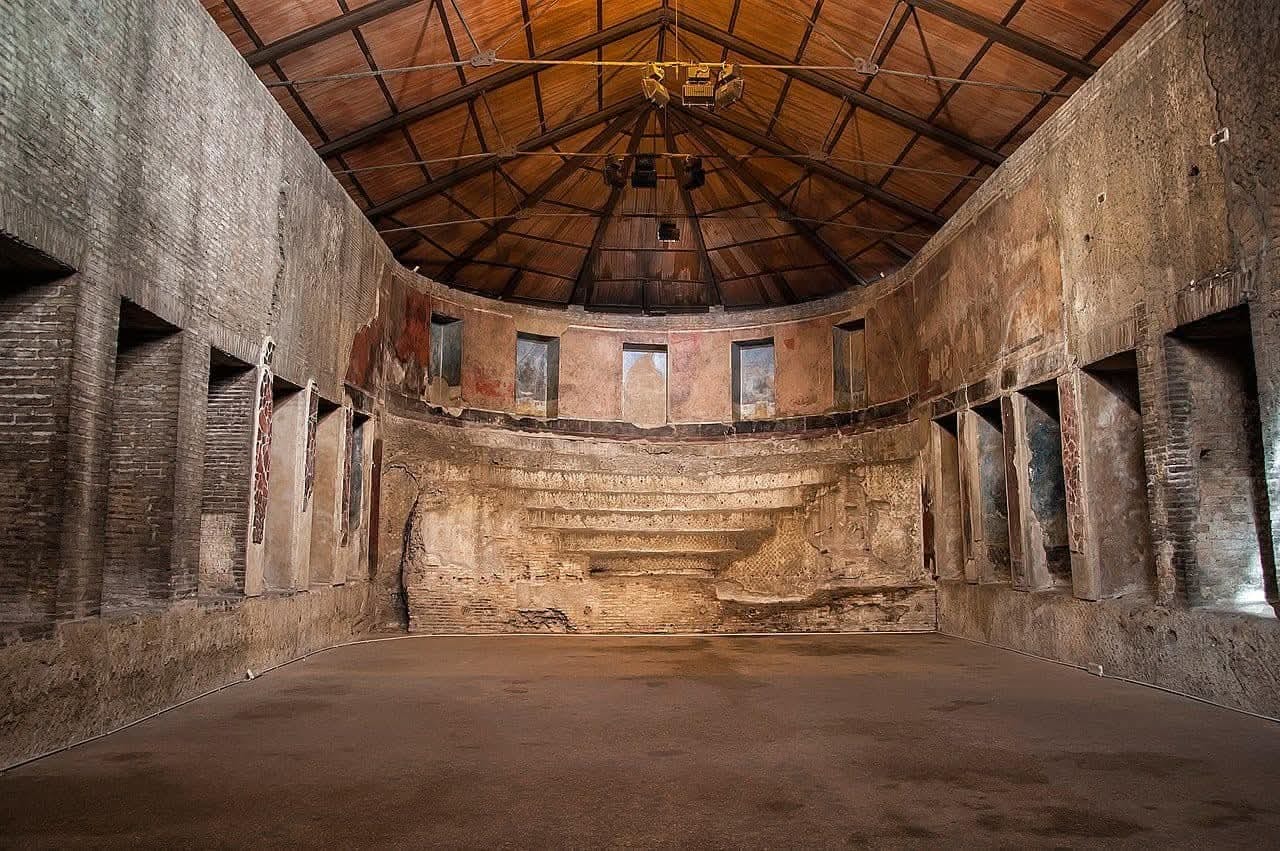
Half-sunk into a small garden on Largo Leopardi is a rare survival: a hall from the private gardens of Gaius Maecenas, the wealthy confidant of the emperor Augustus who bankrolled the poets Virgil and Horace. Long called an auditorium, it was almost certainly a nymphaeum, a semi-subterranean garden room from around the 1st century BC, rediscovered in 1874 as the new Esquilino was being built over the ancient Horti Maecenatis. Down a flight of steps, a tiered apse faces the hall, and on the walls survive faint traces of frescoed gardens and small figures. It is a genuine slice of Augustan Rome in an unlikely spot. The honest catch is access: it is normally open only by advance reservation with the city, and it has been closed for restoration since 2024, so check before you plan a visit and treat the exterior in its garden as the fallback.
Normally by reservation; check current status30 minNormally by advance reservation; closed for restoration since 2024Good for couples, solo
Sourcessovraintendenzaroma.it
- 4
 Via di San Vito Worth it
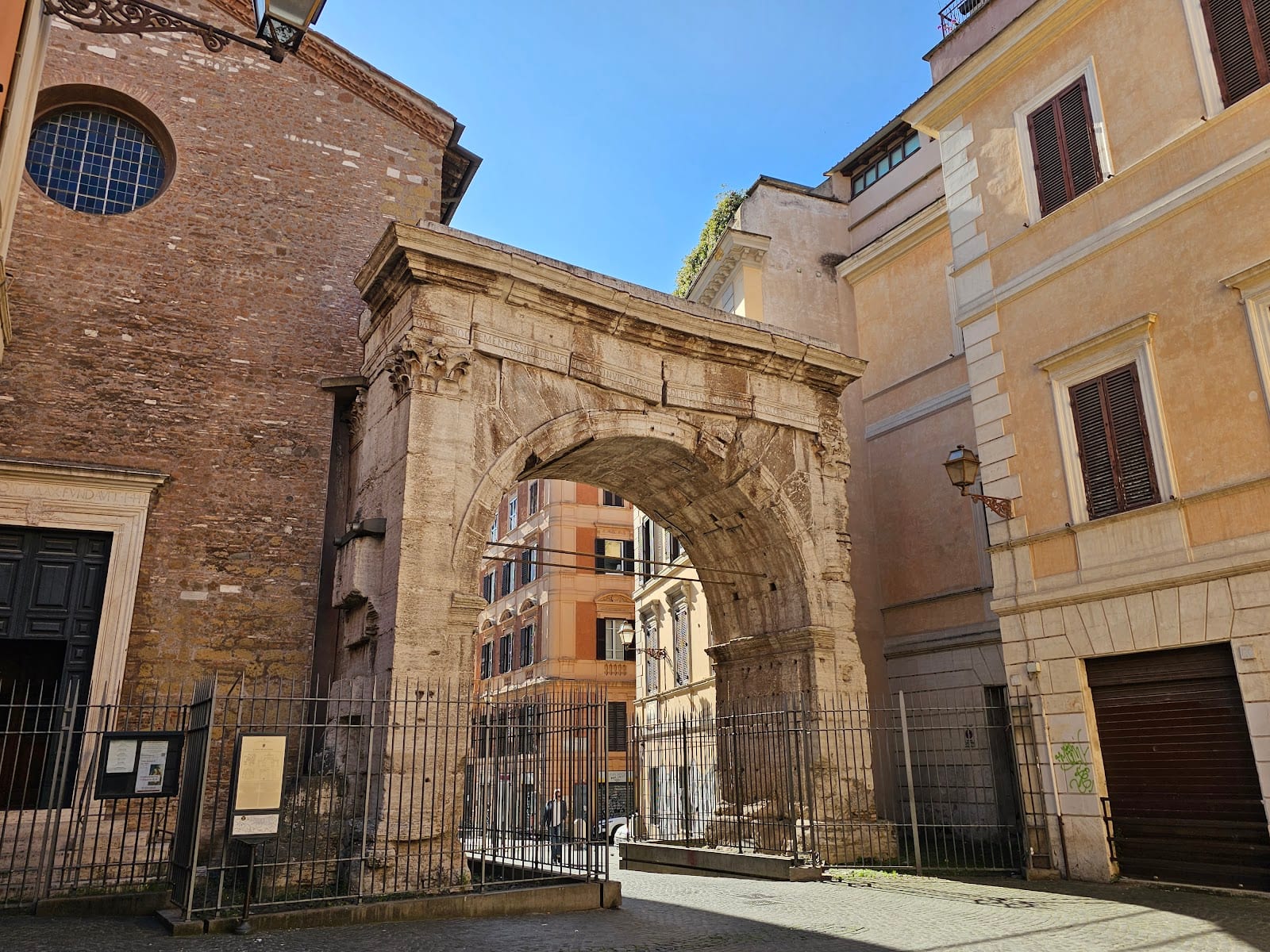
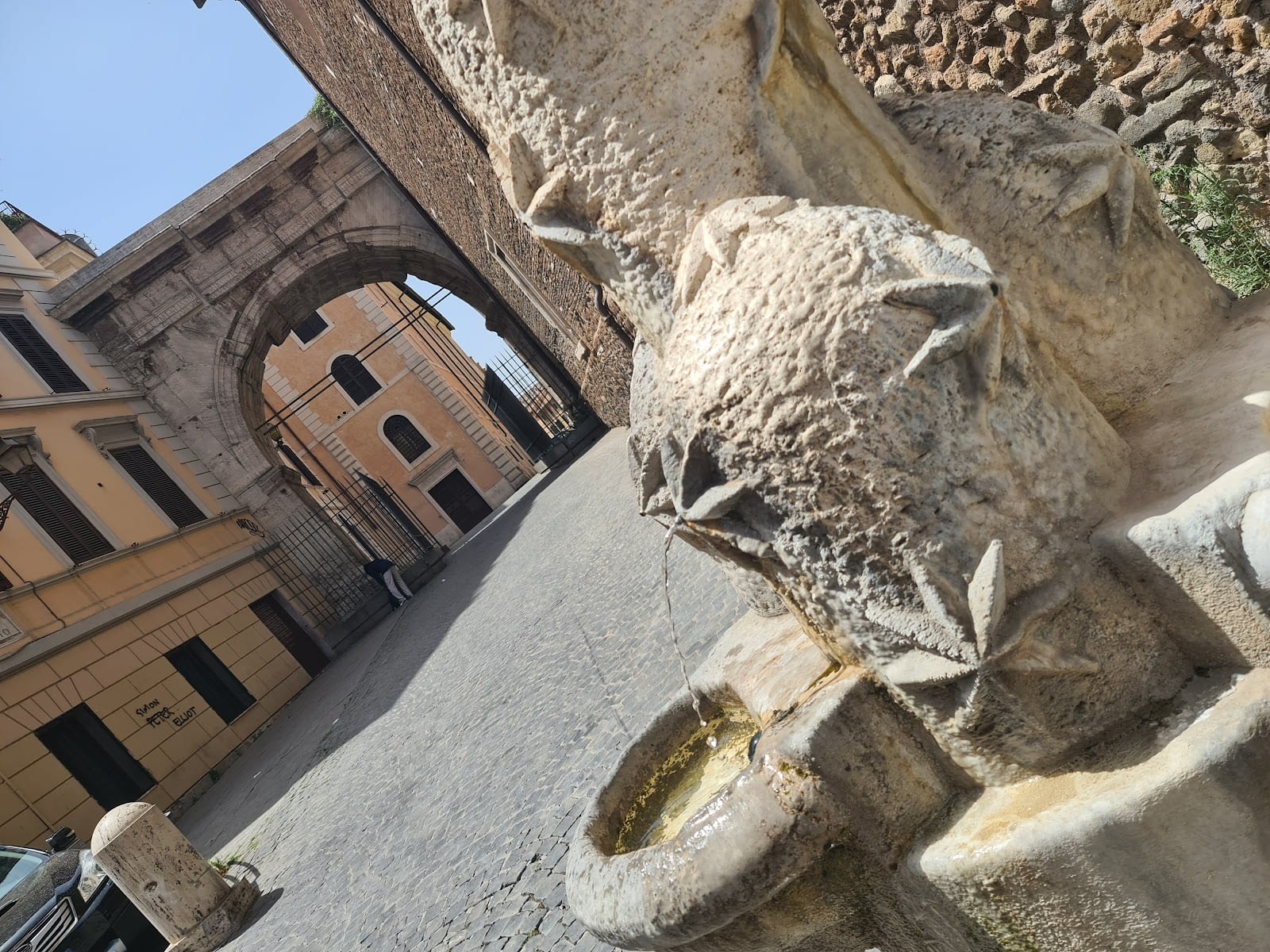
Arch of Gallienus
A quiet travertine arch on the line of Rome's oldest walls, tucked against a small church.
On the calm Via di San Vito, a single travertine arch leans against the little church of Santi Vito e Modesto. This is the Arch of Gallienus, rededicated in 262 to the emperor Gallienus and his wife Salonina by a grateful citizen. It stands on the site of the Porta Esquilina, one of the gates of the Servian Wall, Rome's earliest circuit, which ran through here centuries before the emperors. It once had three openings; the two side arches were pulled down in the late 1400s. It takes two minutes and costs nothing, and its appeal is exactly its quiet: a real ancient monument on an ordinary street, a short walk from the roar of Piazza Vittorio, with almost no one else around.
Open 24 hours (viewed from the street)Good for couples, solo


Hidden gems
Where the crowds thin out.- Hidden gem
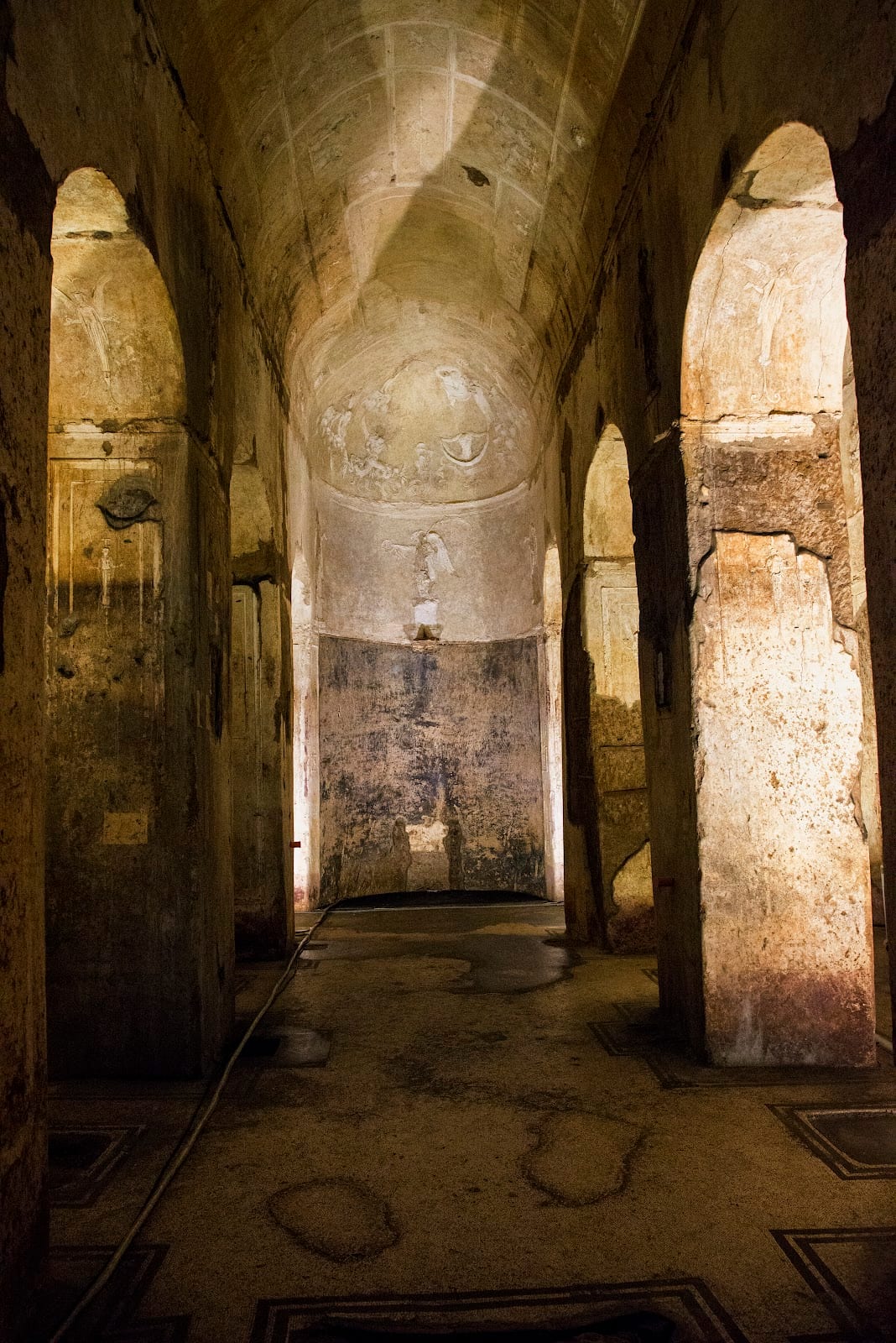
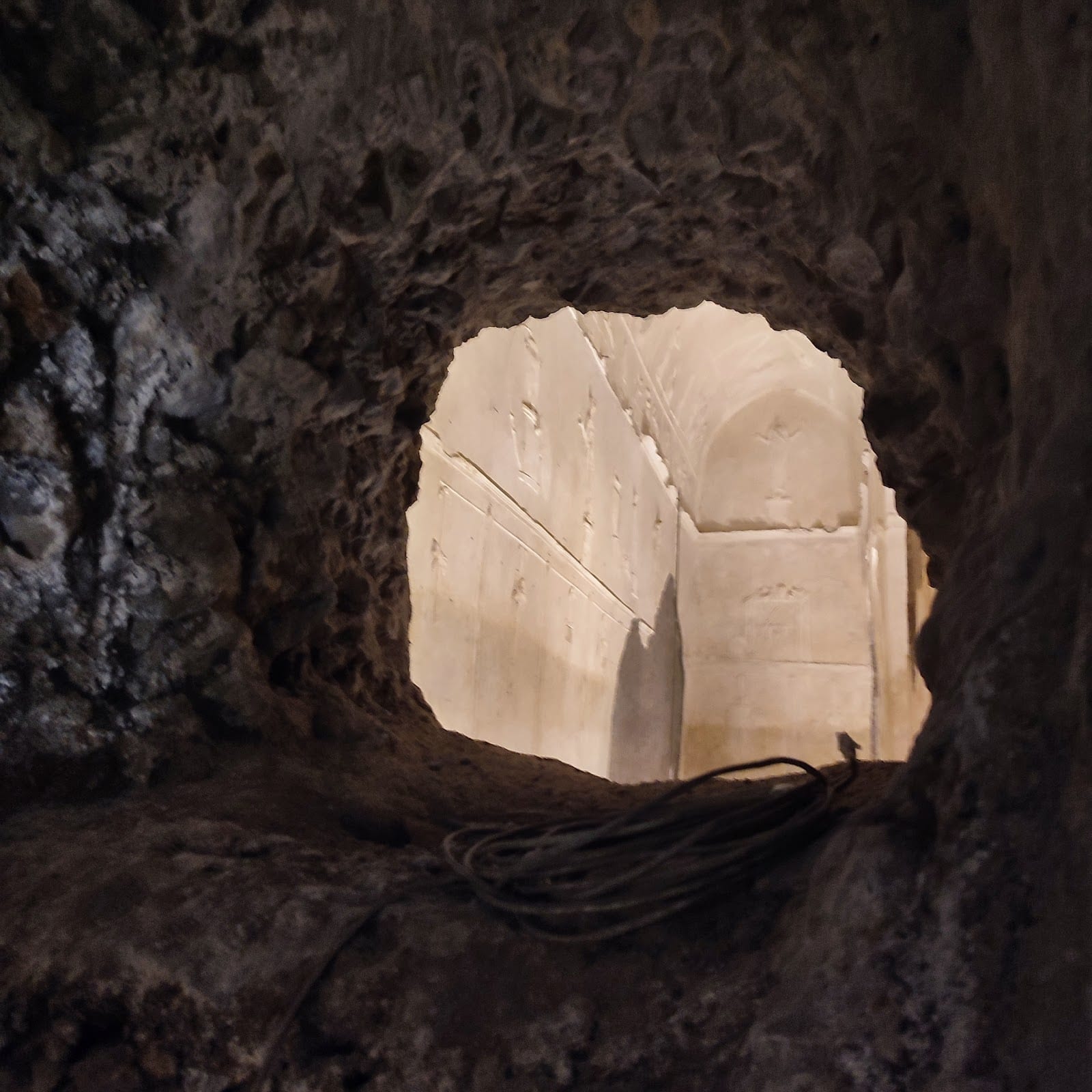
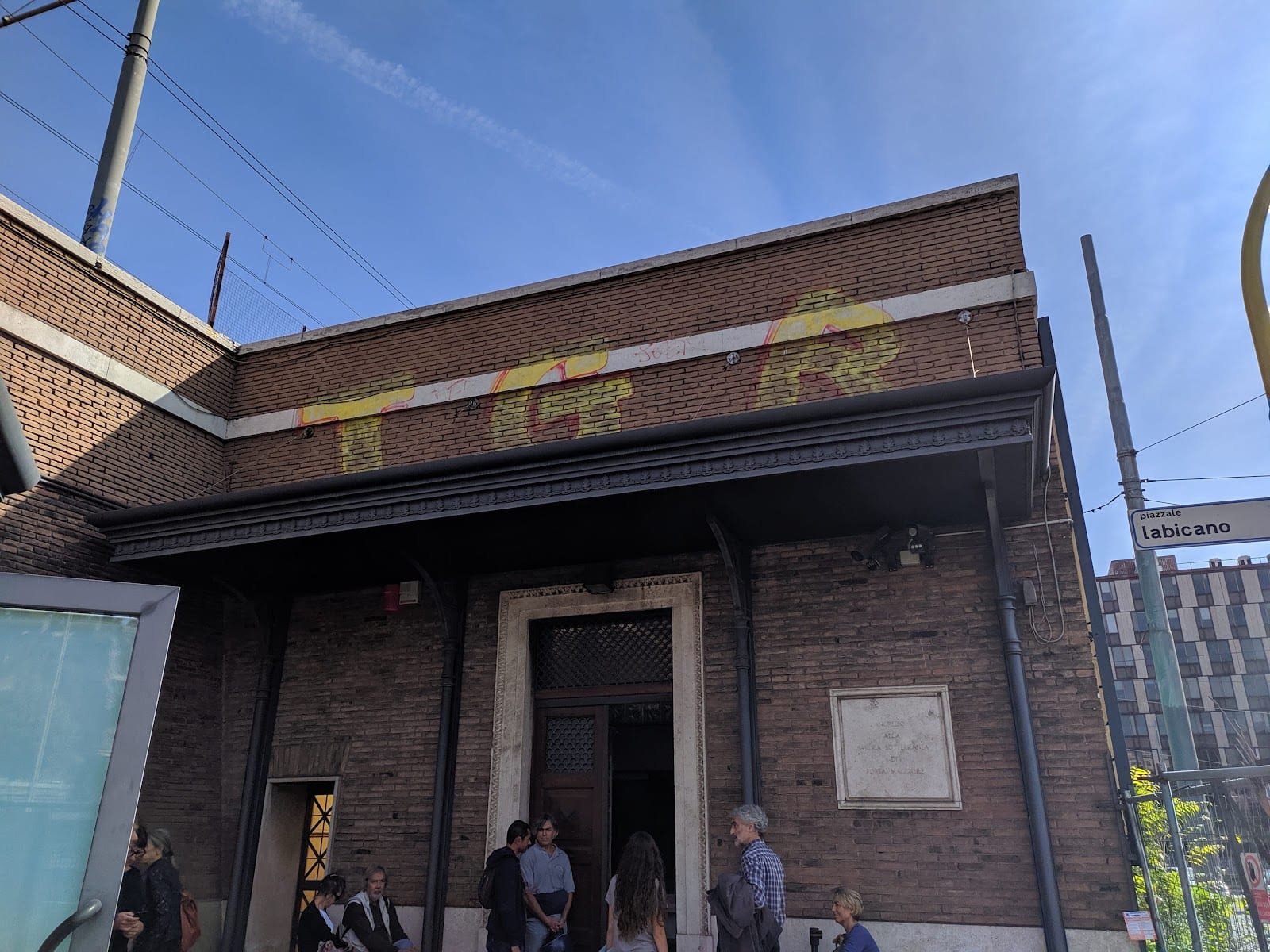
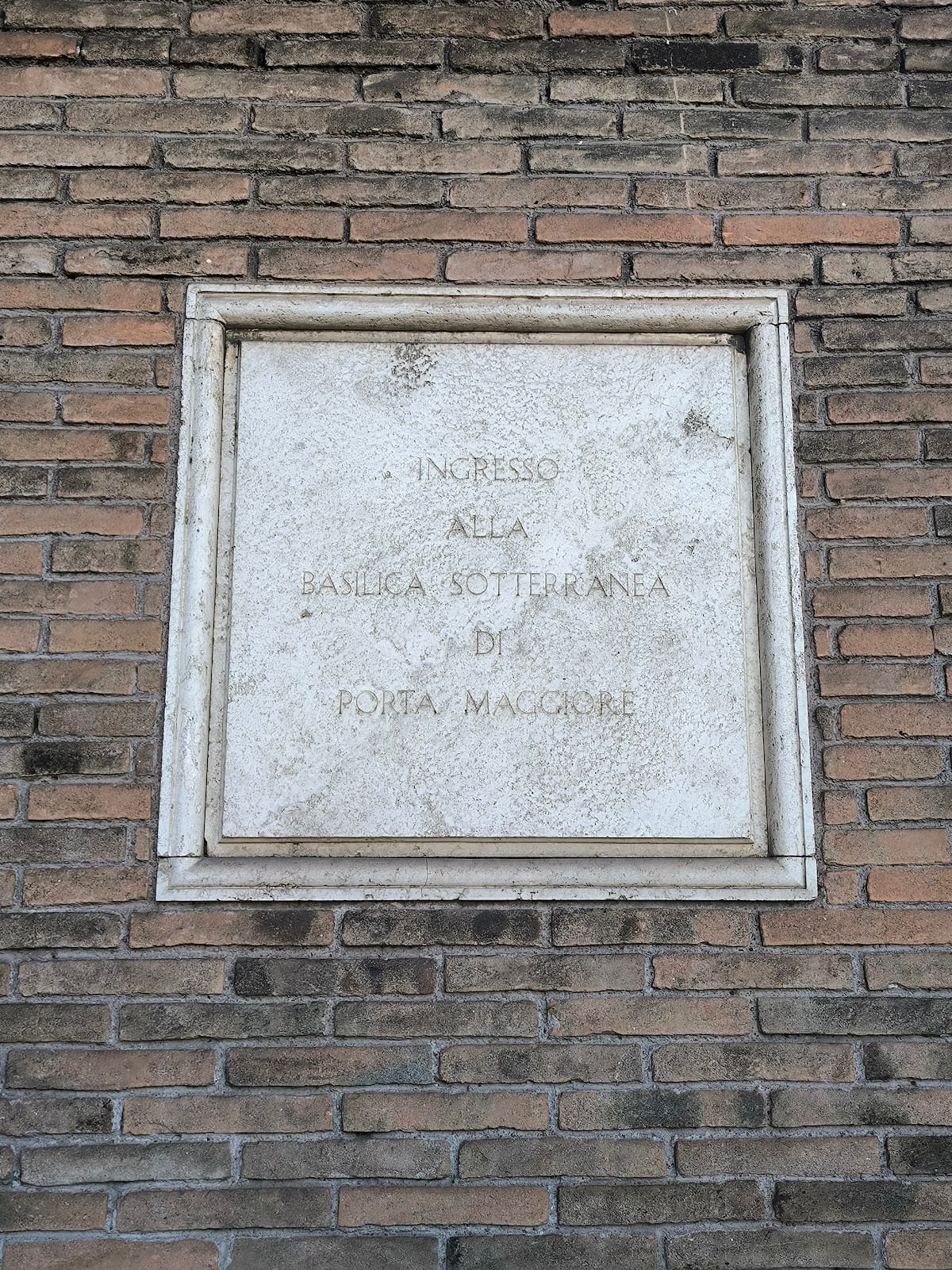 Via Prenestina Worth it
Basilica Sotterranea di Porta Maggiore
An underground 1st-century basilica of a secret cult, hidden below the tracks and seen only by booking.
This is the Esquilino's real hidden gem, and one of the strangest sights in Rome. Nine meters below Via Prenestina, near Porta Maggiore, lies a subterranean hall from the early 1st century AD, decorated with delicate white stucco reliefs of gods, heroes, and mysterious rites. It was found by pure accident in 1917 when the ground caved in during work on the Rome-to-Naples railway. Scholars read it as a private sanctuary of the neo-Pythagoreans, a mystical philosophical sect, apparently sealed on the orders of the emperor Claudius, which makes it the only site of its kind in the city and a precursor in plan to the great Christian basilicas that came centuries later. Because it is fragile and deep, you can see it only on a guided reservation, on very limited dates, arranged through the city heritage office, and access is sometimes suspended for conservation work, so you must check and book ahead rather than turn up. Do the work and you get an all-but-private hour in a 2,000-year-old secret room.
By advance guided reservation only, on limited dates; sometimes closed for worksGood for couples, solo


Verdicts and rankings are our own; ratings open each place on Google. Prices, where shown, are an approximate per-person guide in USD.
Esquilino on screen
Where you've seen the Esquilino before
The neighborhood by the station has its own place in film and music. Tap a clip, then go stand in the scene:
- Film, 1953
Terminal Station (Stazione Termini)
Vittorio De Sica set this whole romantic drama, with Jennifer Jones and Montgomery Clift, inside Roma Termini, the great station on the Esquilino's doorstep. It is the most famous film ever shot in the neighborhood's defining building, and the station is as much a character as the leads.
Nuovo Mercato EsquilinoSource - Music, formed 2002
Orchestra di Piazza Vittorio
The multi-ethnic Orchestra di Piazza Vittorio grew straight out of this square in 2002, made from the Esquilino's immigrant musicians, and became the sound of Rome's most international quarter. Their reworking of Mozart's Don Giovanni is the neighborhood's melting-pot spirit set to music.
Piazza Vittorio Emanuele IISource - News, 2025
The tomb of Pope Francis
In April 2025 Pope Francis was buried in Santa Maria Maggiore, the first pope in more than a century laid to rest outside the Vatican. His plain tomb, marked only Franciscus, put the Esquilino's basilica on front pages worldwide and made it a place of pilgrimage.
Basilica di Santa Maria MaggioreSource
Eat & drink
Where to eat and drink in Esquilino
This is the most exciting eating neighborhood in Rome for anything that is not Roman: the city's best Chinese, Sri Lankan, and Eritrean cooking, plus one classic trattoria to anchor it. A few we would point you to:
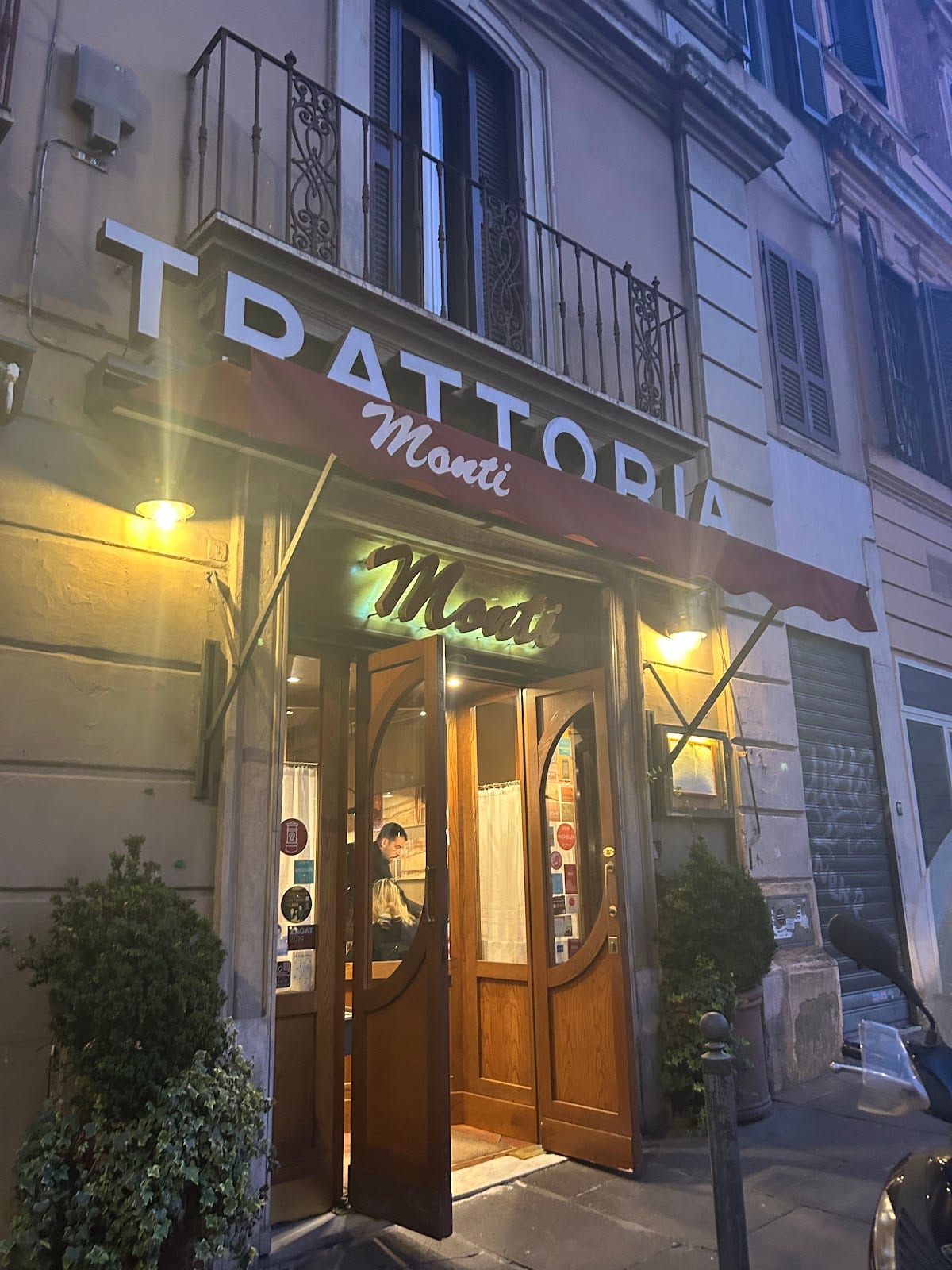
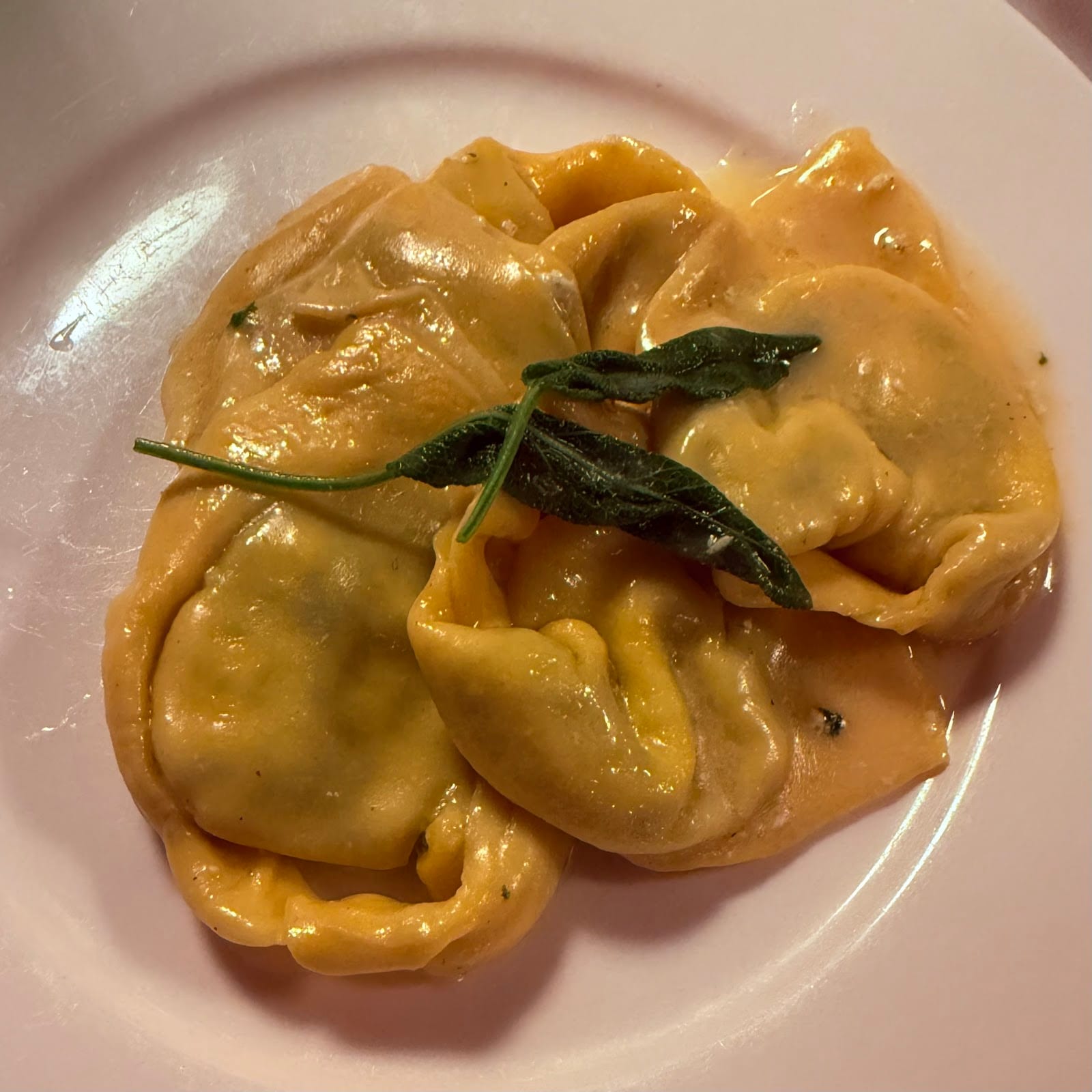
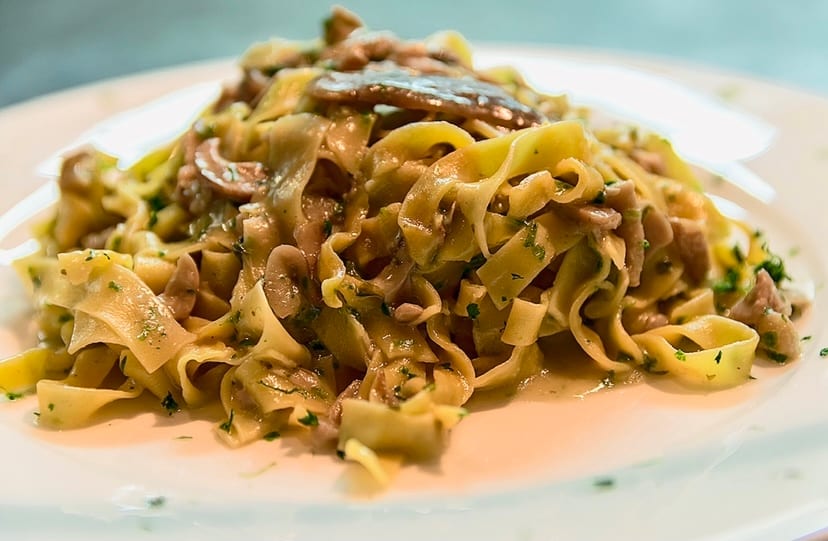
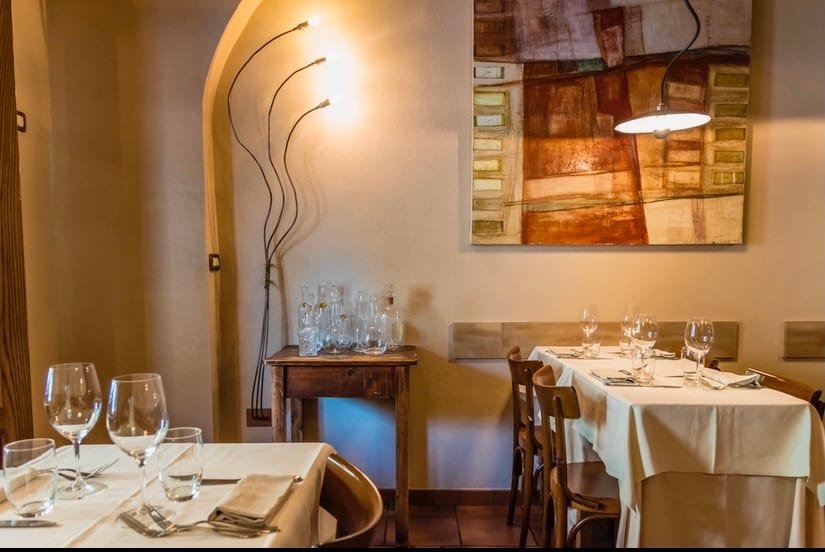
Trattoria Monti
Via di San VitoThe quality headliner and a critics' favorite, a tiny family-run room a step from Piazza Vittorio serving cooking from Le Marche and Rome. The signature is the tortello al rosso d'uovo, a large raviolo with a runny egg yolk in the middle. Book two or three days ahead; it is small and full.
on Google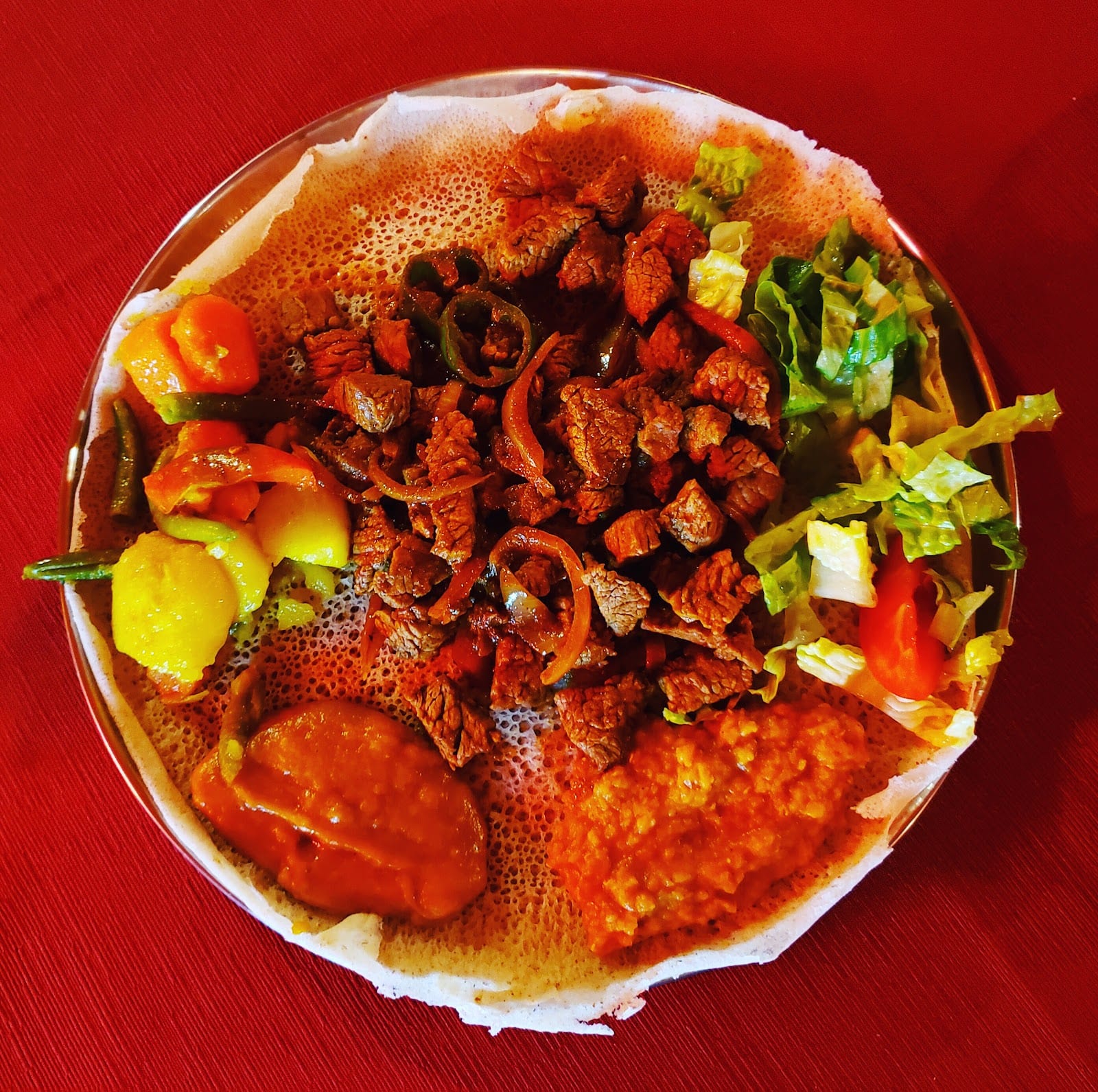
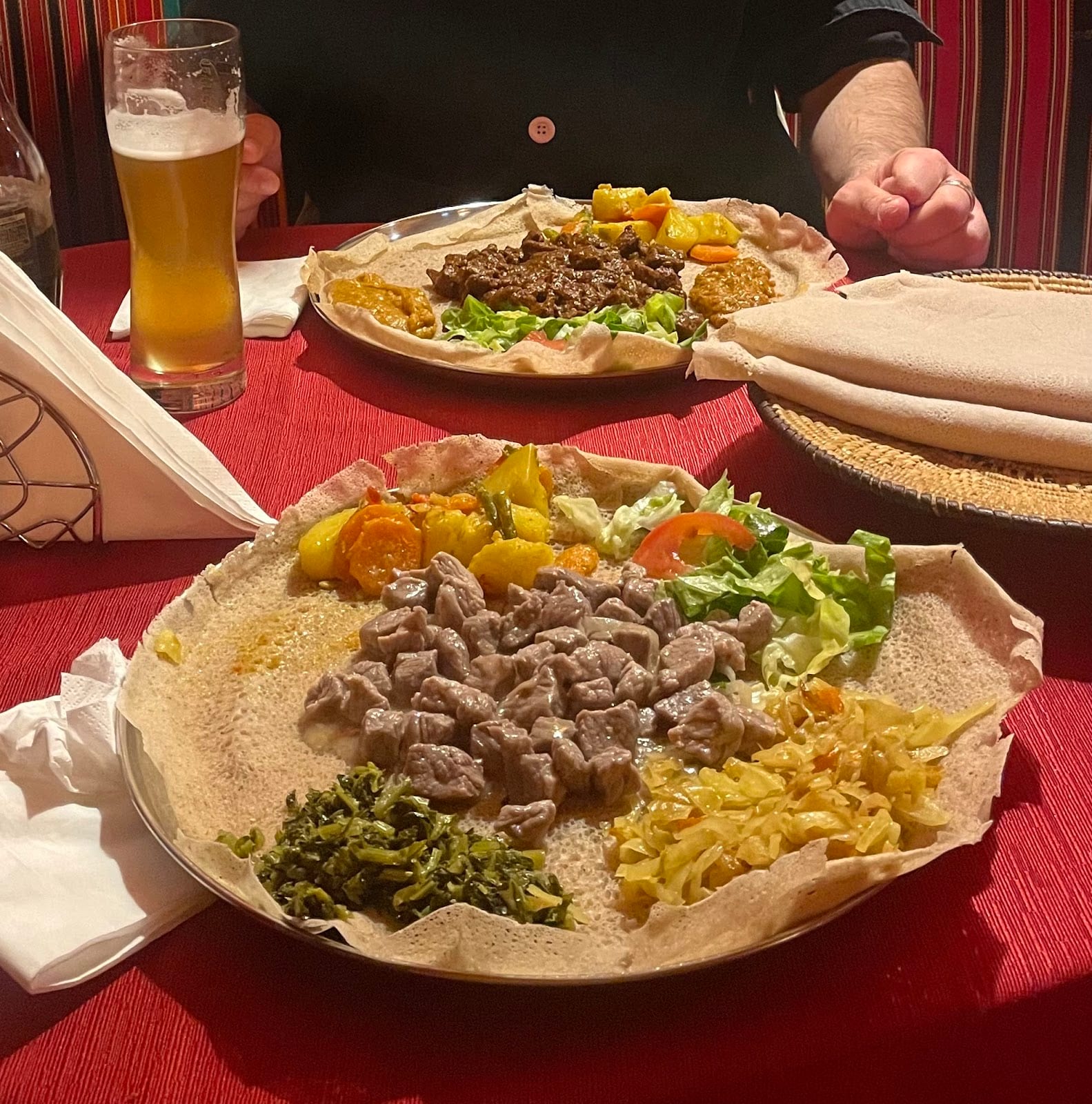
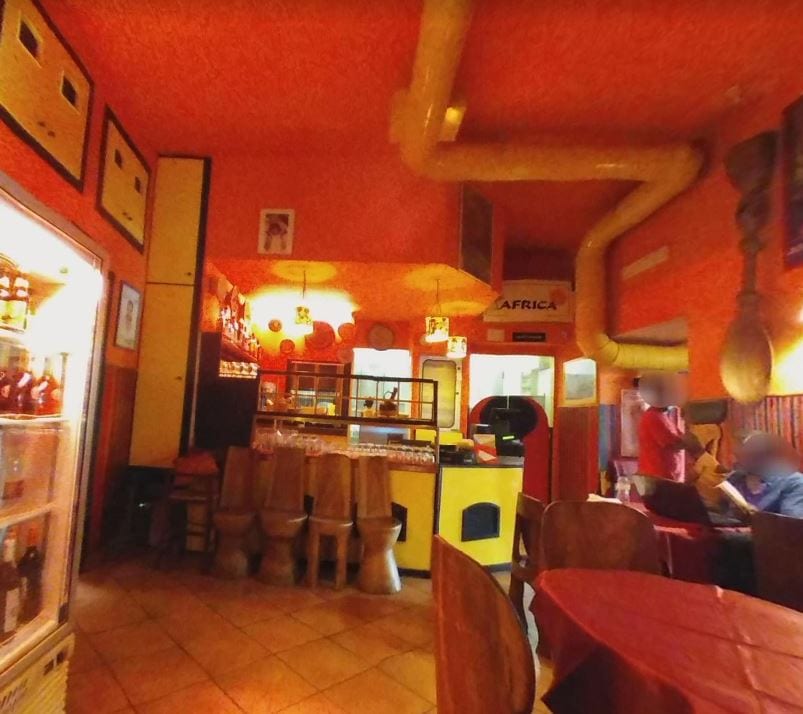
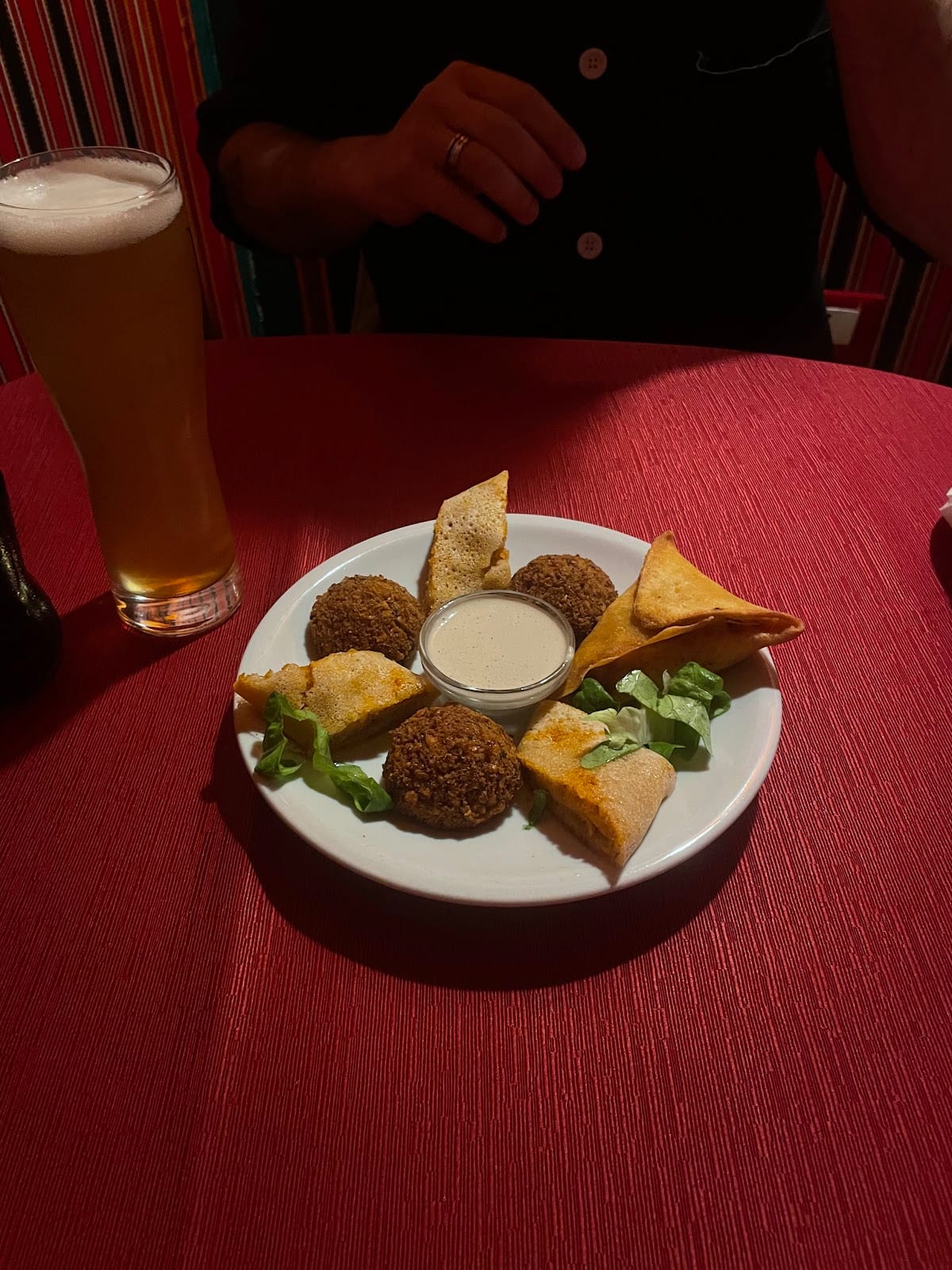
Africa Restaurant
Via Gaeta (just north of Termini)Rome's original African restaurant, an Eritrean and Ethiopian institution going since the late 1970s. Order the zighinì, spicy stews spooned onto sourdough injera and eaten with your hands, and the sambusa to start. Warm, generous, and unlike anything in the tourist center.
on Google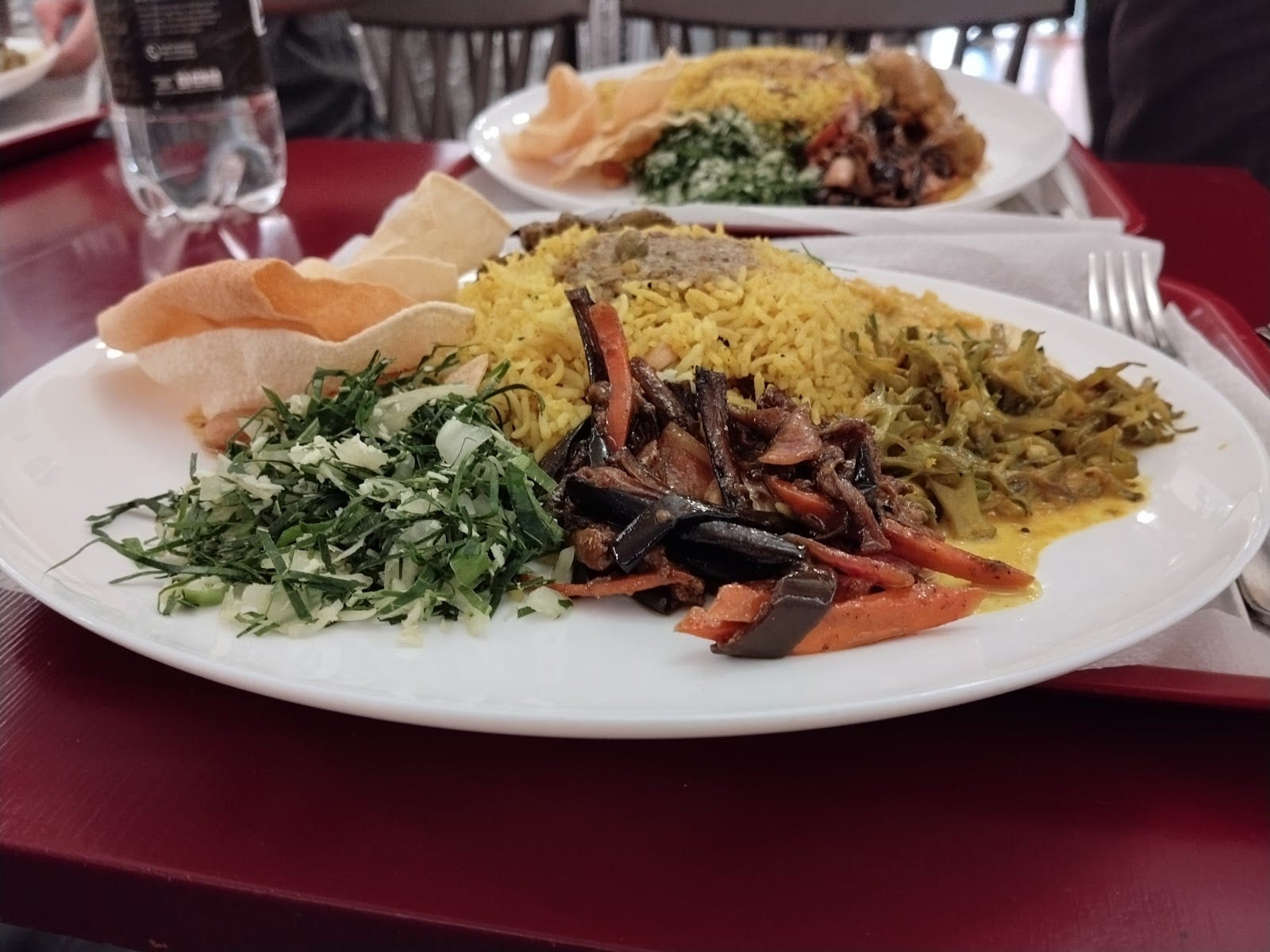
7 Seven Lanka Restaurant
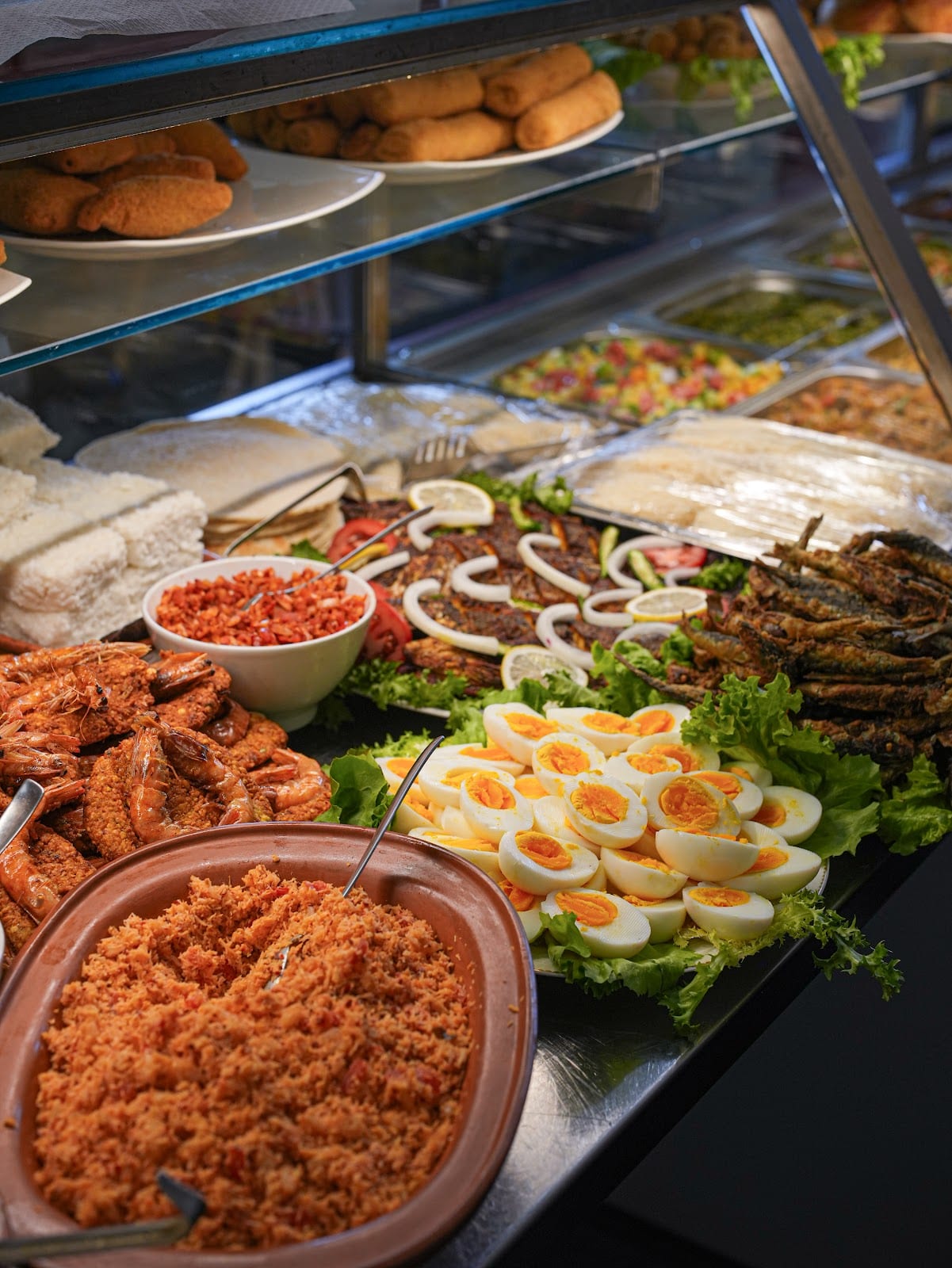
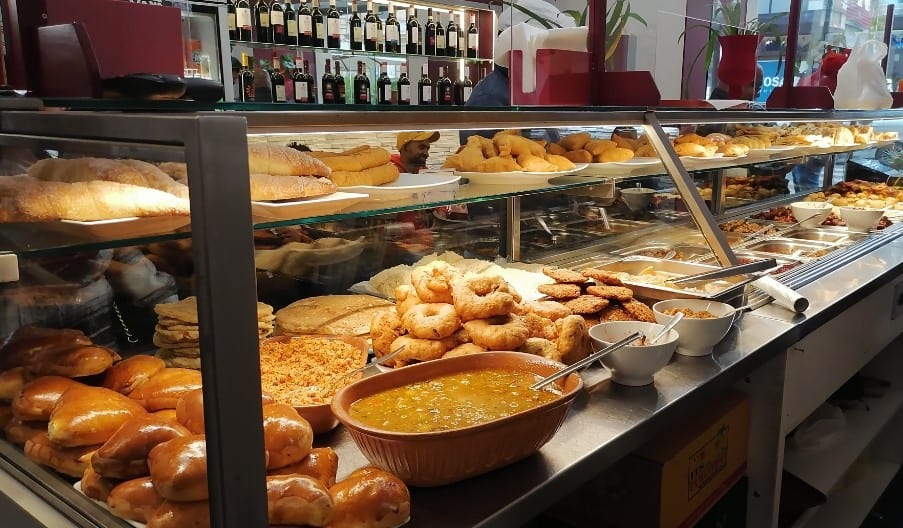
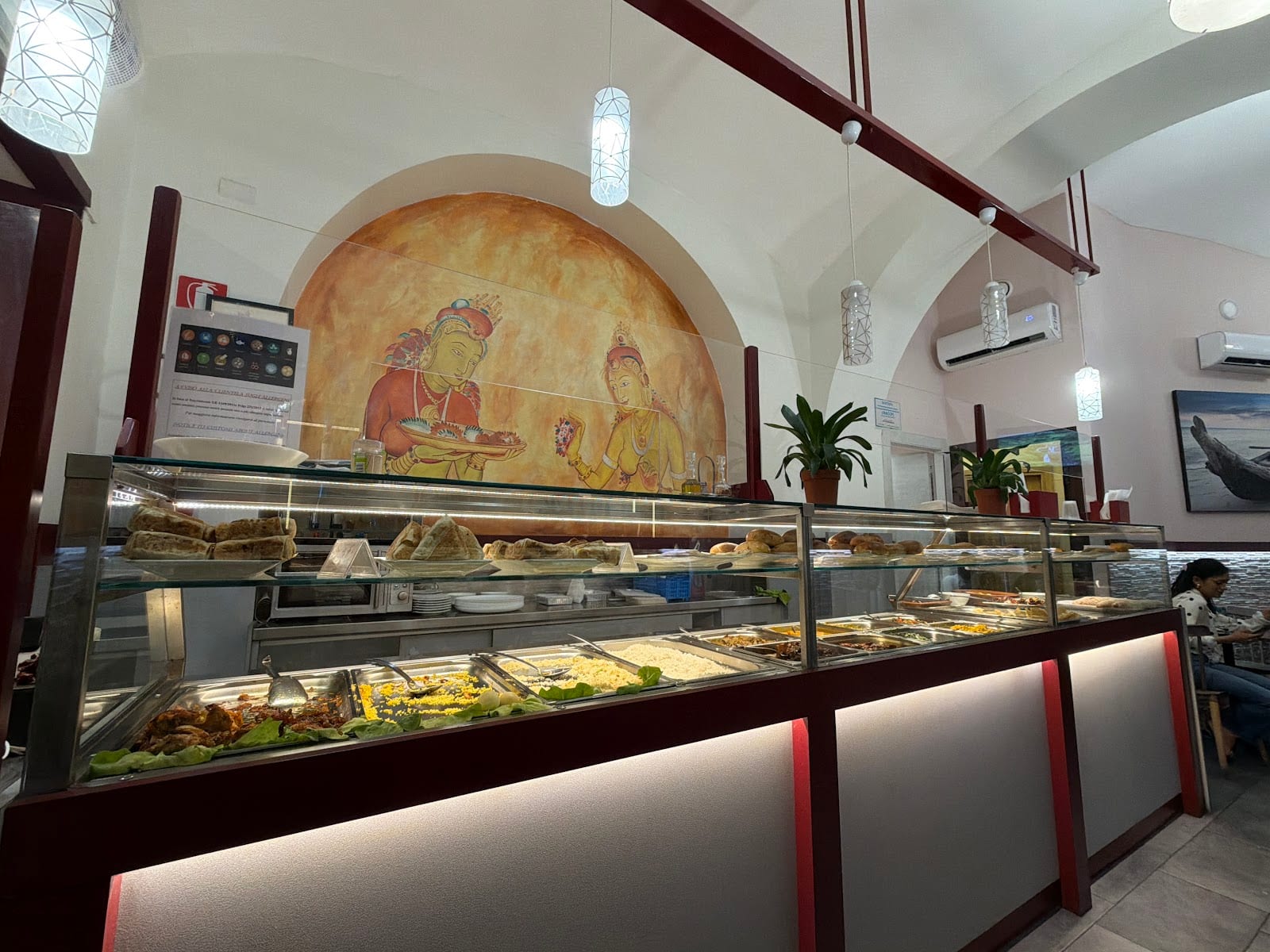
Via MerulanaThe pick for South Asian food, a small, well-loved Sri Lankan spot near Piazza Vittorio. Big plates of kottu, rice and curry, and spiced meats for very little money. Seating is tight, so many regulars take it away; the cooking is the reason to come.
on Google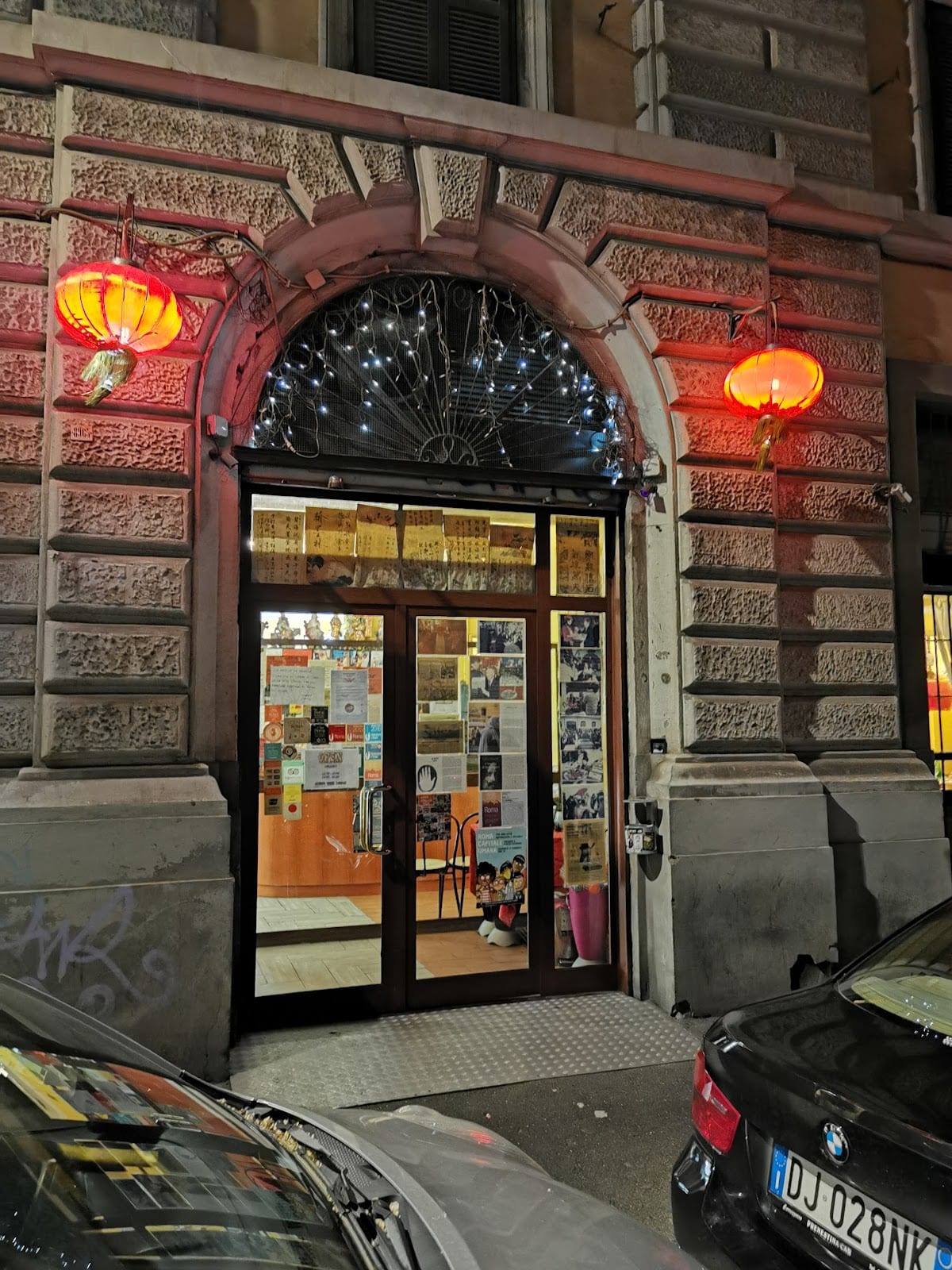
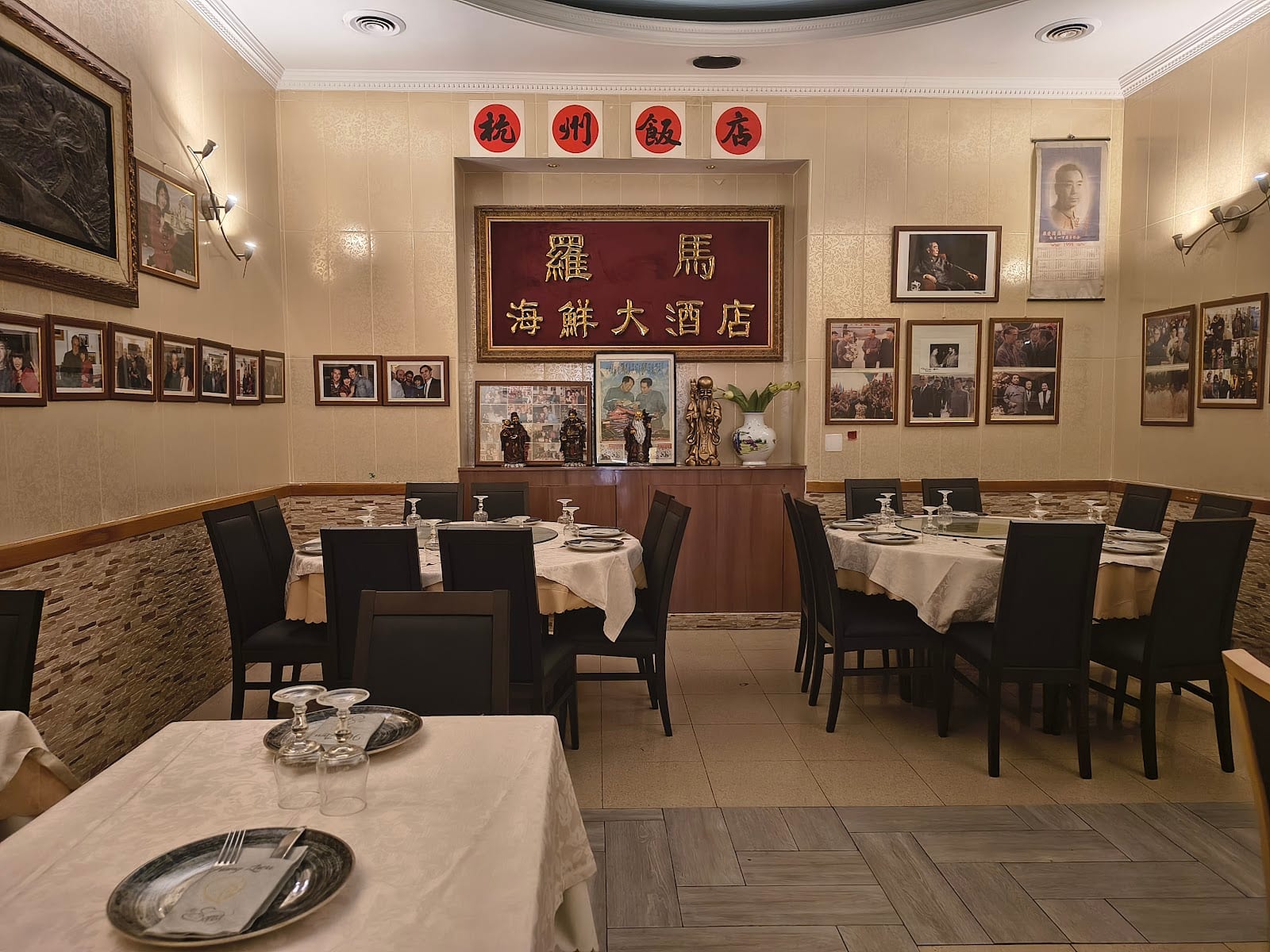
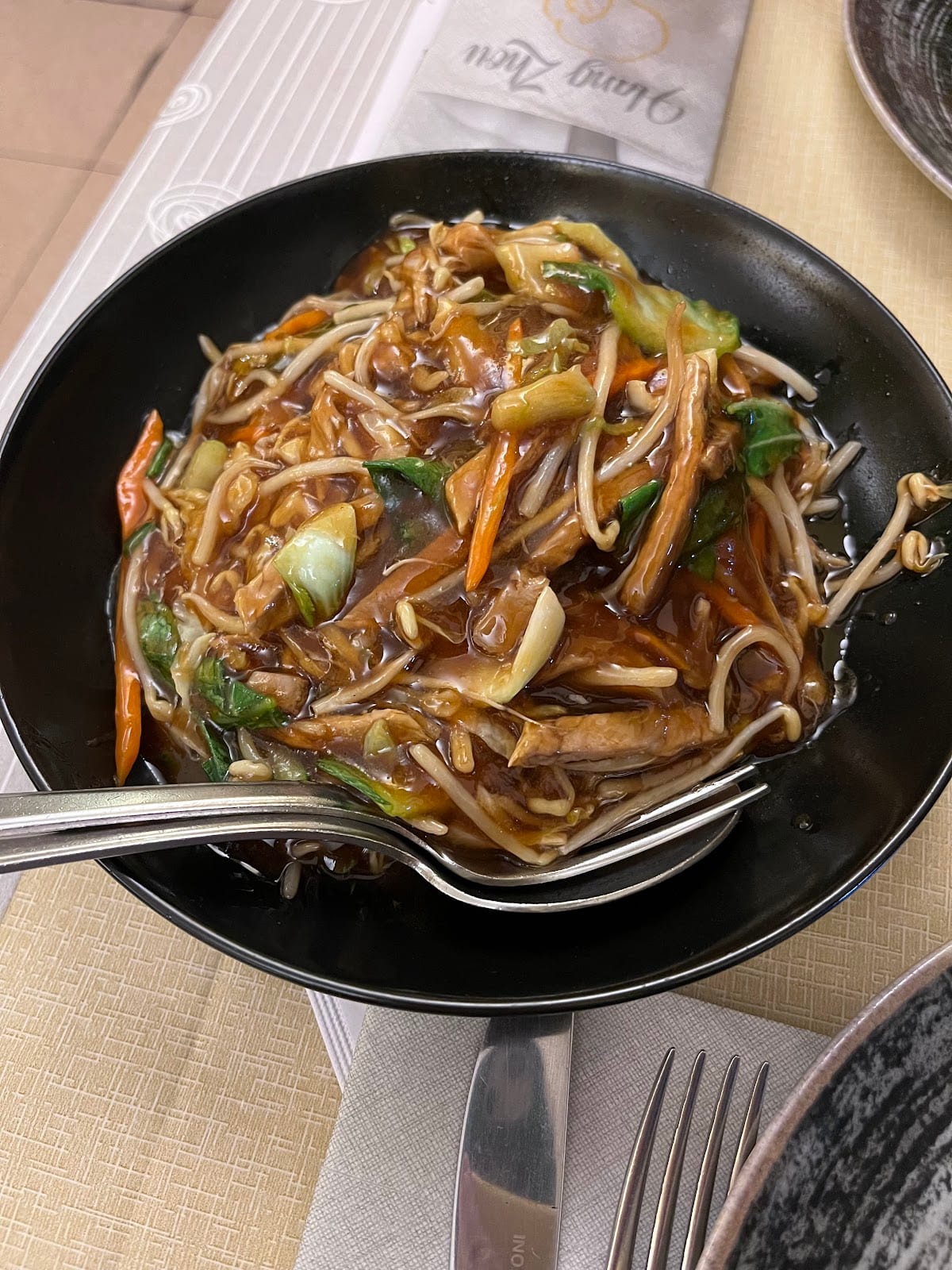
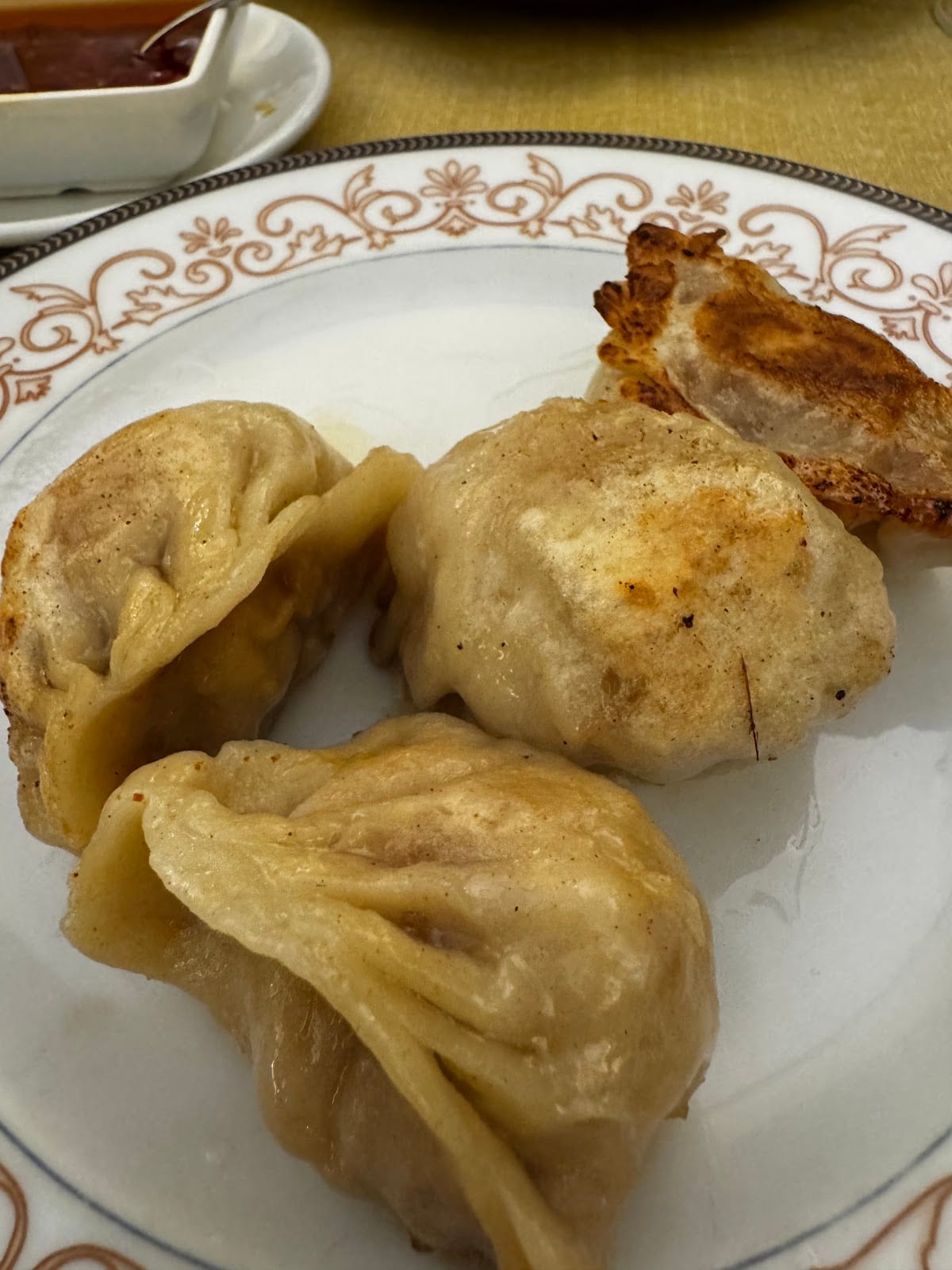
Hang Zhou da Sonia
Via Principe EugenioThe famous face of the Esquilino's Chinatown, its walls papered with photos of owner Sonia and her celebrity guests. It is an institution and an experience more than a hushed fine-dining room: come for the spring rolls, dumplings, and buzz, and expect a queue and no reservations.
on Google


Getting around
Getting around the Esquilino
The Esquilino is flat, gridded, and the easiest neighborhood in Rome to reach, built around the city's main transport hub.
Everything meets at Termini
Roma Termini, on the neighborhood's northern edge, is the hub of the whole country: high-speed and regional trains, both metro lines, and the Leonardo Express to Fiumicino airport. Wherever you are in Rome, you can get to the Esquilino directly.
Metro A and B
Metro lines A and B cross at Termini, and line A also stops at Vittorio Emanuele, right on Piazza Vittorio. That puts the basilica, the square, and the market within a couple of minutes of a station.
Walk the grid
Because this quarter was laid out fresh in the 1870s, the streets are straight and level and the blocks are regular, so it is simple to walk. The basilica, Piazza Vittorio, and the market are a flat ten to fifteen minutes apart.
Watch your bags near the station
The blocks right around Termini are busy and can feel edgy, and, like any big-city station, they draw pickpockets and hustlers. Keep your bag closed and in front of you, especially at night, and the neighborhood is straightforward to enjoy.
Where to stay
Where to stay in the Esquilino
Staying in the Esquilino is all about the transport: you are on top of Termini and both metro lines, which is unbeatable for getting around and out of the city. Where you base yourself within it matters, because the area varies block to block:
Around Piazza Vittorio
The best of the neighborhood: the grand arcaded square, the garden, the market, and the multicultural restaurants on your doorstep, a short walk from the basilica. More local and less polished than the center, but that is the appeal.
Near Santa Maria Maggiore
The most handsome corner of the Esquilino, on the rise by the basilica and closest to Monti and the center. A good compromise between the station's convenience and a calmer, prettier setting.
Right by Termini
Unmatched for transport and full of hotels at every price, but the blocks immediately around the station are the busiest and least appealing in the district. Choose carefully, favor a quieter side street, and mind your bags.
Toward Via Merulana
The long, dignified avenue running down toward the Colosseum, quieter and more residential, with easy walks to both the basilica and Monti. A calmer base that is still minutes from the metro.

Explore the Rome City Guide
See every Rome neighborhood, itinerary, and the essentials, and find the right base for your trip.
View the guideWho it's for
Esquilino for couples, families, and solo
- The Esquilino for couples
- See the mosaics and the tomb of Pope Francis in Santa Maria Maggiore, find the alchemists' door and the ruins in the Piazza Vittorio garden, then book a small table at Trattoria Monti or share a hands-on Eritrean platter at Africa.
- The Esquilino for families
- The market is full of color and smells to take in, and the Piazza Vittorio garden has space to run and ruins to spot. Cheap, filling, no-fuss food from around the world keeps everyone happy, and the whole loop is flat and stroller-friendly.
- The Esquilino for solo travelers
- This is a great base and an easy solo day: a free, first-rank basilica, a market to wander, and cheap counter meals from a dozen cuisines. Keep the usual big-station awareness around Termini, especially after dark, and you are set.
More of Rome
Nearby neighborhoods
A short hop from Esquilino, and worth pairing on the same trip.

Ready to explore the Esquilino?
Tell Zoya, your personal travel assistant, how you like to travel, and she'll turn these into an Esquilino day, or a whole Rome trip, that fits your dates.
Explore now